


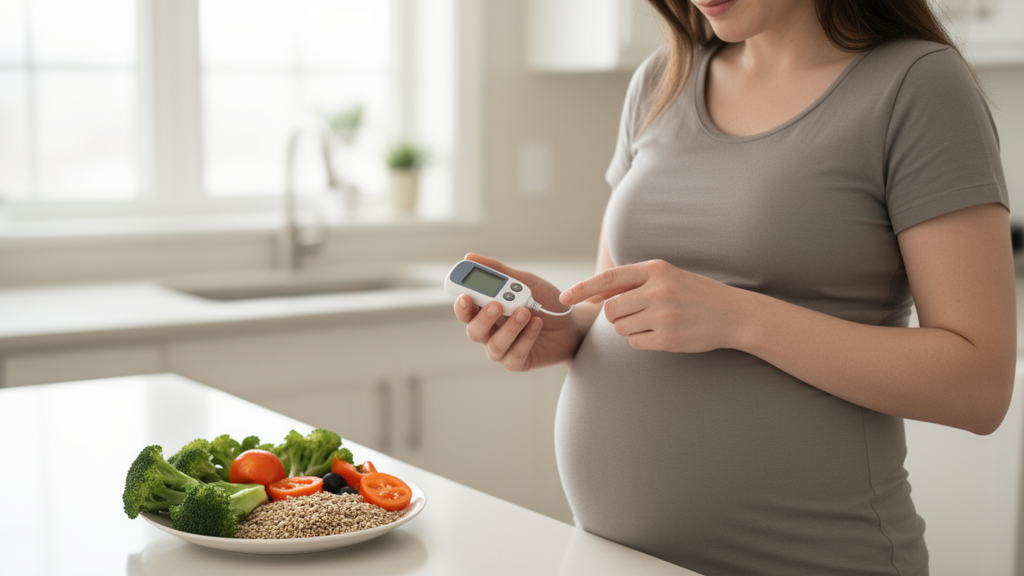
For a pregnant woman newly diagnosed with gestational diabetes, every meal, glucose test, and clinic visit becomes a decision point. A new cross-sectional study published in BMC Public Health by researchers from Fujian Medical University and its affiliated hospitals suggests that the single most powerful driver of how well these women manage their blood sugar is not clinical knowledge alone, but how strongly they perceive the risk the disease poses to themselves and their unborn child. The findings, based on 315 pregnant women attending regular prenatal checkups at a Grade A tertiary hospital in Fujian Province between January and July 2025, offer a data-driven map of the psychological machinery behind glycemic self-management.
Gestational diabetes mellitus is one of the most common metabolic complications of pregnancy, and its management depends almost entirely on daily decisions made by the patient herself: what to eat, how much to move, when to monitor glucose, and when to seek medical help. Clinicians have long observed that some women engage eagerly with standardized glycemic management while others underestimate the condition or become paralyzed by anxiety. The research team, led by Zining Wan and Yilin Huang of the School of Nursing at Fujian Medical University, set out to quantify whether risk perception, the subjective evaluation of how susceptible and how seriously threatened a person feels, actually correlates with these health-related decision-making behaviors, and which psychological and social factors shape that relationship.
The study employed convenience sampling and collected data through an interviewer-administered structured questionnaire package. Beyond a general information questionnaire developed by the authors, participants completed five validated instruments: a gestational diabetes risk perception scale, a behavioral decision-making scale for glycemic management specific to pregnant women with gestational diabetes, a perceived social support scale, a chronic disease self-efficacy scale, and an e-Health literacy scale. This battery allowed the researchers to capture not just the two central variables but also the surrounding ecosystem of social, motivational, and digital-literacy factors that theory suggests should matter.
The statistical approach was path analysis using structural equation modelling, a technique that goes beyond simple correlation to estimate direct and indirect causal pathways between variables. Structural equation modelling allows investigators to test whether a factor such as social support influences behavior directly, or whether its effect flows through an intermediate variable such as risk perception. For a question as tangled as how pregnant women decide to manage a chronic condition during pregnancy, this distinction is critical, because interventions that target the wrong pathway may fail even when the underlying factor seems obviously important.
The headline result was clear: risk perception was positively correlated with glycemic management decision-making behavior, with a correlation coefficient of 0.386 and a P value below 0.01. In practical terms, women who perceived greater risk from their condition tended to make more active, better-informed decisions about managing their blood sugar. Both risk perception and decision-making behavior were also positively correlated with e-health literacy, social support, and self-efficacy, with correlation coefficients ranging from 0.368 to 0.496, all statistically significant at P below 0.01. This pattern suggests that the psychological resources women bring to their diagnosis, from confidence in their own abilities to their comfort navigating digital health information, travel together with how seriously they take the disease and how decisively they act on it.
The path analysis then revealed a striking asymmetry in how these factors operate. Social support had a significant direct effect on risk perception, with a standardized beta of 0.492 and P below 0.001, and a significant total effect on glycemic management decision-making behavior, with a beta of 0.558 and P below 0.001. Yet its direct effect on decision-making behavior was not statistically significant, with a beta of only 0.062 and a P value of 0.471. In other words, social support does not appear to push women toward better glycemic decisions by itself; instead, it works by shaping how much risk they perceive, which then drives the behavior. This is a subtle but clinically important finding, because it suggests that simply providing emotional or practical support without helping women understand their actual disease risk may not translate into better self-management.
Risk perception itself had a significant direct effect on glycemic management decision-making behavior, with a standardized beta of 0.612 and P below 0.001, making it the strongest single pathway in the model. Self-efficacy, the belief in one’s own capacity to execute behaviors necessary to manage a chronic disease, also showed a significant direct effect on decision-making behavior, with a beta of 0.253 and P equal to 0.002, and a significant total effect with a beta of 0.285 and P equal to 0.001. Interestingly, e-health literacy showed a direct effect on decision-making behavior that was not statistically significant, with a beta of 0.125 and P equal to 0.072, and its total effect was identical to that direct effect. This suggests that while digital health skills correlate with better decision-making, their influence in this model may be more diffuse or operate through channels the study did not fully capture.
The authors conclude that both the level of perceived disease risk and behavioral factors should be taken into account during disease management. Their argument is that helping patients develop accurate risk cognition, neither dismissing the condition nor exaggerating it, enhances their capacity to make health-related decisions within complex real-world settings and ultimately improves health outcomes. This framing positions risk perception not as a fixed personality trait but as a modifiable clinical target, something that can be calibrated through structured education, honest risk communication, and the social scaffolding that family members and healthcare teams provide.
The study was approved by the Medical Ethics Committee of the Second Affiliated Hospital of Fujian Medical University under approval number 2024-485 and was conducted in accordance with the Declaration of Helsinki, with written informed consent obtained from all participants before data collection. The research was funded by the Department of Science and Technology of Fujian Province under project number 2025Y9463, with the funding agency playing no role in research design, data collection, analysis, interpretation, manuscript writing, or the decision to submit the manuscript for publication. The authors declare no competing interests, and the article is published open access under a Creative Commons Attribution-NonCommercial-NoDerivatives 4.0 International license.
For clinicians and public health planners, the practical takeaway is that interventions aimed at improving glycemic management in gestational diabetes may be most effective when they explicitly address risk perception as a gateway variable. Rather than treating education, social support, and self-efficacy as parallel inputs, the path model suggests a more strategic sequence: strengthen the social and informational environment that shapes how women perceive their risk, and the behavioral decisions about diet, activity, glucose monitoring, and follow-up care are more likely to follow. As gestational diabetes continues to rise worldwide with rates of obesity and later maternal age, understanding the psychology of these daily decisions may prove as important as any pharmacological tool in protecting both maternal and fetal health.
Subject of Research: public-health
Article Title: The correlation between risk perception and glycemic management decision-making behavior in pregnant women with gestational diabetes: a cross-sectional study
Article References: Wan, Z., Huang, Y., Ke, H., Xie, Y., Yang, N., Zhao, M., & Zhao, H. (2026). The correlation between risk perception and glycemic management decision-making behavior in pregnant women with gestational diabetes: a cross-sectional study. BMC Public Health. https://doi.org/10.1186/s12889-026-29967-6
Image Credits: AI Generated
DOI: 10.1186/s12889-026-29967-6
Keywords: correlation, between, risk, perception, glycemic, management, decision-making, behavior, pregnant, women, gestational, diabetes
Cite Scienmag News
Harold Sullivan. (October 17, 2026). How Risk Perception Drives Blood Sugar Decisions in Gestational Diabetes. Scienmag. https://scienmag.com/how-risk-perception-drives-blood-sugar-decisions-in-gestational-diabetes/
Harold Sullivan. "How Risk Perception Drives Blood Sugar Decisions in Gestational Diabetes." Scienmag, 17 October 2026, https://scienmag.com/how-risk-perception-drives-blood-sugar-decisions-in-gestational-diabetes/. Accessed 17 October 2026.
Harold Sullivan. "How Risk Perception Drives Blood Sugar Decisions in Gestational Diabetes." Scienmag. October 17, 2026. https://scienmag.com/how-risk-perception-drives-blood-sugar-decisions-in-gestational-diabetes/


