


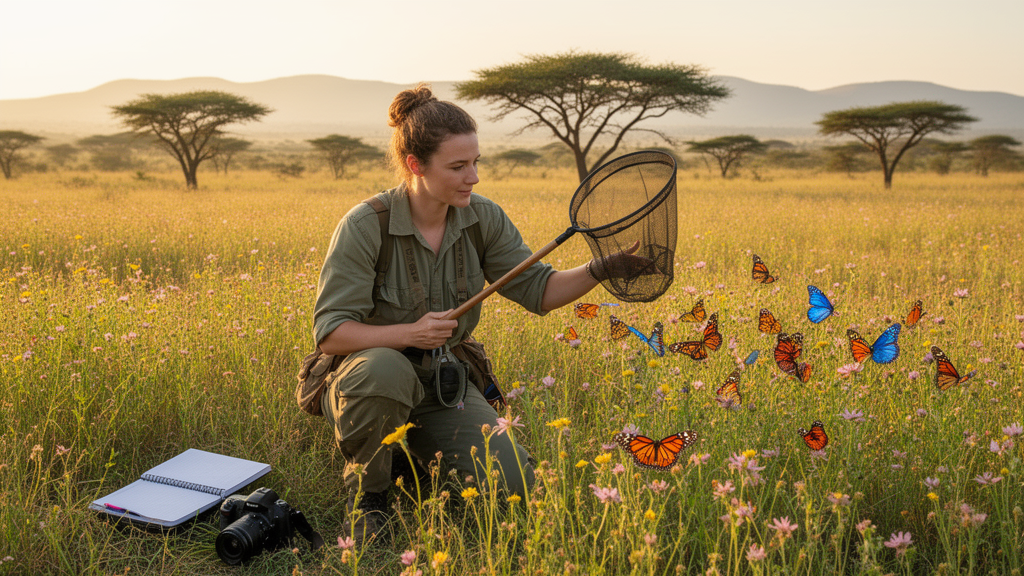
African butterflies are in trouble, and the world’s most powerful biodiversity treaties may be their best hope. A new review published in the journal BioRisk systematically examines how regional and international conservation conventions can be better aligned to protect the continent’s butterflies, which serve as essential pollinators and sensitive indicators of environmental change. The analysis reveals that while existing frameworks provide meaningful support, their effectiveness is constrained by resource limitations, data deficiencies, and a lack of butterfly-specific focus, prompting three key recommendations that could reshape conservation across Africa.
Butterflies occupy a unique position in the ecology of African tropical forests and grasslands. They pollinate diverse plant life, support sustainable agriculture and ecotourism, and carry cultural significance embedded in traditional knowledge. Their sensitivity to habitat degradation, pesticide use, and shifting climates makes them invaluable bioindicators, reflecting environmental changes long before they become obvious through other signals. When butterfly populations decline, they signal broader ecosystem distress that affects countless other organisms, including humans who depend on healthy environments for food, water, and economic stability.
The review, conducted through systematic searches of academic databases including ScienceDirect, Web of Science, and Google Scholar, combined with official convention resources, evaluated how seven major biodiversity conventions affect butterfly conservation in Africa. The Convention on Biological Diversity (CBD), adopted in 1992, emerged as the foundational framework. Its articles promote identifying and monitoring biodiversity, establishing in situ and ex situ conservation, encouraging sustainable use of biological resources, and fostering international cooperation. These provisions directly support butterfly conservation by creating legal and policy structures for integrating butterfly protection into broader biodiversity strategies.
The African Convention on the Conservation of Nature and Natural Resources (ACCNNR), adopted in 1968, offers a complementary regional framework. Although butterflies are not its explicit focus, the convention promotes sustainable resource use, soil and water conservation, and the establishment of protected areas, all of which indirectly benefit butterfly populations. Its guidance on national biodiversity policies can lead to stronger legal frameworks for butterfly conservation at the country level, while its emphasis on public awareness and community engagement builds local support for conservation efforts across the continent.
Climate change presents one of the most significant threats to African butterflies, and the UN Framework Convention on Climate Change (UNFCCC) provides mitigation tools that could prove crucial. Rising temperatures directly influence insect development, affecting growth rates, reproduction, and population dynamics. Altered rainfall patterns and increased frequency of extreme weather events impact butterfly populations and their host plants, leading to reduced body size, impaired flight capabilities, and decreased reproductive success. Climate-induced shifts in distribution and phenology have been observed across numerous butterfly species, and these changes can disrupt intricate ecological interactions, including insect-plant relationships and predator-prey dynamics, with cascading consequences for butterfly abundance and diversity.
The Convention on International Trade in Endangered Species (CITES) regulates the international butterfly trade, but the review identifies an urgent need for expanded species coverage. Analysis of 50,555 online transactions between 2020 and 2021 identified 3,767 traded species, seventeen times more than the 214 species recognized by the IUCN, demonstrating that most traded species currently lack monitoring or regulation. The trade involves long-distance transport averaging 4,814 kilometers from Global South source countries to Western buyers, with median prices of $6.75 per specimen representing significant local economic value. Without strengthened CITES interventions, this substantial but poorly monitored global trade network will continue threatening African butterfly populations.
The Ramsar Convention on Wetlands, established in 1971 as the first international treaty dedicated to wetland conservation, indirectly benefits butterflies through habitat protection and wise use practices. The review proposes that explicitly recognizing butterfly species as bioindicators within wetland ecosystems would enhance the convention’s contribution to butterfly conservation. Similarly, the World Heritage Convention, established in 1972, protects critical butterfly habitats by prioritizing natural areas with exceptional universal value. Several African World Heritage sites, including Virunga National Park in the Democratic Republic of the Congo and Bale Mountains National Park in Ethiopia, are crucial habitats for butterfly conservation. The Basel Convention on hazardous wastes indirectly contributes by preventing contamination of soil and water resources that butterflies depend on.
Success stories demonstrate the transformative power of aligned conventions. The Kavango-Zambezi Transfrontier Conservation Area (KAZA TFCA), established under the CBD and Ramsar Convention, spans Angola, Botswana, Namibia, Zambia, and Zimbabwe. Larger than Germany and Austria combined, this vast protected area features the Okavango Delta and Victoria Falls, protecting diverse habitats and promoting butterfly movement through reduced fragmentation. The Maloti-Drakensberg Transfrontier Conservation Area (MDTFCA), established under the CBD and recognized as a UNESCO World Heritage Site, spans Lesotho and South Africa. Its pronounced elevation changes create a range of microclimates supporting both high-altitude specialists and valley-dwelling butterflies, while collaborative monitoring programs foster improved research and understanding of butterfly populations within this unique ecosystem.
Despite these successes, significant challenges hinder the full effectiveness of biodiversity conventions for African butterfly conservation. Many African countries lack the financial and human resources needed to conduct thorough research, establish protected areas, or implement conservation programs. Monitoring the effectiveness of conservation efforts and enforcing regulations can be difficult, especially in vast and resource-limited landscapes. Conventions often lack species-specific focus and specific action plans for individual butterfly species, while habitat loss and degradation driven by land-use change, unsustainable resource extraction, climate change, and invasive species continue to disrupt breeding grounds, food plants, movement patterns, and genetic diversity. Limited data on African butterfly diversity and populations further hinders efforts to prioritize species for conservation or measure success.
To address these challenges, the review proposes three key recommendations. First, integrating butterfly-specific targets into National Biodiversity Strategies and Action Plans (NBSAPs) would create explicit policy commitments, including designating critical butterfly habitats and listing threatened species under CITES. Second, strengthening research capacity and enforcement mechanisms would address existing data gaps through standardized long-term monitoring programs aligned with CBD requirements, while training customs officials to identify and intercept high-risk species. Third, creating a Pan-African Butterfly Conservation Network would harmonize monitoring protocols, share best practices, and advocate for stronger alignment of international conventions. Additionally, promoting the use of butterflies as bioindicators in climate and land-use policies, including UNFCCC National Adaptation Plans and Ramsar site management strategies, would simultaneously enhance conservation efforts and support broader ecosystem protection objectives. By implementing these strategies, international biodiversity conventions can be more effectively aligned to address the unique conservation challenges facing African butterflies, ensuring their preservation for future generations.
Subject of Research: Aligning regional and international biodiversity conventions to benefit butterfly conservation in Africa: A review
Article Title: Aligning regional and international biodiversity conventions to benefit butterfly conservation in Africa: A review
Article References: Gebrenariam, G. H. (2025). Aligning regional and international biodiversity conventions to benefit butterfly conservation in Africa: A review. BioRisk, 23, 1-15. https://doi.org/10.3897/biorisk.23.141404
Image Credits: AI Generated
DOI: 10.3897/biorisk.23.141404
Keywords: butterfly conservation, biodiversity conventions, Africa, CITES, CBD, Ramsar Convention, climate change, bioindicators, Aligning, regional, international, biodiversity
Cite Scienmag News
Margaret Porter. (October 17, 2026). Aligning Africa’s biodiversity conventions could transform butterfly conservation. Scienmag. https://scienmag.com/aligning-africas-biodiversity-conventions-could-transform-butterfly-conservation/
Margaret Porter. "Aligning Africa’s biodiversity conventions could transform butterfly conservation." Scienmag, 17 October 2026, https://scienmag.com/aligning-africas-biodiversity-conventions-could-transform-butterfly-conservation/. Accessed 17 October 2026.
Margaret Porter. "Aligning Africa’s biodiversity conventions could transform butterfly conservation." Scienmag. October 17, 2026. https://scienmag.com/aligning-africas-biodiversity-conventions-could-transform-butterfly-conservation/


