

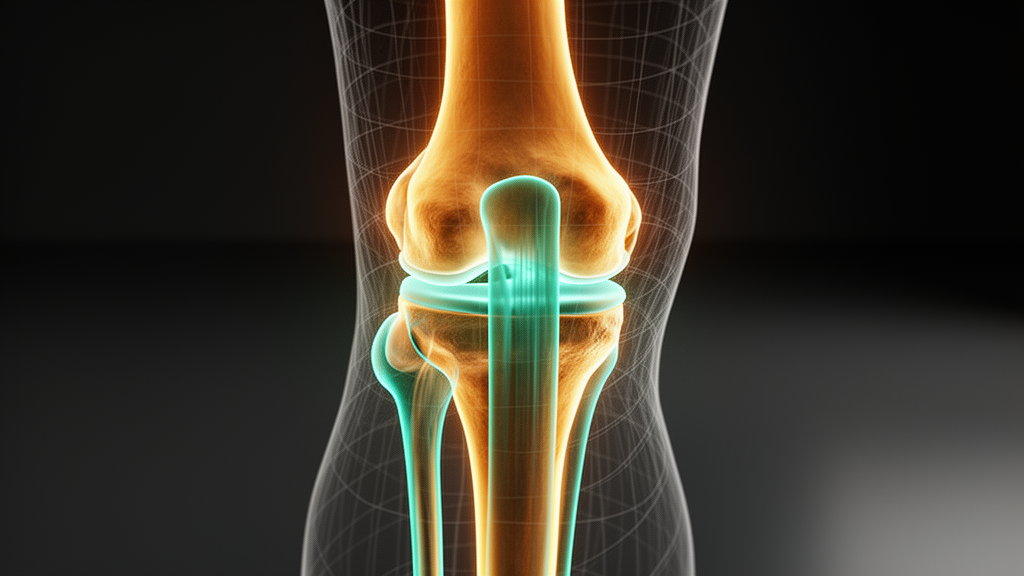
Knee osteoarthritis quietly reshapes the lives of hundreds of millions of older adults, turning simple walks into painful negotiations between cartilage, bone, and gravity. Exercise remains one of the few therapies that guidelines consistently endorse, yet the internal mechanics of how specific movements unload a degenerating joint have long remained hidden from view. Now a team of rehabilitation scientists in China has used finite element analysis to peer inside the arthritic knee during a novel exercise technique called neuromuscular joint facilitation, and their simulations reveal a striking biomechanical signature that sets this therapy apart from conventional resistance training.
The study, published in Frontiers in Rehabilitation Sciences, was led by Yu Qu and Ming Huo of Qilu Hospital of Shandong University and the University of Health and Rehabilitation Sciences in Qingdao, together with colleagues at Wangjing Hospital and other institutions. Neuromuscular joint facilitation, or NJF, is an exercise therapy rooted in kinesiology that blends the facilitatory elements of proprioceptive neuromuscular facilitation with deliberate intra-articular accessory motion. Unlike standard strengthening exercises, NJF applies coordinated resistance to both the proximal and distal tibia during knee movement, an arrangement its developers believe simultaneously mobilizes the joint and stimulates the surrounding neuromuscular system. Previous clinical trials had shown that NJF relieves knee pain, improves muscle strength, and enhances gait in patients with knee osteoarthritis, but no one had quantified what those resistances actually do to the menisci and ligaments inside the joint.
To answer that question, the researchers recruited six patients with knee osteoarthritis, four women and two men with a mean age of 69.2 years and a mean disease duration of five years. Four patients were classified as Kellgren-Lawrence grade I and two as grade II, indicating early-stage disease. Each participant performed three types of knee movement while a wireless inertial motion capture system recorded tibial rotation angles and a handheld dynamometer measured the external forces applied during the resisted conditions. The movement repertoire included active knee extension and flexion without resistance, distally single-resisted knee extension and flexion, and the NJF technique with its distinctive double-resisted pattern. Two movement patterns were tested for each condition: knee extension combined with lateral tibial rotation and knee flexion combined with medial tibial rotation.
The reliability of the motion capture measurements proved solid. Intraclass correlation coefficients for tibial rotation angles exceeded 0.75 across all six movement conditions, with P values below 0.05, meeting the threshold for good consistency established in the reliability literature. Standard errors of measurement ranged from 1.54 to 3.32 degrees, and minimal detectable changes ranged from 4.27 to 9.20 degrees. During NJF, knee extension with lateral rotation produced a mean tibial rotation of 12.18 degrees accompanied by proximal and distal resistances of 119.92 and 147.42 newtons respectively, while knee flexion with medial rotation generated 20.98 degrees of rotation with proximal and distal resistances of 118.92 and 139.75 newtons. These experimentally measured forces and angles became the loading inputs for the computational model, anchoring the simulations in real patient data rather than arbitrary assumptions.
Building the finite element model required a meticulous pipeline. The researchers imported raw CT and MRI data from one subject into Mimics 21.0 to create a three-dimensional mesh, refined the surfaces in Geomagic 2017, assembled the components in SolidWorks 2021, and ran the simulations in ANSYS 21.0. Material properties were assigned from published literature: cortical bone received a Young’s modulus of 12,000 megapascals, cartilage 5 megapascals, the meniscus 59 megapascals, and the cruciate and collateral ligaments between 48 and 116 megapascals. The team validated the model by applying a 134 newton posterior load to the femur to simulate the anterior drawer test, obtaining a maximum posterior tibial displacement of 3.79 millimeters and a maximum ACL stress of 24.11 megapascals, values consistent with previously published cadaveric and computational studies. Mesh convergence testing confirmed that stress variations remained below 5 percent across refinement schemes, and an overall mesh size of 4 millimeters with 0.5 millimeter refinement in critical regions was selected.
The simulations then compared stress distributions in the medial and lateral menisci, the medial and lateral collateral ligaments, and the anterior and posterior cruciate ligaments at flexion angles of 0, 30, 60, and 90 degrees. The results were unambiguous for the menisci. In the knee flexion with medial tibial rotation pattern, meniscal stress was highest during active knee flexion and lowest during NJF at every flexion angle tested. The same held true for the extension with lateral rotation pattern, where active knee extension produced the highest meniscal stress and NJF the lowest. At 0 degrees of flexion in the flexion pattern, for example, medial meniscal stress during active movement reached 0.33006 megapascals while NJF reduced it to 0.00065 megapascals, a reduction of several orders of magnitude. The lateral meniscus showed an equally dramatic drop, from 0.15733 megapascals during active flexion to 0.000221 megapascals during NJF.
Ligament stress told the opposite story. In the flexion with medial rotation pattern, the collateral and cruciate ligaments consistently showed their lowest stress during non-resisted movement and their highest stress during NJF at all flexion angles. At 0 degrees, ACL stress during NJF reached 2.9043 megapascals compared with 1.652 megapascals during active flexion, and PCL stress climbed from 1.2666 to 1.3382 megapascals. In the extension pattern, ligament responses proved more angle-dependent, with NJF reducing peak stress for most ligaments between 30 and 60 degrees of flexion while providing significant mechanical stimulation near full extension. The researchers attribute this load redistribution to the geometry of NJF resistance. By applying forces at approximately 30 degrees to the tibial long axis on both the proximal and distal tibia, the technique generates an axial traction component that counteracts joint compression, widens the joint space, and relieves pressure within the joint capsule, while a transverse rotational component drives tibial rotation and distributes shear forces more evenly across the meniscal surfaces.
The authors frame this as a directional load redistribution rather than simple unloading. Axial traction relieves high-load regions within the joint, particularly the menisci and articular cartilage, while the dual resistance transmits moderate tensile stimulation to the peri-articular ligaments. Because knee ligaments act as tension receptors with important neurosensory functions, the moderate increase in ligament loading during NJF may enhance afferent proprioceptive input and facilitate coordinated peri-articular muscle activation, potentially improving dynamic joint stability. The researchers caution that this proprioceptive hypothesis was not directly measured in the study and would require electrophysiological and functional assessments to confirm. Nonetheless, the computational findings suggest a biomechanical profile for NJF that differs qualitatively from traditional resistance training, which loads the meniscus more heavily while stimulating the ligaments less.
The study carries important limitations that the authors acknowledge candidly. The finite element model was reconstructed from a single subject’s imaging data, so all stress distributions reflect that individual’s anatomy, cartilage thickness, ligament insertions, and material properties rather than the entire cohort. Soft tissues were modeled as linear elastic, isotropic, and homogeneous materials, simplifying their known viscoelastic and anisotropic behavior. Active muscle forces were not incorporated, excluding the quadriceps, hamstrings, and gastrocnemius that modulate joint contact mechanics in vivo. The analysis was static or quasi-static, missing the dynamic knee mechanics of real rehabilitation, and no long-term clinical intervention was conducted. Absolute stress values should therefore be interpreted as comparative indices for ranking interventions rather than true physiological tissue loads, and the findings should not be generalized to all patients with knee osteoarthritis without validation using additional subject-specific models.
Despite these constraints, the work opens a compelling window into how manual resistance techniques reshape internal joint mechanics. For a condition projected to surge by nearly 75 percent by 2050 and currently disabling roughly 365 million people worldwide, any exercise that can shift load away from the meniscus while moderately stimulating the ligaments deserves close scrutiny. The researchers call for multicenter, large-sample, randomized controlled trials to verify whether these computational differences translate into meaningful improvements in patient-reported outcomes, physical function, or disease progression. Future studies should also integrate subject-specific musculoskeletal modeling to incorporate active muscle forces and co-contraction patterns, enabling a more complete simulation of in vivo joint loading during NJF performance. Until then, the simulations stand as a preliminary theoretical basis, suggesting that the hidden mechanics of a carefully angled resistance may hold the key to protecting the arthritic knee from within.
Subject of Research: Exploring the biomechanical mechanisms of neuromuscular joint facilitation intervention in patients with knee osteoarthritis: a finite element analysis
Article Title: Exploring the biomechanical mechanisms of neuromuscular joint facilitation intervention in patients with knee osteoarthritis: a finite element analysis
Article References: Qu, Y., Xie, H., Wang, P., Zhang, X., Liu, S., & Huo, M. (2026). Exploring the biomechanical mechanisms of neuromuscular joint facilitation intervention in patients with knee osteoarthritis: a finite element analysis. Frontiers in Rehabilitation Sciences, 7, Article 1945210. https://doi.org/10.3389/fresc.2026.1945210
Image Credits: AI Generated
DOI: 10.3389/fresc.2026.1945210
Keywords: Exploring, biomechanical, mechanisms, neuromuscular, joint, facilitation, intervention, patients, knee, osteoarthritis, finite, element
Cite Scienmag News
Scienmag. (October 17, 2026). Hidden Biomechanics of a New Knee Therapy Revealed by Finite Element Simulation. https://scienmag.com/hidden-biomechanics-of-a-new-knee-therapy-revealed-by-finite-element-simulation/
Scienmag. "Hidden Biomechanics of a New Knee Therapy Revealed by Finite Element Simulation." Scienmag, 17 October 2026, https://scienmag.com/hidden-biomechanics-of-a-new-knee-therapy-revealed-by-finite-element-simulation/. Accessed 17 October 2026.
Scienmag. "Hidden Biomechanics of a New Knee Therapy Revealed by Finite Element Simulation." Scienmag. October 17, 2026. https://scienmag.com/hidden-biomechanics-of-a-new-knee-therapy-revealed-by-finite-element-simulation/


