


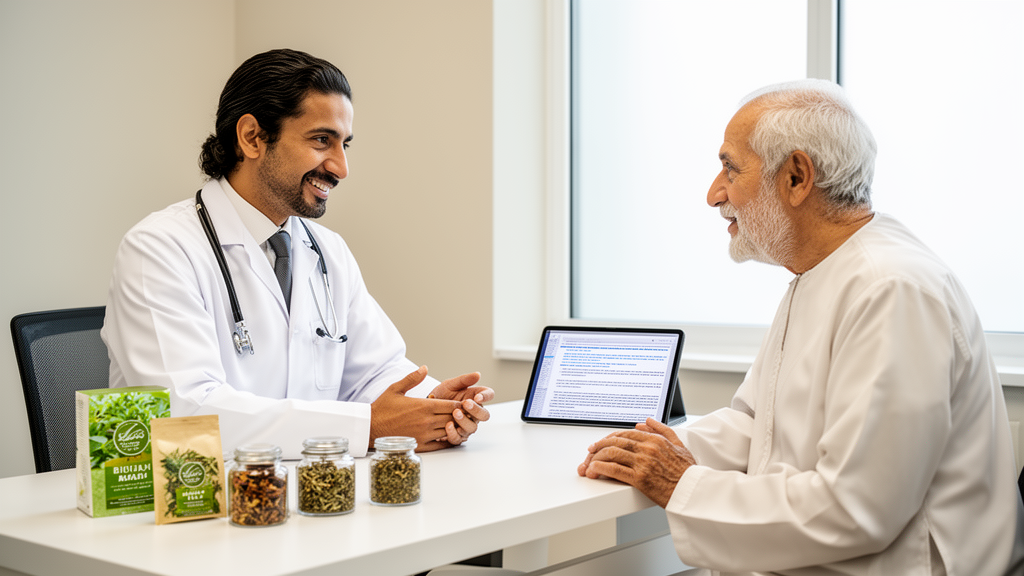
Complementary and alternative medicine, once dismissed by mainstream clinicians as fringe practice, is now quietly woven into the daily routines of family physicians across Saudi Arabia. A new exploratory cross-sectional study published in Frontiers in Health Services reveals that nearly four out of five family physicians surveyed recommend CAM therapies to their patients, with meditation, herbal supplements, spiritual healing, and cupping topping the list of preferred modalities. The findings, drawn from 62 physicians working in primary healthcare centres and clinics between August 2025 and January 2026, offer one of the most recent snapshots of how frontline doctors in the Kingdom navigate the intersection of conventional medicine and deeply rooted cultural traditions.
The research team, led by Safaa M. Alsanosi of Umm Al-Qura University in Makkah alongside colleagues from Batterjee Medical College in Jeddah, administered structured interviewer-led questionnaires to family physicians actively engaged in primary care practice. Participants ranged from general practitioners to consultants, with the majority holding senior consultant positions. The gender distribution was exactly equal, and most respondents fell between 36 and 45 years of age. Only about one-third reported receiving any formal training in CAM, while more than half admitted following CAM-related content on social media, a figure that underscores the informal channels through which much clinical exposure to these therapies still occurs.
Knowledge of CAM among the surveyed physicians was classified as moderate overall. Most respondents knew what CAM stands for and had heard of it previously, yet over half rated their own knowledge of specific therapies as limited. When asked whether clear national guidelines for CAM exist in Saudi Arabia, nearly half expressed uncertainty, revealing a regulatory blind spot that persists despite the Kingdom’s substantial investments in healthcare infrastructure and medical education. Peer-reviewed journals emerged as the most frequently cited source of CAM information, followed by the internet, while structured educational pathways such as health databases, books, and formal courses were relied upon by comparatively few physicians.
Attitudes toward CAM were predominantly positive. A striking 79 percent supported the integration of evidence-based CAM into conventional care, and 82.2 percent endorsed the inclusion of CAM education in undergraduate medical curricula. Nearly two-thirds agreed that physicians knowledgeable in CAM benefit their patients, and over half viewed herbal products as a valid form of drug therapy. Yet the picture was not uniformly enthusiastic: 51.6 percent perceived CAM as a potential public health concern, suggesting a measured critical perspective rather than uncritical acceptance. The researchers interpret this apparent contradiction as evidence that physicians may differentiate between regulated, evidence-informed CAM practices and those that remain unregulated or insufficiently evaluated.
Clinical practice patterns revealed a selective approach that favoured culturally familiar therapies. Meditation and relaxation techniques were recommended by 64.5 percent of physicians, herbal and dietary supplements by 59.7 percent, spiritual healing and prayers by 58.1 percent, and cupping by 53.2 percent. By contrast, therapies less embedded in local clinical culture, such as acupuncture, chiropractic care, homeopathy, and aromatherapy, were recommended by only a small minority. The researchers note that this selective familiarity likely reflects cultural exposure and patient demand rather than evidence-based clinical competence, and they caution that such familiarity may foster unsubstantiated assumptions about safety or efficacy.
One of the study’s most technically significant findings concerns the relationship between knowledge and practice. Physicians who had received previous formal CAM training showed a higher proportion of satisfactory knowledge compared to those without training exposure, a difference that reached statistical significance at p = 0.049. More notably, higher levels of CAM knowledge were significantly associated with recommending CAM to a greater proportion of patients, with the association measured at p = 0.012. Knowledge category was also linked to the types of illness physicians considered suitable for CAM, with those holding satisfactory knowledge more frequently recognising its applicability to physical conditions. The authors stress that these exploratory cross-sectional associations cannot establish causality, as physicians with greater pre-existing interest in CAM may have been more likely to seek training in the first place.
The study also examined counselling confidence regarding commonly used herbs, revealing a hierarchy shaped by cultural prevalence. Ginger emerged as the best-understood herb, with 59.7 percent of participants reporting knowledge of its medicinal uses and comfort counselling patients about its benefits and risks. Garlic and cinnamon followed closely, each with 54.8 percent reporting counselling confidence. Black seed and turmeric also showed relatively high confidence levels. Conversely, herbs such as echinacea, ginseng, and ashwagandha, despite their growing global popularity, were associated with substantially lower counselling confidence, with over half of participants reporting a lack of knowledge about these botanicals. This pattern suggests that medical education in the region has not kept pace with the expanding global botanical supplement market.
Encouragingly, most physicians reported discussing CAM use with their patients, and 80.6 percent addressed the potential harmful effects of specific CAM therapies, indicating responsible clinical engagement. This is particularly important in Saudi Arabia, where CAM use is widespread and frequently occurs alongside conventional treatment. The high frequency of patient CAM use reported by physicians, with 41.9 percent describing their patients as frequent users, further underscores the need for active physician involvement to prevent harmful interactions and support informed decision-making. Over half of the surveyed physicians believed their patients use CAM more than conventional medicine, a perception that amplifies the clinical relevance of these conversations.
The researchers emphasise that evidence-based CAM integration should not be equated with unconditional acceptance. Safe integration requires critical appraisal of the evidence, appropriate clinical assessment, documentation, safety monitoring, and ongoing evaluation to minimise potential risks, including delayed conventional treatment, adverse effects, and herb–drug interactions. Herbal products and supplements, in particular, may pose risks such as inconsistent dosing, contamination, and pharmacological interactions with conventional medicines. The study did not assess the appropriateness, safety, or clinical outcomes of physicians’ CAM recommendations, and the authors caution that the findings should not be interpreted as evidence that CAM training enhances patient outcomes.
Looking forward, the research team calls for larger, multicentre studies with representative samples and validated, objective measures of CAM knowledge and practice. They propose competency-based undergraduate and continuing professional development programs supported by evidence-based clinical resources and standardised documentation, with particular emphasis on developing skills in critically appraising CAM evidence, identifying herb–drug and supplement–drug interactions, recognising adverse effects and contraindications, and conducting medication reconciliation. The cultural and religious context of Saudi Arabia, they note, exerts a significant influence on CAM practices, especially herbal remedies, cupping, and spiritual healing, and culturally sensitive counselling should acknowledge patients’ beliefs while upholding evidence-based practice and prioritising patient safety. The study, approved by the Biomedical Research Ethics Committee at Umm Al-Qura University and reported in accordance with the STROBE statement, represents an incremental but contextually valuable contribution to the growing international literature on how primary care physicians navigate the complex terrain between conventional medicine and the complementary therapies their patients increasingly demand.
Subject of Research: Health Services Research
Article Title: Family physicians’ knowledge, attitudes, and practices regarding complementary and alternative medicine in Saudi Arabia: an exploratory cross-sectional study
Article References: Alsanosi, S. M., Alshanberi, A. M., Alqathama, A., Almech, M., Thalib, H. I., Abuageelah, B. M., Manzoor, A., Alruways, R. H. M., Alhindi, Y., & Alshareef, M. H. (2026). Family physicians’ knowledge, attitudes, and practices regarding complementary and alternative medicine in Saudi Arabia: an exploratory cross-sectional study. Frontiers in Health Services, 6, Article 1837145. https://doi.org/10.3389/frhs.2026.1837145
Image Credits: AI Generated
DOI: 10.3389/frhs.2026.1837145
Keywords: complementary and alternative medicine, family physicians, Saudi Arabia, primary care, herbal medicine, cross-sectional study, medical education, patient safety, Family, physicians, knowledge, attitudes
Cite Scienmag News
Ophelia Keating. (October 17, 2026). Family Physicians in Saudi Arabia Embrace Evidence-Based Complementary Medicine, Study Finds. Scienmag. https://scienmag.com/family-physicians-in-saudi-arabia-embrace-evidence-based-complementary-medicine-study-finds/
Ophelia Keating. "Family Physicians in Saudi Arabia Embrace Evidence-Based Complementary Medicine, Study Finds." Scienmag, 17 October 2026, https://scienmag.com/family-physicians-in-saudi-arabia-embrace-evidence-based-complementary-medicine-study-finds/. Accessed 17 October 2026.
Ophelia Keating. "Family Physicians in Saudi Arabia Embrace Evidence-Based Complementary Medicine, Study Finds." Scienmag. October 17, 2026. https://scienmag.com/family-physicians-in-saudi-arabia-embrace-evidence-based-complementary-medicine-study-finds/


