


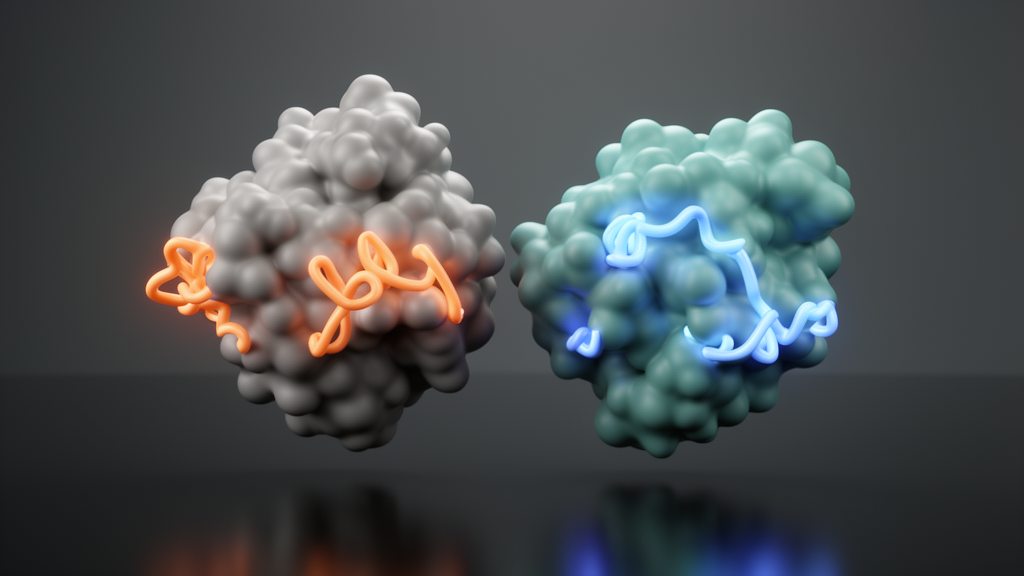
The clinical approval of sotorasib and adagrasib marked a turning point in the treatment of KRAS G12C–driven cancers, but it also created a natural experiment in evolutionary pressure. When a covalent inhibitor occupies the switch II pocket and locks the protein in its inactive, GDP-bound conformation, any tumor cell that can restore nucleotide cycling or disrupt the drug’s interaction network gains a decisive growth advantage. The secondary mutations examined in this study—Y96C, Y96S, and Y96D—sit directly within the binding site yet leave the covalent attachment chemistry at cysteine 12 untouched. This is a subtle but important distinction: rather than eliminating the reactive handle that inhibitors depend on, these substitutions reshape the local structural environment around the pocket, suggesting that resistance here is fundamentally a problem of conformational dynamics and solvent organization rather than of lost covalent reactivity.
Tyrosine 96 occupies a strategically important position in the switch II pocket. Its aromatic side chain participates in the network of noncovalent contacts that stabilize inhibitor binding alongside histidine 95 and glutamine 99. Replacing tyrosine with the smaller, differently polar cysteine or serine, or with the flexible and uncharged aspartate in the case of Y96D, removes a bulky hydrophobic surface and alters the hydrogen-bonding landscape of the pocket interior. Clinical and structural studies of these mutants have shown that the resulting resistance can manifest in different ways—some substitutions appear to destabilize the inactive conformation that inhibitors preferentially recognize, while others seem to interfere with specific drug contacts or shift the equilibrium between conformational states. What has been difficult to establish is whether these distinct biochemical changes converge on a shared physical signature that could be detected without the drug present at all.
This question motivated the apo-state design of the study. Most computational investigations of resistance simulate the mutant protein in complex with the inhibitor, which naturally captures the direct steric and electrostatic consequences of the substitution but conflates them with drug-specific effects. By simulating the unbound protein, the researchers asked a different question: does the resistant mutant, before any inhibitor arrives, already exhibit measurable differences in how its structure moves, how its residues interact, and how its surfaces are exposed to solvent? If such intrinsic signatures exist, they would represent properties of the mutant protein itself—properties that any inhibitor targeting the switch II pocket would have to contend with, regardless of its chemical scaffold. This framing also carries a practical implication for drug design: a compound optimized against the apo-state conformational ensemble of a resistant mutant may retain activity even as the mutant continues to cycle between nucleotide states.
The methodological choices in this work reflect a growing awareness of the statistical pitfalls inherent in molecular dynamics–based machine learning. MD simulations generate thousands of correlated snapshots, and treating each frame as an independent observation can dramatically inflate apparent model performance. The system-independent mixed held-out validation scheme addresses this by ensuring that the held-out data come from simulation systems not represented during training, testing whether the learned decision boundary generalizes across mutant identities rather than merely memorizing trajectory-specific patterns. Similarly, the clustering-aware statistical approaches used in the univariate analysis acknowledge that conformers sampled from the same trajectory are not independent draws. These safeguards matter because the alternative—naive frame-level cross-validation—can produce classifiers that appear highly accurate while capturing nothing more than the idiosyncrasies of individual simulation runs.
The distinction the authors draw between mutant-identity-specific variation and shared resistance phenotype deserves particular attention. When three different mutants—G12C/Y96C, G12C/Y96S, and G12C/Y96D—are compared against treatment-sensitive systems, some features may separate one mutant from the others simply because of the unique chemistry of that substitution. Such features are real but not generalizable: they would not predict resistance in a newly discovered secondary mutant. Features that are statistically consistent across all three resistant mutants, by contrast, are more likely to reflect a convergent physical consequence of resistance at the switch II site. The cross-referencing strategy—using machine learning feature importance to nominate candidate features and within-resistant-group variability testing to filter them—operationalizes this distinction in a way that could be adapted to other resistance contexts where multiple mutants of the same target are available.
The specific residues that emerged as signature carriers are informative when mapped onto KRAS structure and function. Glutamate 62 lies within the switch II region, a segment whose conformational behavior is central to both nucleotide exchange and effector engagement. Histidine 95 directly lines the switch II pocket exploited by covalent inhibitors, forming part of the interaction network that anchors sotorasib and adagrasib. Methionine 72, also implicated through its fluctuation profile, sits in proximity to the nucleotide-binding region and contributes to the hydrophobic core dynamics of the G-domain. That solvent-accessible surface area variability at E62 and H95, root mean square fluctuation at M72 and H95, and Lennard-Jones 1,4 interaction energy collectively discriminate resistant from sensitive systems suggests that resistance is encoded not in a single static structural change but in the dynamic behavior of a connected set of residues spanning the switch II machinery.
Solvent exposure deserves particular emphasis as a descriptor class. Water molecules in and around a binding pocket influence both the thermodynamics of ligand binding and the conformational preferences of the protein. A residue whose solvent accessibility fluctuates markedly across a trajectory may indicate a pocket that breathes differently in the mutant background—opening transiently in ways that could admit or expel water, destabilize bound ligands, or alter the energetic cost of adopting the inactive conformation. Because the simulations were performed in the apo state, these solvent-exposure signatures cannot be artifacts of ligand-induced water displacement; they are intrinsic properties of the mutant protein in solution. This makes them candidate targets for experimental validation, for example through solvent relaxation measurements, hydrogen-deuterium exchange mass spectrometry, or high-resolution crystallography of apo-state mutant proteins.
The energetic descriptor that survived the feature filtering—Lennard-Jones 1,4 interaction energy—captures the strength of dispersion and repulsion interactions between atoms separated by three covalent bonds. Changes in this quantity at specific residue pairs can signal subtle rearrangements of local packing that would be difficult to detect by visual inspection of average structures. Its consistency across the three resistant mutants suggests that altered van der Waals packing near the switch II region may be a common physical consequence of tyrosine 96 substitutions, plausibly reflecting the loss of the tyrosine aromatic ring and its replacement by smaller or differently shaped side chains that pack differently against neighboring residues.
Root mean square fluctuation, the third descriptor class in the signature set, measures per-residue mobility averaged over the trajectory. Elevated or reduced fluctuation at M72 and H95 in resistant mutants indicates that the local flexibility of the switch II neighborhood is altered even in the absence of drug. This connects to a broader theme in allosteric protein pharmacology: mutations distant from a binding site can remodel its dynamic landscape, and conversely, mutations within a site can propagate their effects through the network of coupled motions that define protein function. The KRAS switch II region is mechanically coupled to the nucleotide-binding P-loop and to the switch I loop that engages effectors, so changes in switch II dynamics could in principle influence the delicate equilibrium between inactive and active conformational states that determines signaling output.
It is worth situating these findings within the broader landscape of KRAS drug discovery. The field has moved rapidly from the long-standing perception of KRAS as undruggable to a portfolio of clinical agents and pipeline candidates targeting multiple mutant alleles and multiple conformational states. Inhibitors of the active, GTP-bound form and degraders based on proteolysis-targeting chimeras represent complementary strategies that may be less susceptible to switch II resistance mutations. Yet the clinical reality is that patients treated with sotorasib or adagrasib will develop resistance, and the specific secondary mutations that arise—Y96D among the most frequently reported—will determine which subsequent therapies are viable. A framework that can identify intrinsic conformational signatures of resistance before a drug is even designed against a given mutant could shorten the development cycle for second-generation inhibitors.
The proof-of-concept nature of the work should be weighed against its limitations. The study examined a small number of mutant systems, all sharing the G12C background and all involving substitutions at tyrosine 96. Whether the identified signatures generalize to resistance mutations at other positions—such as G13D, R68M, A59S, or Q99L—or to resistance arising in non-G12C backgrounds remains an open question that the authors themselves flag as requiring validation in additional structurally independent mutant systems. Furthermore, the apo-state design, while methodologically clean, means the findings speak to correlates of resistance rather than to the mechanistic details of how any particular inhibitor fails against a particular mutant. Bridging that gap will require paired simulations of bound and unbound states, ideally complemented by experimental structural data.
Nevertheless, the convergence of machine learning feature importance with clustering-aware statistical testing offers a template that extends beyond KRAS. Targeted cancer therapies across many protein families face mutation-induced resistance, and the combinatorial space of possible secondary mutations is too large to characterize exhaustively by experiment. A workflow that simulates candidate mutants in the apo state, extracts physically interpretable descriptors, and applies rigorous validation to identify convergent signatures could prioritize which resistance mutations warrant early experimental attention and which structural features next-generation inhibitors should be designed to accommodate. In this sense, the study contributes not only specific residue-level hypotheses about KRAS resistance but also a methodological blueprint for interrogating resistance phenotypes through the lens of protein dynamics and interpretable machine learning.
Subject of Research: KRAS drug resistance
Article Title: Integrating molecular dynamics and machine learning to identify potential apo-state conformational and solvent-exposure signatures associated with resistant KRAS mutants
Article References: Mizgalska, K., Urbaniak, K., Imbody, D. J., Haura, E. B., Guida, W. C., Branciamore, S., & Karolak, A. (2026). Integrating molecular dynamics and machine learning to identify potential apo-state conformational and solvent-exposure signatures associated with resistant KRAS mutants. Frontiers in Chemical Biology, 5, Article 1900407. https://doi.org/10.3389/fchbi.2026.1900407
Image Credits: AI Generated
DOI: 10.3389/fchbi.2026.1900407
Keywords: Integrating, molecular, dynamics, machine, learning, identify, potential, apo-state, conformational, solvent-exposure, signatures, associated
Cite Scienmag News
Teresa Odom. (October 17, 2026). Machine learning reveals hidden conformational signatures of resistant KRAS mutants. Scienmag. https://scienmag.com/machine-learning-reveals-hidden-conformational-signatures-of-resistant-kras-mutants/
Teresa Odom. "Machine learning reveals hidden conformational signatures of resistant KRAS mutants." Scienmag, 17 October 2026, https://scienmag.com/machine-learning-reveals-hidden-conformational-signatures-of-resistant-kras-mutants/. Accessed 17 October 2026.
Teresa Odom. "Machine learning reveals hidden conformational signatures of resistant KRAS mutants." Scienmag. October 17, 2026. https://scienmag.com/machine-learning-reveals-hidden-conformational-signatures-of-resistant-kras-mutants/


