


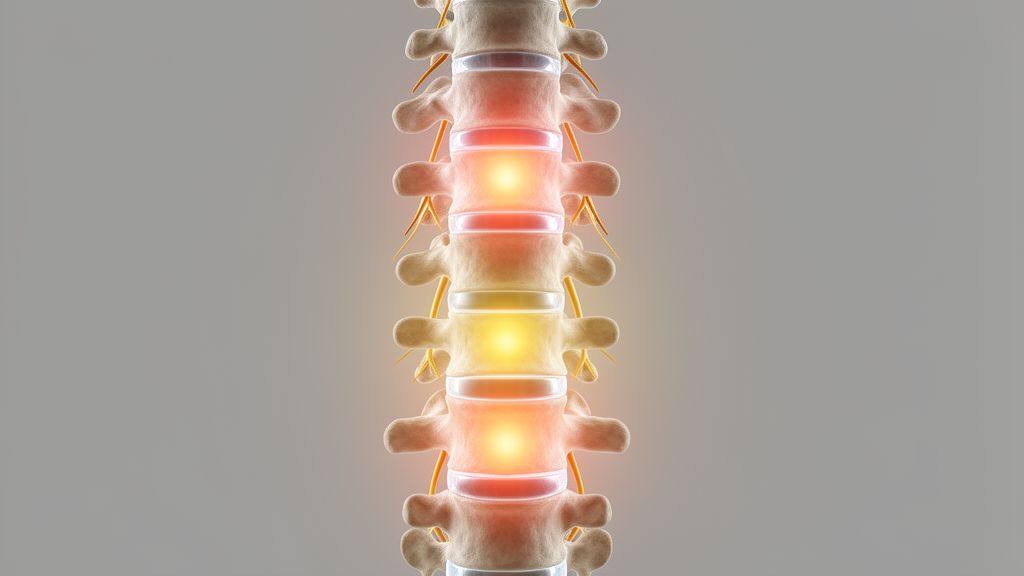
Chronic low back pain is one of the most stubborn and disabling conditions in modern medicine, affecting hundreds of millions of people worldwide and defying the simple idea that it stems from a single damaged structure. Now a new synthesis published in Frontiers in Molecular Neuroscience argues that the pain may arise not from one anatomical culprit but from up to four distinct tissue microenvironments in the lumbar spine, each with its own sensory biology, molecular signals, and capacity for remodeling. The review, led by Yizhuan Huang and Han Wang of the Affiliated Sports Hospital of Chengdu Sport University in China, reframes peripheral pain generation in chronic low back pain as a set of tissue-specific nociceptive niches rather than a uniform process, a conceptual shift with potentially viral implications for how the condition is diagnosed and treated.
The four candidate niches are the intervertebral disc, the vertebral endplate, the thoracolumbar fascia, and the paraspinal muscles, particularly the lumbar multifidus. These compartments differ markedly in their baseline innervation, cellular composition, extracellular environment, and responses to mechanical and inflammatory stress. The authors introduce the term nociceptive niche to describe a local tissue microenvironment in which sensory afferents interact with resident, immune, vascular, or skeletal cells in ways that generate or sustain nociceptive input. Crucially, they also distinguish sensory remodeling, meaning structural or persistent phenotypic changes in sensory afferents or end organs, from sensitization, which refers primarily to increased afferent responsiveness or excitability. This distinction matters because the two processes can coexist, diverge, or compensate for one another across tissues.
The intervertebral disc provides the clearest and most established example of pathological sensory expansion. In the healthy adult disc, neural fibers are concentrated largely in the outer annulus fibrosus, while the inner annulus and nucleus pulposus remain sparsely innervated and effectively protected from nociceptive input. Degeneration disrupts this spatial organization. Human histological studies dating back to the late 1990s identified nerve fibers extending into normally poorly innervated inner disc regions in patients with chronic back pain, and subsequent analyses linked this abnormal ingrowth to local nerve growth factor expression and TrkA-positive fibers, often in close association with invading microvessels. Conditioned medium from degenerative human nucleus pulposus promotes dorsal root ganglion neurite extension and substance P expression in vitro, and blocking nerve growth factor suppresses this neurite growth, supporting an NGF-TrkA neurotrophic axis through which degeneration renders the inner disc permissive to nociceptive ingrowth.
Inflammation and vascular invasion are tightly coupled to this neural remodeling. Vascular endothelial growth factor A-producing macrophages promote disc angiogenesis and sensory innervation, and inhibiting this macrophage phenotype reduces neurovascular remodeling and degeneration-associated pain in experimental models. Disc injury can also increase NGF and TrkA expression, together with CGRP, substance P, interleukin-1 beta, and interleukin-6, in both injured and adjacent uninjured discs, suggesting that multisegmental afferents and neurogenic inflammation may extend nociceptive signaling beyond the primary lesion. Changes extend to the sensory neurons themselves. Disc injury increases oxidative stress and the expression of TRPV1, CGRP, and substance P in the dorsal root ganglion, while single-nucleus transcriptomic analysis of experimental chronic discogenic pain identifies persistent changes in pain- and mechanosensation-associated genes including Scn9a, Piezo2, Fstl1, and Ngfr. Discogenic pain may therefore evolve from local neurotrophic and neurovascular remodeling toward a broader state of persistent peripheral sensory neuron plasticity.
The vertebral endplate differs fundamentally because it lies within an already innervated osteochondral and intraosseous compartment. Human anatomical studies demonstrate PGP9.5-positive nerve fibers within the vertebral body and central endplate region, frequently accompanying intraosseous vessels and connecting with the basivertebral nerve pathway. In cadaveric lumbar specimens, endplate pathologies were more frequently and extensively innervated than disc pathologies, although the clinical pain status of these tissues could not be determined. Bone remodeling appears central to this niche. In aged mice and models of lumbar instability, osteoclast activity generates porous endplates and promotes CGRP-positive sensory innervation, with osteoclast-derived Netrin-1 stimulating sensory nerve growth and elevated prostaglandin E2 contributing to spinal hypersensitivity. Prostaglandin E2 acting through the EP4 receptor further enhances TRPV1-dependent dorsal root ganglion excitability, and pharmacological disruption of this pathway reduces pain-related responses.
Recent work adds a striking mechanically driven nerve-tissue feedback loop at the endplate. Excessive mechanical stress activates Piezo2 in dorsal root ganglion sensory neurons and increases CGRP release. CGRP then acts through RAMP1 on cartilage endplate cells and, together with mechanical stress, activates nuclear factor kappa B signaling, increasing interleukin-1 beta and interleukin-6 production. These inflammatory signals can in turn further sensitize the sensory neurons, creating a bidirectional mechanical-neuroinflammatory cycle. Inhibition of Piezo2 or CGRP signaling attenuates pain-related behavior and endplate inflammation in this experimental setting. Endplate injury can also increase dorsal horn substance P and activate spinal microglial and astrocytic responses, linking peripheral pathology to spinal amplification. The key unresolved issue, the authors stress, is not whether endplates can be innervated, but which structural endplate abnormalities acquire the capacity to sustain nociceptive signaling.
The thoracolumbar fascia represents a third, distinct form of sensory pathology because it already possesses an established sensory network under physiological conditions. Histological studies demonstrate sensory innervation of the fascia in both rats and humans, with quantitative analyses identifying CGRP- and substance P-positive free nerve endings consistent with a nociceptive phenotype. Fascial nociception is therefore more plausibly driven by sensitization and remodeling of pre-existing afferents than by de novo neural invasion. In rats, experimental inflammation of the fascia causes layer-specific redistribution of sensory innervation and significantly increases the density of substance P-positive fibers despite relatively little change in overall innervation density, while lumbar dorsal horn neurons show increased spontaneous activity and responsiveness under similar conditions, linking altered fascial input to spinal sensitization. Human experimental studies confirm the fascia can generate substantial nociceptive input: hypertonic saline stimulation produces prolonged and spatially extensive pain, and high-frequency electrical stimulation can induce long-term potentiation-like pain amplification, with direct comparisons showing greater pain intensity, duration, and radiation after fascial stimulation than after multifidus stimulation under some conditions.
Paraspinal muscle remains the emerging and least well-defined niche. Human biopsy and molecular studies identify degeneration, inflammation, reduced vascularity, fibrosis, fatty infiltration, and altered transcriptional programs in lumbar pathology, creating an inflammatory-fibrotic microenvironment capable of influencing afferent activity, but these findings do not establish chronic nociceptor sprouting or phenotypic switching. Hypertonic saline injection into the multifidus evokes local and radiating low back pain, though generally with smaller magnitude and spatial spread than comparable fascial stimulation. A distinct sensory component involves muscle spindles and should not be conflated with nociception. In a large-animal model of disc degeneration, multifidus muscle spindles developed thicker connective-tissue capsules with increased collagen I and III expression, providing direct evidence of structural remodeling of a proprioceptive sensory organ, and subsequent targeted multifidus activation reduced spindle capsule thickness and collagen I accumulation, indicating this remodeling is at least partly modifiable. Whether these proprioceptive changes couple to nociceptive circuitry remains unproven.
Across all four tissues, recurring neurotrophic, inflammatory, neuropeptide, and mechanosensory mediators indicate molecular overlap, but the authors are careful to note that shared mediators do not establish functional convergence of tissue-specific afferents within common sensory circuits. The dorsal root ganglion and spinal dorsal horn are therefore considered candidate sites of downstream integration rather than proven convergence nodes. Evidence remains compartment-specific: disc studies support neurovascular ingrowth and dorsal root ganglion molecular plasticity, endplate models provide causal evidence for osteoclast-sensory signaling and Piezo2-CGRP-dependent feedback, fascial inflammation alters afferent organization and sensitizes dorsal horn neurons, and paraspinal muscle studies primarily demonstrate inflammatory-fibrotic pathology and spindle remodeling rather than a defined nociceptor circuit. Adaptive immune mechanisms may also contribute, as a mouse disc-injury model showed B-cell germinal-center formation and pronociceptive antibody production accompanying chronic nociceptive sensitization.
The review ultimately proposes a dynamic multi-niche model with explicit, testable predictions that could reshape clinical practice. An active niche should show concordance among tissue pathology, a tissue-linked sensory or molecular signature, and the pain phenotype, whereas incidental degeneration should lack this concordance. If tissue contributions shift over time, longitudinal changes in niche-linked biomarkers, provocation responses, or targeted-intervention responses should track symptoms more closely than static imaging alone. True circuit convergence would predict that selective stimulation or tracing of different lumbar tissues recruits partially overlapping dorsal root ganglion or dorsal horn neuronal populations, while absence of such overlap would support parallel tissue-specific circuits. Future spatial transcriptomic, longitudinal, and epigenomic studies may enable molecular definition of active pain-generating states, distinguishing biologically active nociception from structural degeneration and opening the door to mechanism-guided treatment for the millions living with chronic low back pain.
Subject of Research: Tissue-specific peripheral sensory remodeling in chronic low back pain: established and emerging nociceptive niches
Article Title: Tissue-specific peripheral sensory remodeling in chronic low back pain: established and emerging nociceptive niches
Article References: Huang, Y., & Wang, H. (2026). Tissue-specific peripheral sensory remodeling in chronic low back pain: established and emerging nociceptive niches. Frontiers in Molecular Neuroscience, 19, Article 1972635. https://doi.org/10.3389/fnmol.2026.1972635
Image Credits: AI Generated
DOI: 10.3389/fnmol.2026.1972635
Keywords: Tissue-specific, peripheral, sensory, remodeling, chronic, back, pain, established, emerging, nociceptive, niches, scientific research
Cite Scienmag News
Ophelia Keating. (October 17, 2026). Chronic Low Back Pain May Not Come From One Tissue, But From Four Distinct Pain Niches. Scienmag. https://scienmag.com/chronic-low-back-pain-may-not-come-from-one-tissue-but-from-four-distinct-pain-niches/
Ophelia Keating. "Chronic Low Back Pain May Not Come From One Tissue, But From Four Distinct Pain Niches." Scienmag, 17 October 2026, https://scienmag.com/chronic-low-back-pain-may-not-come-from-one-tissue-but-from-four-distinct-pain-niches/. Accessed 17 October 2026.
Ophelia Keating. "Chronic Low Back Pain May Not Come From One Tissue, But From Four Distinct Pain Niches." Scienmag. October 17, 2026. https://scienmag.com/chronic-low-back-pain-may-not-come-from-one-tissue-but-from-four-distinct-pain-niches/


