


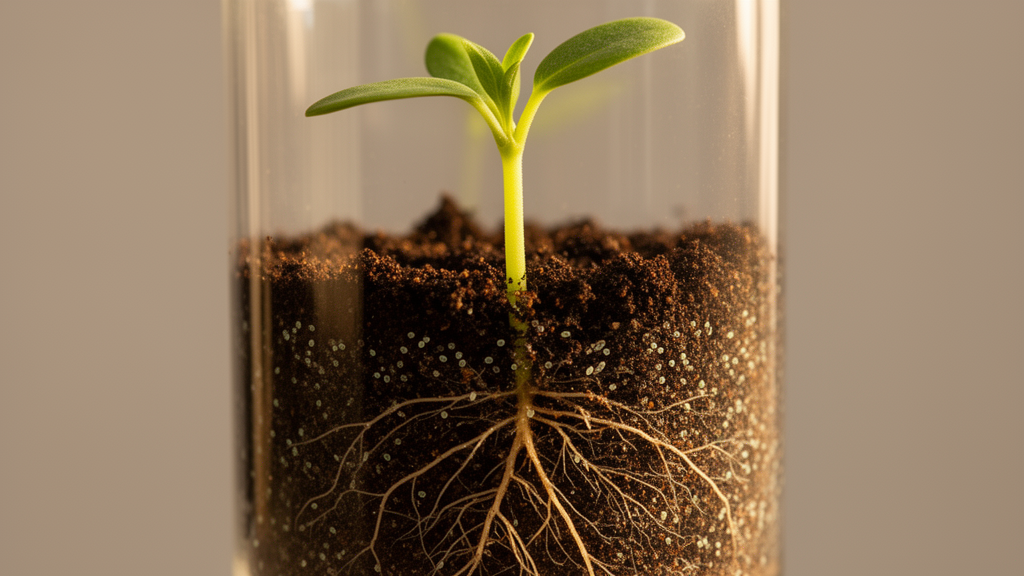
Plants rarely face one environmental problem at a time. Drought, salinity, nutrient scarcity, and temperature extremes arrive together, and the molecular machinery inside roots must respond to all of them simultaneously. A new editorial published in Frontiers in Plant Physiology brings together a Research Topic on the molecular markers of plant adaptation to multiple environmental stressors, and its central message is striking: some of the most powerful adaptive responses are not generated by the plant alone, but by the symbiotic partners living in and around its roots. The editorial, led by Tihana Marček of Josip Juraj Strossmayer University of Osijek in Croatia, together with Muhammad Zahid Mumtaz and Monika Marković, argues that understanding these internally provoked mechanisms could reprogram how agriculture manages soil fertility in the face of climate stress.
Environmental stressors do more than impair plant growth. They shift the composition of the root microbiome community and alter the chemical makeup of root exudates, the metabolites that roots release into the surrounding soil. Among the beneficial microorganisms that respond to these signals, rhizobia and arbuscular mycorrhizal fungi, or AMF, stand out for their ability to improve plant tolerance to abiotic stress by modulating water uptake, nutrient assimilation, the antioxidative response, and photosynthetic performance. The editorial suggests that these environmentally friendly approaches to preserving soil fertility are emerging as a suitable replacement for conventional agricultural practices, particularly where synthetic fertilizers have become both expensive and environmentally damaging.
One of the most technically intriguing contributions highlighted in the editorial concerns rhizopines, specialized root exudates that attract nitrogen-fixing bacteria. Pree and colleagues presented new possibilities for exploring the interconnection between root hairs, rhizopines, and the root microbiome when plants cope with stressful situations. Rhizopines are not generic attractants; certain groups of exudate compounds are destined for specific bacteria. This specificity opens the door to a bold engineering strategy: creating genetically engineered cereals with the ability to synthesize particular rhizopine groups could be an excellent alternative for preserving soil fertility without synthetic nitrogen inputs. The secretion of rhizopines promotes colonization of the rhizosphere by various microbiome communities, which in turn induces root hair genesis and root plasticity.
Among cereals, barley has so far demonstrated the highest potential in this arena. The composition of root exudates consists of diverse combinations of primary and secondary metabolites that vary according to resource availability and environmental conditions, and the bioactive molecules within them determine the composition and variability of microbial and fungal root assemblages. In leguminous plants, flavonoid-rich rhizopines attract nitrogen-fixing bacteria more efficiently, but the editorial notes that in non-legumes these same compounds may also influence the establishment of non-symbiotic diazotrophs in the root microbiome community. That observation opens new perspectives for the exogenous addition of flavonoids as a tool for shaping root growth and fitness in crops that have no natural legume machinery.
The molecular control of this system is equally detailed. Demands in growth conditions necessitate the modulation of auxin homeostasis, the hormonal balance that controls root hair outgrowth. In cereals such as barley and in the model plant Arabidopsis thaliana, research is focused on understanding the mode of action of conserved regulatory pathways involved in auxin balancing. In barley, the β-expansin protein HvEXPB7 controls root hair development and contributes to drought tolerance, making it a concrete molecular marker of adaptation. Root systems and root hair outgrowth can be monitored directly in situ using non-destructive imaging tools such as minirhizotrons, and the editorial argues that minirhizotron phenotyping has the potential to elucidate root plasticity and the interactions between root hairs and nitrogen-fixing bacteria, with the explicit goal of minimizing the utilization of synthetic nitrogen fertilizers.
Arbuscular mycorrhizal fungi face their own stubborn barrier, one that researchers call the Phosphate Paradox. High soil phosphorus represses the symbiosis, undermining the very benefit the fungus is supposed to deliver. Lucic-Mercy and colleagues provided a compelling demonstration that this paradigm is not immutable. By employing an innovative strategy of directed fungal evolution, the authors successfully generated an AMF phenotype capable of partially bypassing the repressive effects of high phosphorus, paving the way for a truly resilient symbiont suitable for modern agricultural demands. The adapted lineage, designated RiQS81-Pi+, represents a shift in research focus from finding naturally occurring phosphorus-tolerant strains to actively creating them in the laboratory.
The molecular restoration achieved by this adapted fungus is the strongest evidence yet that the evolved symbiont provides sufficient benefit to overcome the host plant’s intrinsic phosphorus-sensing repression. Inoculation with the RiQS81-Pi+ phenotype restored the high induction levels of the phosphate transporter genes CmSTR1, CmSTR2, CmBCP1a, and CmBCP1b in melon roots, even under high phosphorus conditions. The implications are profound for basic research, inoculum production, and global agricultural sustainability. The study validates directed fungal evolution as a powerful tool for generating commercially relevant traits, and the improved propagule production ratios of the RiQS81-Pi+ lineage under high phosphorus suggest that this adaptation is durable and scalable over subsequent generations. These findings bring AMF products closer to being reliable, high-performance inputs compatible with the realities of intensive crop management.
Legume-rhizobium symbiosis, meanwhile, remains one of nature’s most sophisticated nutrient exchange systems. Rhizobia fix atmospheric nitrogen within root nodules and return ammonium to the host plant, but the process must be tightly regulated to match the plant’s fluctuating nitrogen demand and environmental conditions. Martin and colleagues demonstrated these regulatory dynamics using a split-root experimental design in Medicago truncatula inoculated with Sinorhizobium medicae md4. One half of the root system was exposed to osmotic stress via polyethylene glycol, while the other inoculated half remained unstressed. The results revealed a rapid and localized inhibition of nitrogen fixation at the stress site, which triggered a systemic compensatory response in nodules elsewhere. Nodules distant from the stress site exhibited enhanced development and increased sucrose allocation, showing that the plant adjusts systemically to maximize symbiotic efficiency.
The transcriptomic reprogramming observed in the stressed nodules was extensive. Gene families related to nodule cysteine-rich peptides, gastrin-releasing peptide, core histones, leghemoglobins, SWEET sucrose transporters, and nodulin genes were overexpressed under osmotic stress. Key transcripts involved in rhizobial recognition and infection, including MtNPL, MtRPG, MtLYK10, MtDMI3, MtNSP2, MtEFD, and MtEFD2, were differentially expressed under treatment. In a parallel contribution, Gao and colleagues observed metabolic and transcriptional reprogramming in AMF symbiosis in cassava, Manihot esculenta Crantz. AMF inoculation in cassava roots showed differential accumulation of metabolites associated with nitrogen assimilation and cellular metabolism, including 5-aminolevulinic acid, L-glutamic acid, and lysoPC 18:2, alongside differentially expressed genes related to nutrient transport, hormone signaling, sugar metabolism, and symbiosis signaling pathways.
Taken together, the four articles in this Research Topic introduce the scientific community to an integrated toolkit of advanced techniques: transcriptomic reprogramming, short-term cultivation of highly adapted phosphorus fungi, hormonal regulation, root exudate metabolomic analysis, phenotyping of the root system, and root hair development. All of these are promising tools for efficient nitrogen uptake and, the editorial argues, excellent solutions against the overuse of synthetic nitrogen fertilizers, which remain a significant source of greenhouse gas emissions. The molecular markers catalogued across these studies, from HvEXPB7 and the CmSTR gene family to the nodulin and SWEET transporter transcripts, offer the plant science community a concrete vocabulary for adaptation that could soon move from laboratory benches to the fields where the climate crisis is already testing every crop.
Subject of Research: Editorial: Molecular markers of plant adaptation to multiple environmental stressors
Article Title: Editorial: Molecular markers of plant adaptation to multiple environmental stressors
Article References: Marček, T., Mumtaz, M. Z., & Marković, M. (2025). Editorial: Molecular markers of plant adaptation to multiple environmental stressors. Frontiers in Plant Physiology, 3, Article 1731014. https://doi.org/10.3389/fphgy.2025.1731014
Image Credits: AI Generated
DOI: 10.3389/fphgy.2025.1731014
Keywords: Editorial, Molecular, markers, plant, adaptation, multiple, environmental, stressors, scientific research
Cite Scienmag News
Morgan Morrow. (October 17, 2026). How plants and their microbial partners rewrite stress adaptation from the roots up. Scienmag. https://scienmag.com/how-plants-and-their-microbial-partners-rewrite-stress-adaptation-from-the-roots-up/
Morgan Morrow. "How plants and their microbial partners rewrite stress adaptation from the roots up." Scienmag, 17 October 2026, https://scienmag.com/how-plants-and-their-microbial-partners-rewrite-stress-adaptation-from-the-roots-up/. Accessed 17 October 2026.
Morgan Morrow. "How plants and their microbial partners rewrite stress adaptation from the roots up." Scienmag. October 17, 2026. https://scienmag.com/how-plants-and-their-microbial-partners-rewrite-stress-adaptation-from-the-roots-up/


