


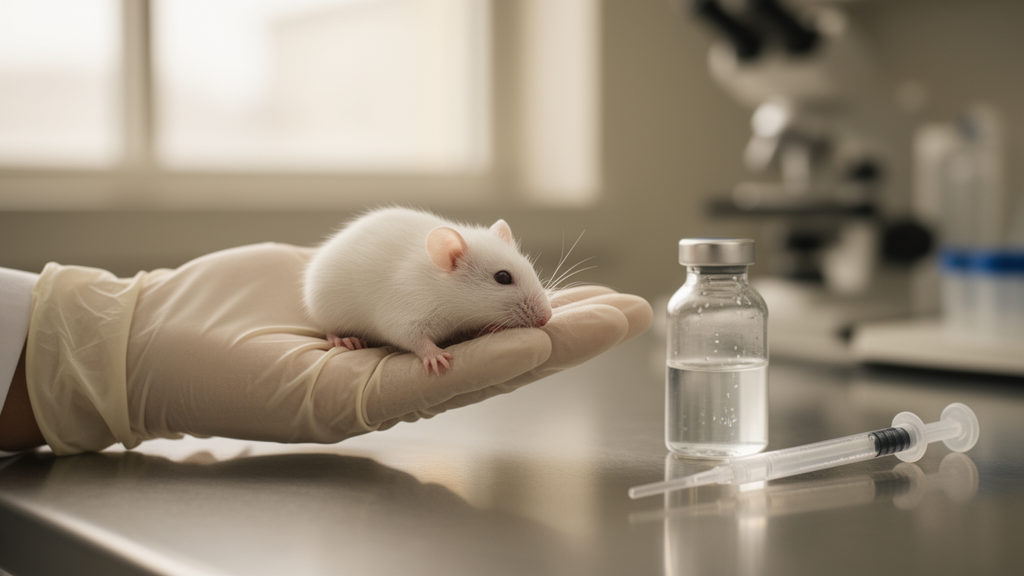
Systemic lupus erythematosus has long frustrated researchers precisely because it refuses to behave like a single disease. The autoimmune disorder, estimated to affect roughly five million people worldwide and predominantly women of childbearing age, unleashes a cascade of aberrant immune activation, autoantibody production, immune complex deposition, and progressive organ damage. Now, a team of researchers at Chaitanya (Deemed to be University) in Hyderabad, India, reports that a synthetic peptide called SK1217 can simultaneously dampen nearly every major arm of this pathological storm in mice, offering one of the most comprehensive preclinical pictures yet of a peptide-based approach to lupus therapy.
The study, published in Frontiers in Lupus, evaluated SK1217 in a pristane-induced lupus mouse model, a widely used experimental system in which a single intraperitoneal injection of the mineral oil tetramethylpentadecane triggers lupus-like symptoms including autoantibody production, immune dysregulation, and renal damage. The researchers, Swetha Kakkerla, Sridhar Kavela, and Sathvika Chintalapani, initially screened four novel antimicrobial and immunomodulatory peptides, SK1203, SK1217, SK1260, and SK1281, for their ability to modulate the lupus-like disease. SK1217, a cationic peptide with the sequence AFWWKAKKFAWAKKFAWWKAW, demonstrated the most promising effects and was selected for detailed dose-response experiments at 1 and 2 mg/kg.
The experimental design was rigorous. Female BALB/c mice, eight weeks old, were randomly divided into six groups of six animals each. One group served as an untreated normal control, while the remaining five received 0.5 mL of pristane intraperitoneally. After an eight-week induction period, peptide treatments began at 2 mg/kg three times per week and continued until the mice reached 30 weeks of age. Serum samples collected at weeks 8, 16, and 30 allowed the team to track disease progression longitudinally, and kidney tissues were examined at the endpoint by light microscopy and Western blotting.
The results on autoantibodies were striking. Vehicle-treated lupus mice showed progressive, time-dependent increases in anti-nuclear antibodies, anti-double-stranded DNA, and anti-nRNP/Sm antibodies, confirming successful disease induction. By week 30, SK1217-treated mice exhibited marked reductions in all of these autoantibodies, as well as in anti-chromatin and anti-single-stranded DNA IgG levels measured by indirect ELISA. Because these autoantibodies form immune complexes that deposit in tissues, activate complement, and recruit inflammatory cells, their suppression represents a direct attack on one of the central mechanisms driving organ damage in lupus.
The peptide also proved to be a potent anti-inflammatory agent. Serum concentrations of the proinflammatory cytokines TNF-α, IL-1β, IL-6, and IL-17, all implicated in lupus pathogenesis and correlated with disease activity, were significantly elevated in vehicle-treated lupus mice but fell substantially after SK1217 treatment, approaching levels seen in non-lupus controls. Mechanistically, Western blot analysis of renal tissue revealed that SK1217 downregulated NF-κB p65 expression and reduced the phosphorylation of JNK and p38 MAPK, two stress-activated kinases central to inflammatory signaling and lupus nephritis progression. This concurrent inhibition of two major intracellular cascades suggests the peptide disrupts the signaling infrastructure that sustains renal inflammation.
Perhaps the most mechanistically revealing findings concerned the humoral immune system. Pristane-induced lupus mice showed elevated serum levels of B-cell activating factor, or BAFF, a cytokine that promotes B cell survival, activation, and plasma cell differentiation. SK1217 treatment at both doses significantly reduced BAFF concentrations. Flow cytometric analysis of splenocytes further showed that the peptide decreased the proportion of CD40-positive activated B cells and CD138-positive plasma cells, accompanied by reduced total serum IgG. This coordinated suppression of BAFF-driven B cell amplification provides a coherent explanation for the observed drop in circulating autoantibodies and positions SK1217 alongside belimumab, the approved anti-BAFF monoclonal antibody, as a therapeutic strategy targeting the same pathway.
Renal protection was equally impressive. Vehicle-treated lupus mice exhibited elevated serum creatinine and blood urea nitrogen, hallmarks of impaired kidney function, along with reduced complement C3 levels consistent with complement consumption by immune complex deposition. SK1217 treatment normalized creatinine and BUN, restored C3 toward control levels, and significantly reduced urinary protein excretion measured over 24-hour metabolic cage collections. Histopathological examination of hematoxylin and eosin-stained kidney sections confirmed reduced glomerular damage in treated animals, providing morphological corroboration of the functional biomarkers.
Notably, the peptide did not act as a blunt immunosuppressant. Flow cytometry of peritoneal lavage cells showed that total peritoneal exudate cell numbers were unchanged between treated and untreated lupus mice, indicating no global depletion of immune cells. Instead, SK1217 selectively reduced the frequency of Ly6C-high inflammatory monocytes, a subset known to drive autoantibody production through type I interferon secretion in a Toll-like receptor 7-dependent manner, while decreasing peritoneal IFN-γ levels. Interestingly, granulocyte numbers increased in the treated group, suggesting a reshaping rather than a wholesale suppression of innate immunity.
The therapeutic landscape for lupus remains constrained. Conventional management relies on glucocorticoids, methotrexate, azathioprine, mycophenolate mofetil, and cyclophosphamide, all of which carry significant long-term toxicity and infection risk, while the heterogeneity and unpredictable course of the disease make uniform treatment responses elusive. Therapeutic peptides offer theoretical advantages including high specificity, low immunogenicity, and modifiable structures, and prior work has shown that cationic host-defence peptides can attenuate lupus-associated immune activation in preclinical models. Challenges such as proteolytic degradation, short half-life, and synthesis cost, however, have historically limited their clinical translation.
The authors conclude that SK1217 exerts multi-target immunomodulatory and renoprotective effects through coordinated suppression of BAFF-driven B cell activation, inflammatory cytokine production, complement activation, and MAPK/NF-κB signaling. They emphasize that further research is needed to fully elucidate the peptide’s mechanisms, evaluate its long-term safety, and explore potential synergies with existing lupus therapies. If those translational steps succeed, SK1217 could represent a genuinely novel class of lupus treatment, one that modulates rather than obliterates the immune system, and one whose journey from a Hyderabad laboratory to the clinic will be watched closely by researchers and patients alike.
Subject of Research: SK1217 peptide efficacy in pristane-induced lupus mice
Article Title: Evaluating the efficacy of SK1217 in attenuating pristane-induced lupus in mice
Article References: Kakkerla, S., Kavela, S., & Chintalapani, S. (2026). Evaluating the efficacy of SK1217 in attenuating pristane-induced lupus in mice. Frontiers in Lupus, 4, Article 1466123. https://doi.org/10.3389/flupu.2026.1466123
Image Credits: AI Generated
DOI: 10.3389/flupu.2026.1466123
Keywords: SK1217, systemic lupus erythematosus, lupus nephritis, pristane model, BAFF, autoantibodies, MAPK/NF-κB signaling, immunomodulatory peptide, renal protection, preclinical study, Evaluating, efficacy
Cite Scienmag News
Jerry Hayes. (October 17, 2026). SK1217 Peptide Shows Multi-Target Protection Against Lupus in Mice. Scienmag. https://scienmag.com/sk1217-peptide-shows-multi-target-protection-against-lupus-in-mice/
Jerry Hayes. "SK1217 Peptide Shows Multi-Target Protection Against Lupus in Mice." Scienmag, 17 October 2026, https://scienmag.com/sk1217-peptide-shows-multi-target-protection-against-lupus-in-mice/. Accessed 17 October 2026.
Jerry Hayes. "SK1217 Peptide Shows Multi-Target Protection Against Lupus in Mice." Scienmag. October 17, 2026. https://scienmag.com/sk1217-peptide-shows-multi-target-protection-against-lupus-in-mice/


