


Hydrogen has long been heralded as the clean fuel of the future, but the way most of it is made today is anything but clean. In China, the vast majority of hydrogen is produced from coal, a process that releases substantial carbon dioxide into the atmosphere. Now, a new study published in Clean Technologies and Environmental Policy offers a detailed mathematical framework for deciding how coal-to-hydrogen plants can be paired with carbon capture and storage, or CCS, to produce hydrogen that is both affordable and dramatically lower in carbon intensity. The research, led by Lin Zhu of North China Electric Power University together with colleagues from China Energy Investment and Ordos Institute of Technology, tackles one of the most consequential questions in the global energy transition: can fossil-based hydrogen be cleaned up quickly and economically enough to serve as a bridge to a carbon-neutral future?
The study arrives at a moment when the tension between energy security and climate ambition has never been sharper. China’s dual-carbon goals—peaking carbon emissions before 2030 and achieving carbon neutrality before 2060—place enormous pressure on industries that depend on coal. Hydrogen is central to decarbonizing steel, chemicals, heavy transport, and long-duration energy storage, yet green hydrogen produced by electrolyzing water with renewable electricity remains significantly more expensive in most markets. Coal-to-hydrogen coupled with CCS, sometimes called blue or low-carbon hydrogen when paired with capture, represents a pragmatic middle path. The new research provides quantitative decision support for exactly how that path should be engineered and planned, weighing costs, emissions, and energy consumption simultaneously rather than in isolation.
At the heart of the paper is a multi-objective planning and decision-making model designed to optimize a coal-to-hydrogen system integrated with CCS. Rather than pursuing a single goal, the model minimizes three competing objectives at once: the levelized cost of hydrogen production, the carbon emissions per unit of hydrogen produced, and the comprehensive energy consumption per unit of hydrogen. This tri-objective framing reflects the real-world dilemma faced by planners. A design that minimizes cost may capture too little carbon; a design that maximizes capture may drive costs and energy penalties to politically unacceptable levels. By defining clear system boundaries and building explicit cost and energy consumption models for each component of the plant—from gasification and gas processing through capture, compression, transportation, and storage—the researchers created a framework in which trade-offs can be mapped rather than guessed.
Solving such a model is computationally demanding, because the objectives conflict and the decision space includes discrete choices about equipment configuration and continuous variables about operating levels. The team employed an improved version of NSGA-II, the Non-dominated Sorting Genetic Algorithm II, a widely used evolutionary optimization method that evolves a population of candidate solutions toward the Pareto front—the set of designs in which no objective can be improved without worsening another. The improvements to the algorithm were aimed at enhancing convergence and diversity of solutions, allowing the model to explore a rich landscape of possible plant configurations. Each solution on the Pareto front represents a different balance point between cheap hydrogen, clean hydrogen, and energy-efficient hydrogen, giving decision-makers a menu of defensible options instead of a single prescriptive answer.
The baseline results are striking. Under the reference scenario, the optimized system achieves a 16.43 percent reduction in carbon emissions per unit of hydrogen, at the price of only about a 7.06 percent increase in production cost and a 4.39 percent increase in comprehensive energy consumption. Those numbers matter because they quantify, for the first time within a single consistent framework, how much climate benefit can be purchased for how much economic and energetic sacrifice. A roughly one-sixth emissions cut for a cost premium of around seven percent suggests that moderate CCS integration is not a prohibitively expensive proposition, particularly in regions where hydrogen demand is already large and coal feedstocks are cheap. The finding lends quantitative weight to the argument that low-carbon hydrogen from fossil feedstocks can play a meaningful transitional role.
Perhaps the most policy-relevant insight concerns the power of carbon pricing. The researchers found that as the carbon price rises, the model’s optimal planning decisions shift toward progressively more aggressive carbon capture strategies. Crucially, they identified a threshold: once the carbon price exceeds 120 Chinese yuan per tonne of carbon dioxide, the economics flip decisively, incentivizing large-scale adoption of CCS across the system. Below that level, partial capture remains the dominant strategy; above it, comprehensive capture becomes the rational choice. This finding offers policymakers a concrete dial to turn. If China’s national carbon market prices rise toward that threshold, coal-to-hydrogen operators would face market-driven, rather than mandate-driven, incentives to decarbonize. Conversely, the result quantifies how much carbon-price uncertainty translates into investment hesitancy for capture projects.
Coal prices, the second major source of uncertainty, act on the system in a different way. When coal becomes more expensive, the model’s optimal responses are not primarily about capture but about energy efficiency. Rising coal costs push the planning decisions toward improvements in overall energy efficiency and corresponding adjustments to production scale, because feedstock expense dominates the economics. In other words, capture decisions respond chiefly to carbon prices, while efficiency and sizing decisions respond chiefly to coal prices. This separation of levers is valuable for planners: it suggests that fuel hedging and efficiency investments can be managed somewhat independently of decarbonization strategy, and that fluctuating coal markets need not derail CCS adoption if carbon pricing remains strong.
The sensitivity analysis digs even deeper into the machinery of the system, identifying which specific technical and economic parameters most influence outcomes. Five factors rise to the top. The investment cost of pre-combustion capture equipment strongly affects system economics, since pre-combustion capture—in which carbon is removed from syngas before combustion—can be more cost-effective but requires significant upfront capital. The energy consumed in regenerating the solvent used for post-combustion capture dominates energy-consumption outcomes, reflecting the well-known thermodynamic penalty of stripping carbon dioxide from flue gases. Electricity prices, the distance over which captured carbon dioxide must be transported to storage sites, and the allocation of free carbon quotas round out the list. Each of these factors represents a concrete lever: cheaper capture hardware, lower-regeneration solvents, siting plants near geological storage, and well-designed quota policies all directly improve the viability of low-carbon coal hydrogen.
To guard against overconfident conclusions, the study incorporates multi-scenario robustness assessment alongside sensitivity analysis, testing how optimal decisions hold up under different combinations of uncertain parameters such as coal prices and carbon prices. This robustness lens is essential because infrastructure investments in hydrogen and capture equipment have lifetimes measured in decades, spanning many cycles of commodity and policy volatility. The methodological approach—combining an improved NSGA-II solver with scenario testing and sensitivity analysis—provides a template that can be adapted to other hydrogen-producing regions and other capture technologies, from Australia to the Middle East, where gasification of local feedstocks coupled with capture is under active consideration.
The implications reach well beyond China’s borders. Globally, debates over the role of fossil hydrogen in a clean energy transition often proceed on ideology rather than analysis, with advocates of pure green hydrogen dismissing coal-based routes and energy-security-focused planners dismissing decarbonization constraints. This study offers something rarer: a transparent, quantitative accounting of what intermediate pathways actually cost in money, carbon, and energy. Its message is neither that coal-to-hydrogen with CCS is a panacea nor that it should be abandoned, but that well-planned integration—guided by carbon prices above a calculable threshold, smart plant siting near storage, and targeted investment in capture hardware—can deliver meaningful emissions reductions at a tolerable premium. For a world that must produce vastly more hydrogen while slashing emissions, frameworks like this one convert an abstract policy aspiration into an engineering decision that can actually be made.
Subject of Research: Multi-objective optimization of coal-to-hydrogen production coupled with carbon capture and storage under China's dual-carbon goals
Article Title: Research on a multi‑objective planning and decision‑making model for coal‑to‑hydrogen with CCS under the dual-carbon goals
Article References: Zhu, L., Chen, Y., Bao, H., Liu, J., & Dai, Q. (2026). Research on a multi‑objective planning and decision‑making model for coal‑to‑hydrogen with CCS under the dual-carbon goals. Clean Technologies and Environmental Policy, 28(11), Article 276. https://doi.org/10.1007/s10098-026-03569-7
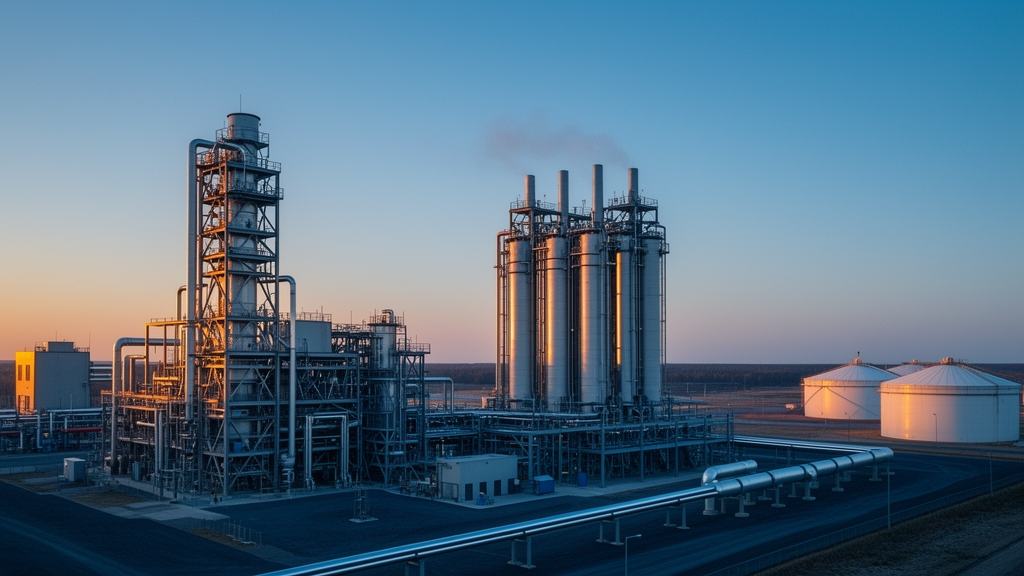
Image Credits: AI Generated
DOI: 10.1007/s10098-026-03569-7
Keywords: coal-to-hydrogen, carbon capture and storage, hydrogen production, multi-objective optimization, NSGA-II, carbon pricing, dual-carbon goals, levelized cost of hydrogen, energy efficiency, sensitivity analysis, clean coal technology, energy transition
Cite Scienmag News
Sloane Callahan. (October 17, 2026). New Model Shows How Coal-to-Hydrogen with Carbon Capture Could Slash Emissions. Scienmag. https://scienmag.com/new-model-shows-how-coal-to-hydrogen-with-carbon-capture-could-slash-emissions/
Sloane Callahan. "New Model Shows How Coal-to-Hydrogen with Carbon Capture Could Slash Emissions." Scienmag, 17 October 2026, https://scienmag.com/new-model-shows-how-coal-to-hydrogen-with-carbon-capture-could-slash-emissions/. Accessed 17 October 2026.
Sloane Callahan. "New Model Shows How Coal-to-Hydrogen with Carbon Capture Could Slash Emissions." Scienmag. October 17, 2026. https://scienmag.com/new-model-shows-how-coal-to-hydrogen-with-carbon-capture-could-slash-emissions/


