


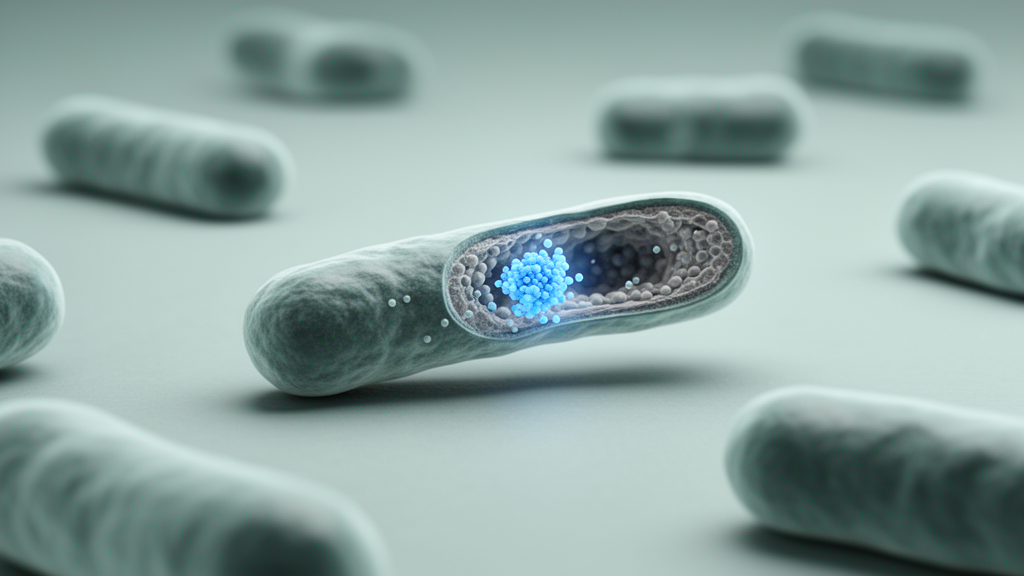
Antibiotic resistance is often described as an arms race, with bacteria evolving new defenses as fast as chemists can design new drugs. A new study from Umeå University in Sweden suggests that the race may have an unexpected twist: some of the very mutations that let bacteria survive antibiotics also leave them exposed in ways scientists had overlooked. The findings, published in Nature Communications, reveal that even highly resistant bacteria become markedly more vulnerable when a critical transport system in their cell wall is disrupted, opening a potential route to restore the power of existing drugs rather than waiting for entirely new ones.
The research, led by Felipe Cava, Professor at the Department of Molecular Biology at Umeå University, in collaboration with researchers from the Spanish National Research Council (CSIC) and Umeå University Hospital, focused on a deceptively simple question. Could resistant bacteria be pushed into an evolutionary dead end, where the mechanisms that help them survive antibiotics simultaneously make them fragile? As Cava explains, the search for new antibiotics remains crucial, but smarter ways to extend the lifespan of the drugs already in circulation are equally urgent. The team’s answer, after years of experimental work, appears to be yes, at least for an important group of pathogens.
To understand the discovery, it helps to revisit how the most widely used antibiotics actually work. Bacteria are encased in a robust cell wall, a rigid lattice that allows them to survive osmotic stress and harsh environments. This wall is the target of β-lactam antibiotics, the class that includes penicillins and remains among the most heavily prescribed treatments for bacterial infections worldwide. β-lactams sabotage the machinery that cross-links the wall’s building blocks, causing the cell to rupture. Some bacteria, however, have evolved ways to keep building their wall despite the drug’s interference, and this ability underlies some of the most notorious resistance problems in modern medicine.
The most famous example is methicillin-resistant Staphylococcus aureus, or MRSA, a pathogen that causes difficult-to-treat infections in hospitals and communities around the globe. MRSA has rewired its cell wall synthesis apparatus so that β-lactams can no longer shut it down. Over time, resistant strains can pick up additional mutations that strengthen this defense even further, producing bacteria that clinicians struggle to eradicate. The Umeå team set out to track exactly how this evolutionary escalation unfolds, and what they found in the fine print of resistance surprised them.
At the heart of the discovery is a small lipid molecule called undecaprenyl phosphate. This lipid acts as a conveyor belt, shuttling the sugar and peptide building blocks of the cell wall across the bacterial membrane so they can be assembled into the protective lattice. Without a functioning conveyor, construction stalls. The researchers found that resistant bacteria are critically dependent on this transport system, and when it was disrupted, the bacteria found it considerably more difficult to maintain their resistance. The vulnerability had been sitting in plain sight, embedded in the very logistics of wall construction, yet it had largely escaped attention as a therapeutic target.
In their experiments, the researchers followed MRSA as it evolved under antibiotic treatment, identifying the genetic changes that allowed the bacteria to regain resistance after each challenge. But when the transport of cell wall building blocks was disrupted, this evolutionary route was effectively blocked. The bacteria could no longer climb back to full resistance along their usual paths. In effect, interfering with the lipid conveyor converted a flexible, adaptable pathogen into one whose escape routes had been sealed off, forcing it into a genetic corner from which recovery was far harder.
There was a second, equally striking pattern in the data. Bacteria carrying the new resistance mutations often grew more slowly and were less capable of causing infection. Gabriel Torrens, first author of the study and a researcher at the Department of Molecular Biology at Umeå University, described the team’s surprise at this trade-off. Some mutations that help bacteria survive antibiotic treatment simultaneously create new vulnerabilities, he noted, so rather than becoming stronger in every respect, the bacteria appear to be forced into a compromise. Evolution, in other words, does not grant resistance for free; it extracts a price in fitness, and that price can be exploited.
The phenomenon was not confined to MRSA. The researchers observed the same vulnerability in Streptococcus pneumoniae, a bacterium that commonly causes pneumonia and other serious diseases. This consistency suggests that the weakness may be shared across many antibiotic-resistant Gram-positive bacteria, the broad group that includes staphylococci and pneumococci, two of the most clinically important resistant pathogens. If the finding generalizes as widely as the early evidence indicates, a single strategy aimed at the lipid transport system could potentially sensitize multiple species to drugs that are already on the shelf.
The researchers believe the discovery opens a new avenue for future therapies designed not to replace existing antibiotics but to restore their effectiveness. The potential has already attracted commercial interest, with a patent application filed on the approach. Funding for the work came from the Swedish Research Council through a research environment grant within infection and antibiotics, the Knut and Alice Wallenberg Foundation, and the Kempe Foundations. Torrens was recruited to Umeå University through the Excellence by Choice postdoctoral programme and is currently funded by the Swedish Society for Medical Research, reflecting the international talent pipeline that such translational research increasingly depends on.
For a field exhausted by grim headlines about untreatable infections, the study offers a genuinely hopeful reframing. Resistance is not an impenetrable fortress but a set of biological mechanisms with costs, dependencies, and structural constraints, and the cell wall’s supply chain may be its most exploitable weak point. If follow-up research can translate lipid carrier stress into clinical strategies, the antibiotics that have anchored infectious disease treatment for decades could regain their edge, buying precious time while the slower work of developing entirely new drugs continues.
Subject of Research: antibiotic resistance
Article Title: Researchers discover Achilles' heel of antibiotic-resistant bacteria
Article References: Researchers discover Achilles' heel of antibiotic-resistant bacteria. Original publication (Bibliographic details unavailable.)
Image Credits: AI Generated
DOI: Not provided
Keywords: antibiotic resistance, MRSA, cell wall, undecaprenyl phosphate, beta-lactams, Streptococcus pneumoniae, Umeå University, evolutionary trade-off, Researchers, discover, Achilles', heel
Cite Scienmag News
Drew Townsend. (October 17, 2026). Scientists uncover hidden weakness in antibiotic-resistant bacteria. Scienmag. https://scienmag.com/scientists-uncover-hidden-weakness-in-antibiotic-resistant-bacteria/
Drew Townsend. "Scientists uncover hidden weakness in antibiotic-resistant bacteria." Scienmag, 17 October 2026, https://scienmag.com/scientists-uncover-hidden-weakness-in-antibiotic-resistant-bacteria/. Accessed 17 October 2026.
Drew Townsend. "Scientists uncover hidden weakness in antibiotic-resistant bacteria." Scienmag. October 17, 2026. https://scienmag.com/scientists-uncover-hidden-weakness-in-antibiotic-resistant-bacteria/


