


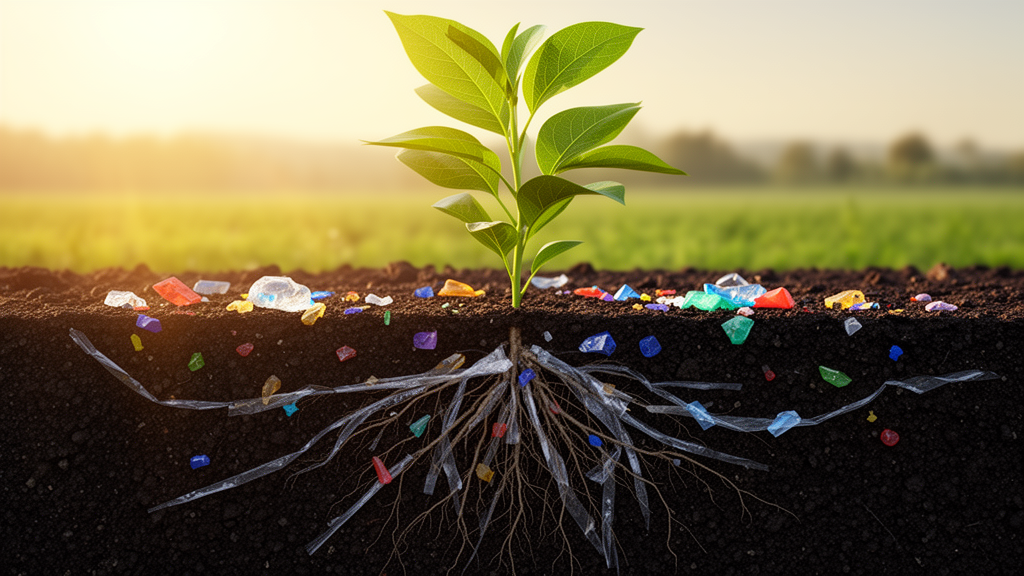
Microplastics have become an unavoidable ingredient of the world’s farmland. A comprehensive review published in the journal Environmental and Sustainability Indicators examines how these tiny plastic particles, defined as fragments smaller than five millimeters, accumulate in agricultural soils and what that means for soil health, crop productivity, and ultimately the food on our plates. The analysis, led by researchers from institutions including SRM University, Delhi-NCR, and Banaras Hindu University, synthesizes findings from studies across the globe and concludes that agricultural soils may hold more microplastic pollution than the oceans, a striking claim that reframes where the plastic crisis truly concentrates.
The scale of the problem is staggering. The review reports that roughly 4.8 to 12.7 million metric tons of plastic enter the oceans annually, while approximately 12.5 million metric tons of plastic waste have been dumped on land, with agricultural soils receiving an estimated 23 times more microplastic load than oceanic environments. Global plastic production reached 367 million metric tons in 2020, and a substantial share of that material ends up in fields through mulching films, plastic greenhouses, irrigation pipes, sewage sludge, and organic composts. The authors estimate that microplastic concentrations in soil can reach up to 67,500 particles per kilogram in some agricultural settings, with mulch films alone contributing between 10 and 30 kilograms of plastic debris per hectare each year.
Once in the soil, microplastics do not simply sit inert. The review documents how these particles alter the physical architecture of soil, changing bulk density, water retention, and the stability of aggregates that hold the soil together. They can leach toxic additives such as phthalates, bisphenol A, and heavy metals, and they interact with earthworms, fungi, and the vast microbial communities that drive nutrient cycling. Studies cited in the review show that microplastic exposure can reduce bacterial and fungal diversity, disrupt enzymatic activity, and impair the nitrogen and carbon cycles that crops depend on. Earthworms, the engineers of healthy soil, have been shown to suffer reduced growth and reproduction when exposed to microplastic-laden soils, with some experiments reporting declines in earthworm survival and changes in their burrowing behavior.
Perhaps the most alarming finding concerns how microplastics make their way into the plants themselves. The review details evidence that nanoparticles and small microplastic particles can cross the root barrier and travel through vascular tissues, accumulating in stems, leaves, and even edible organs such as grains and fruits. Studies on lettuce, carrots, and apples have detected microplastic particles in plant tissues, with lettuce showing uptake of nanoplastic particles through roots and apples containing microplastics in their flesh. The mechanisms involve apoplastic and symplastic pathways, where particles slip between cell walls or are actively transported through cellular machinery, though larger particles tend to remain trapped at the root surface or in the root cap.
The consequences for crop physiology are measurable and often negative. The review summarizes experiments showing that microplastic exposure can reduce seed germination rates, stunt root and shoot growth, and interfere with photosynthesis. In wheat, exposure to polyethylene and polystyrene microplastics has been linked to reduced plant height and biomass, while in rice and maize, microplastic contamination has been associated with decreased chlorophyll content and disrupted photosynthetic efficiency. Some studies report yield losses of up to 30 percent under high microplastic concentrations, though the review notes that results vary widely depending on particle type, size, concentration, and crop species. The mechanisms include physical damage to root cells, oxidative stress from reactive oxygen species, and interference with nutrient and water uptake.
Beyond the plants themselves, microplastics threaten the broader agricultural ecosystem. The review highlights how these particles can alter soil microbial communities in ways that reduce the effectiveness of beneficial symbioses, such as the mycorrhizal fungi that help plants absorb phosphorus and water. They can also serve as vectors for antibiotic resistance genes, creating reservoirs of drug-resistant bacteria in agricultural soils. The combination of microplastic contamination with other stressors, including heavy metals, pesticides, and climate change, creates a compounding threat that the authors argue has been largely overlooked in conventional risk assessments.
The human health dimension adds urgency to these findings. Microplastics have now been detected in human blood, lungs, placenta, and breast milk, and the review cites studies suggesting that humans may ingest tens of thousands of microplastic particles annually through food and water. While the full health consequences remain uncertain, preliminary research links microplastic exposure to inflammation, oxidative stress, and potential disruption of endocrine function. The review notes that microplastics in food crops represent a direct exposure pathway that bypasses environmental dilution, making agricultural contamination a matter of food safety as well as environmental concern.
The authors also examine potential solutions, though they acknowledge that most remain in early stages. Biodegradable mulch films made from starch, cellulose, or polylactic acid offer a promising alternative to conventional polyethylene, though their performance and cost remain barriers to widespread adoption. Bioremediation approaches, including the use of plastic-degrading microbes and enzymes, show laboratory promise but face significant challenges in real-world soil environments. Policy interventions, such as restrictions on single-use plastics and improved waste management, could reduce the flow of microplastics into agricultural systems, but the authors note that existing regulations are fragmented and often poorly enforced.
The review calls for urgent interdisciplinary research to address the knowledge gaps that currently limit effective action. The authors identify several priorities, including standardized methods for measuring microplastics in soil and food, long-term field studies that track the fate of microplastics under realistic agricultural conditions, and investigations into the combined effects of microplastics with other environmental stressors. They also emphasize the need for better understanding of how microplastics interact with soil biota at the molecular level, particularly in the rhizosphere where roots, microbes, and soil particles interact in complex ways.
Ultimately, the review paints a picture of an agricultural system quietly accumulating a form of pollution that threatens its own productivity and the safety of the food it produces. The authors conclude that addressing microplastic contamination in agricultural soils requires coordinated action across research, policy, and practice, and that the window for preventing widespread, irreversible contamination may be narrowing. As plastic production continues to grow and agricultural intensification accelerates, the invisible burden of microplastics in the world’s farmland is set to increase, making this one of the most pressing yet underappreciated environmental challenges of the coming decade.
Subject of Research: Microplastic contamination of agricultural soils and its effects on soil health, crop productivity, and food safety
Article Title: Microplastics in agricultural soils: sources, soil–plant interactions, ecotoxicological effects and food security concerns
Article References: Rustagi, D., Kunal, Kumar, R., Kumar, P., Kumar, A., Rajeev, Critykar, J., Mitra, D., Gautam, M. K., Rajput, V. D., & Babatunde, C. A. (2026). Microplastics in agricultural soils: sources, soil–plant interactions, ecotoxicological effects and food security concerns. Frontiers in Soil Science, 6, Article 1899490. https://doi.org/10.3389/fsoil.2026.1899490
Image Credits: AI Generated
DOI: 10.3389/fsoil.2026.1899490
Keywords: microplastics, agricultural soils, crop productivity, food security, soil health, plant uptake, mulch films, bioremediation, food safety, soil microbiome, environmental pollution, sustainable agriculture
Cite Scienmag News
Alan Morgan. (October 16, 2026). From Farm Film to Food Chain: How Microplastics in Agricultural Soils Threaten Crops and Food Security. Scienmag. https://scienmag.com/from-farm-film-to-food-chain-how-microplastics-in-agricultural-soils-threaten-crops-and-food-security/
Alan Morgan. "From Farm Film to Food Chain: How Microplastics in Agricultural Soils Threaten Crops and Food Security." Scienmag, 16 October 2026, https://scienmag.com/from-farm-film-to-food-chain-how-microplastics-in-agricultural-soils-threaten-crops-and-food-security/. Accessed 16 October 2026.
Alan Morgan. "From Farm Film to Food Chain: How Microplastics in Agricultural Soils Threaten Crops and Food Security." Scienmag. October 16, 2026. https://scienmag.com/from-farm-film-to-food-chain-how-microplastics-in-agricultural-soils-threaten-crops-and-food-security/


