


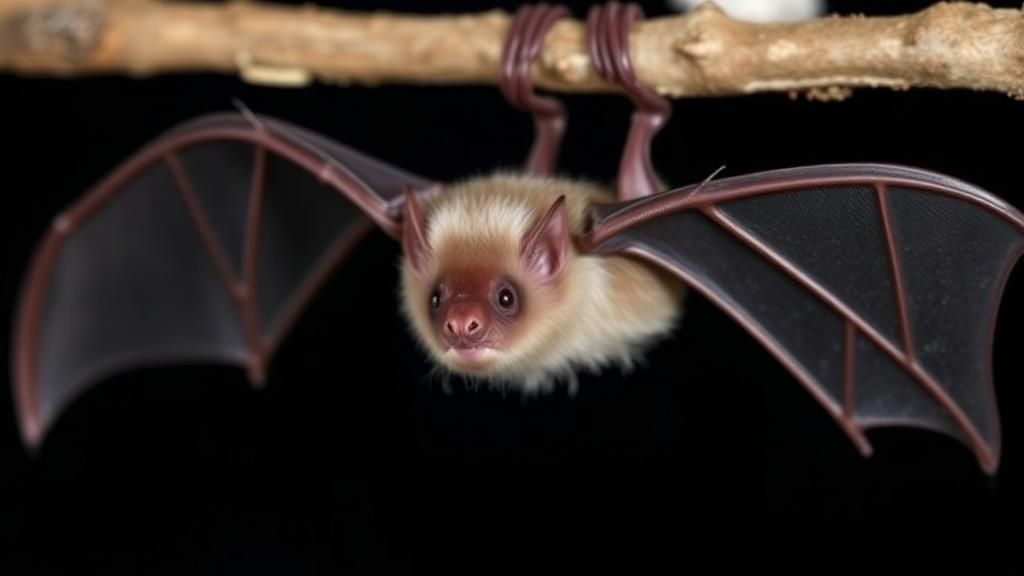
The long-fingered bat (Myotis capaccinii), a small cave-dwelling species native to the Mediterranean Basin, has long puzzled scientists with its unclear evolutionary history. Now, a new study published in the journal Subterranean Biology has shed fresh light on the phylogeny and phylogeography of this elusive mammal, using mitochondrial DNA to trace its ancient migrations and clarify its taxonomic status across Europe, North Africa, and the Middle East.
Researchers analyzed Cytochrome-b sequences from 41 Myotis capaccinii samples collected from eight localities across Türkiye, comparing them with previously published sequences from European, Tunisian, and Iranian populations. The team identified nine haplotypes, three of which were recorded for the first time from two Mediterranean locations in southern Türkiye. The findings provide compelling evidence that Bulgarian and Turkish populations form a distinct mitochondrial clade separate from other European samples, while also revealing surprisingly low genetic differentiation among Turkish subpopulations.
The long-fingered bat is classified as Vulnerable by the IUCN due to population declines linked to habitat degradation, water pollution, and disturbance of cave roosts. Its distribution stretches from the Iberian Peninsula and North Africa through Southeastern Europe, Türkiye, and the Levant, reaching Western Iran. This cave-dwelling species is closely associated with aquatic habitats for foraging, making it particularly sensitive to environmental changes that affect freshwater ecosystems.
The taxonomic status of Myotis capaccinii has been controversial for decades. Previous researchers have proposed different subspecies assignments based on morphological differences between European and Anatolian subpopulations. Some studies included specimens from Turkish Thrace in the subspecies M. c. bureschi, while others placed Turkish specimens in the nominative subspecies. More recently, a new subspecies called M. c. abidinbudaki was proposed from southern Central Anatolia based on lighter dorsal fur color and biometric measurements. However, these morphologically defined races have not coincided with the lineages revealed by molecular phylogenetic analyses.
The research team generated new Cytochrome-b sequences from specimens collected in Antalya and Mersin provinces in Mediterranean Türkiye, combining them with sequences from GenBank representing localities across the species’ range. Using Bayesian Inference methods, the researchers constructed phylogenetic trees that revealed three main mitochondrial clusters. Cluster I consisted primarily of western European and Tunisian samples, Cluster II included Turkish, Bulgarian, and Greek samples together with part of the western European samples, and Cluster III comprised mainly Turkish and Iranian samples along with some southeastern European specimens.
Genetic distance analysis showed that the distance between Turkish and European samples was 3.0 percent, while distances among the six Turkish population groups ranged from just 0.10 to 0.76 percent. Haplotype diversity for Turkish samples was 0.786 with nucleotide diversity of 0.005, values quite similar to those found in European populations. The highest genetic distance, 4.0 percent, was observed between Turkish and Iranian samples, suggesting that Iranian populations represent the most divergent group in the study.
Divergence time estimates using Bayesian molecular clock analysis suggest that Cluster III likely separated from Clusters I and II approximately 1.64 million years ago during the mid-Pleistocene, while Clusters I and II diverged around 0.70 million years ago. These timelines align with previous estimates suggesting that Myotis capaccinii diverged from other Myotis species approximately 8 million years ago. The researchers propose that the species’ dispersal into southeastern Mediterranean refugia during the Last Glacial Maximum, followed by recolonization into Europe, facilitated gene exchange between Thracian, Anatolian, and European populations.
Tajima’s D neutrality test yielded a significantly negative value for the Turkish population, potentially indicating recent population expansion. However, Fu’s Fs was not statistically significant, so this signal should be interpreted cautiously. The Median-joining network analysis showed that although common haplotypes were shared among Tunisian, European, Turkish, and Iranian subpopulations, haplotype differentiation in the Bulgarian and Turkish samples was evident, with new haplotypes separated from the central haplotype group by varying mutational steps.
The findings have important implications for bat conservation and taxonomy. The low genetic diversity among Turkish subpopulations is thought to be related to the species’ dispersal ability, with movement among nearby caves and foraging habitats potentially facilitating gene flow. The researchers conclude that there is currently no clear mitochondrial evidence supporting additional subspecies differentiation within Turkish populations, as genetic distances are well below the subspecies level. However, they caution that mitochondrial markers reflect only maternal lineage history, and more comprehensive geographic sampling combined with nuclear markers and genomic data would be necessary to fully evaluate the taxonomic validity of proposed subspecies.
Anatolia’s location between the Middle East and Europe appears to have served as a genetic bridge for eastern and western lineages of this species. The study highlights the importance of the Thrace region, along the Greek-Bulgarian-Turkish border, as a potential contact zone where European and Anatolian lineages meet. Protecting this region is considered crucial for maintaining the species’ genetic diversity. As climate change and habitat destruction continue to threaten cave-dwelling bats across the Mediterranean, understanding the evolutionary history and population structure of vulnerable species like the long-fingered bat becomes increasingly urgent for developing effective conservation strategies.
Subject of Research: Phylogeny and phylogeography of the long-fingered bat Myotis capaccinii using Cytochrome-b mitochondrial DNA
Article Title: Contributions to the phylogeny and phylogeography of Myotis capaccinii (Bonaparte, 1837) ( Chordata , Mammalia , Chiroptera , Vespertilionidae ), inferred with Cytochrome-b
Article References: Barlas, E., Çetintürk, D., & Yiğit, N. (2026). Contributions to the phylogeny and phylogeography of Myotis capaccinii (Bonaparte, 1837) (Chordata, Mammalia, Chiroptera, Vespertilionidae), inferred with Cytochrome-b. Subterranean Biology, 56, 179-194. https://doi.org/10.3897/subtbiol.56.183693
Image Credits: AI Generated
DOI: 10.3897/subtbiol.56.183693
Keywords: Myotis capaccinii, long-fingered bat, phylogeography, Cytochrome-b, mitochondrial DNA, haplotypes, Anatolia, Bulgaria, Last Glacial Maximum, subspecies, cave-dwelling bats, Türkiye
Cite Scienmag News
Gavin Prescott. (October 16, 2026). Ancient DNA Reveals Hidden Evolutionary Story of Mediterranean Long-Fingered Bat. Scienmag. https://scienmag.com/ancient-dna-reveals-hidden-evolutionary-story-of-mediterranean-long-fingered-bat/
Gavin Prescott. "Ancient DNA Reveals Hidden Evolutionary Story of Mediterranean Long-Fingered Bat." Scienmag, 16 October 2026, https://scienmag.com/ancient-dna-reveals-hidden-evolutionary-story-of-mediterranean-long-fingered-bat/. Accessed 16 October 2026.
Gavin Prescott. "Ancient DNA Reveals Hidden Evolutionary Story of Mediterranean Long-Fingered Bat." Scienmag. October 16, 2026. https://scienmag.com/ancient-dna-reveals-hidden-evolutionary-story-of-mediterranean-long-fingered-bat/


