


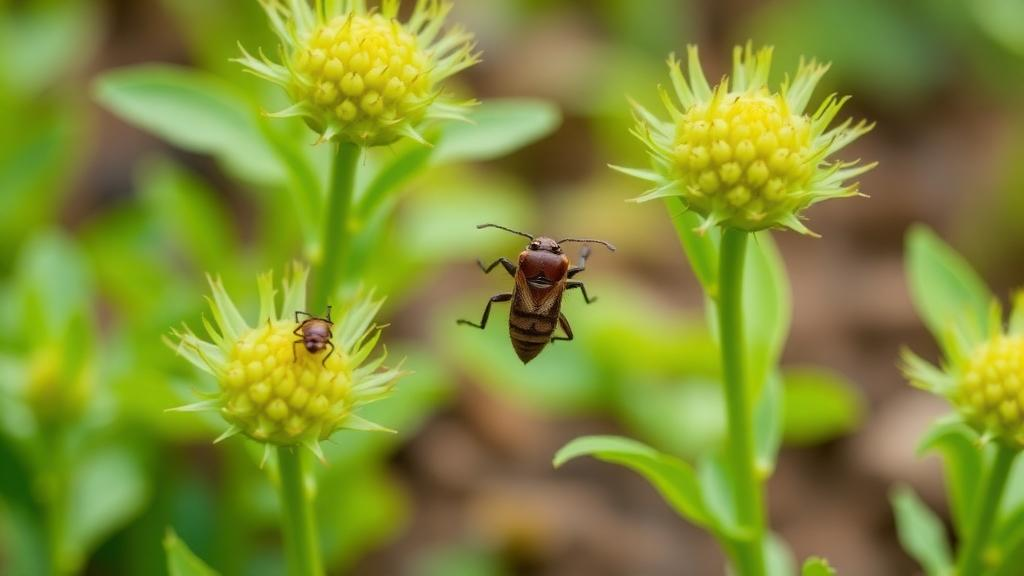
Deep inside the stems, roots, and leaves of every crop plant, a hidden workforce is clocking in. These are endophytes—bacteria, fungi, and other microorganisms that live within plant tissues without causing disease—and according to a new review published in Frontiers in Microbiomes, they may represent one of the most promising yet underexploited frontiers in sustainable pest control. The review, which synthesizes decades of research on endophyte-mediated pest resistance, delivers both an encouraging assessment of what these microbial allies can do and a sobering account of why so few have made the leap from laboratory bench to farmers’ fields.
The stakes could hardly be higher. Global food demand is projected to rise by roughly 50 percent by 2050, yet pests and diseases already claim between 20 and 40 percent of annual crop production, at an estimated cost of around 220 billion US dollars. Conventional chemical pesticides, once the backbone of crop protection, are increasingly constrained by the evolution of resistance in pest populations, environmental persistence, residue concerns, and tightening regulatory scrutiny. Against this backdrop, the idea of enlisting microbes that live inside the plant itself—defending it from within, before, during, and after pest attack—has an obvious appeal. But as the review makes clear, appeal and reliability are very different things.
The term endophyte was coined by Anton de Bary in 1866, building on observations made decades earlier, to describe organisms living inside plant tissues without producing visible disease symptoms. Today the category spans fungi, bacteria, actinomycetes, and even archaea. In pest-resistance research, the most intensively studied groups include entomopathogenic fungi such as Beauveria and Metarhizium, which can kill insects but also colonize plant tissue, and bacterial genera such as Bacillus, Pseudomonas, and Streptomyces. Grasses host a special class of vertically transmitted fungal endophytes in the genus Epichloë, which pass from parent plant to seed and can persist across generations, producing alkaloids that deter or poison herbivores.
What makes endophytes scientifically fascinating—and commercially challenging—is that their effects are not fixed properties. The same strain may act as a mutualist, a neutral commensal, or even a latent pathogen depending on host genotype, tissue type, developmental stage, environmental conditions, and the resident microbiome. The review emphasizes that pest resistance mediated by endophytes arises through several distinct but often interacting mechanisms. Direct antagonism involves insecticidal metabolites, lytic enzymes, and toxins that reduce herbivore survival, feeding, or reproduction. Indirect mechanisms include immune priming, in which the plant’s basal defenses stay low but respond faster and more strongly when attacked; hormonal crosstalk among the jasmonic acid, salicylic acid, and ethylene signaling pathways; modification of volatile organic compound emissions that can repel herbivores or recruit predators and parasitoids; and restructuring of the plant’s internal microbial community.
Immune priming is arguably the most conceptually elegant of these mechanisms. Rather than maintaining energetically costly defenses at all times, a primed plant keeps its defensive arsenal in reserve, ready to be deployed at speed when a herbivore begins feeding. Endophyte colonization appears to establish this state of heightened preparedness through pattern-recognition signaling, calcium fluxes, reactive oxygen species, and mitogen-activated protein kinase cascades, ultimately reshaping the expression of genes for proteinase inhibitors, oxidative enzymes, phenylpropanoid metabolism, and terpenoid and alkaloid biosynthesis. Yet the review stresses that the hormonal picture is rarely simple: jasmonic acid and ethylene responses are generally associated with resistance to chewing insects, salicylic acid with biotrophic pathogens and some sap-suckers, but these pathways interact synergistically, additively, or antagonistically depending on the strain, host, pest, and environment.
The volatile dimension adds a further layer of sophistication. Endophyte-colonized plants can emit altered blends of volatile organic compounds—green leaf volatiles, terpenoids, phenylpropanoids, and benzenoids—that interfere with herbivore host-finding and attract natural enemies. In one striking example, Beauveria bassiana colonization of melon plants changed the volatile profile in ways that made the predatory lacewing Chrysoperla carnea significantly prefer aphids reared on colonized plants. Microbial volatiles emitted by the endophytes themselves, including alcohols, ketones, terpenes, acetoin, and 2,3-butanediol, may prime plant defenses or directly modify insect behavior. However, the review notes that evidence for microbially mediated volatile defense remains less mature than for general herbivore-induced plant volatiles, and stronger inference will require chemical identification of the compounds involved and behavioral assays under realistic conditions.
Perhaps the most methodologically important contribution of the review is its insistence on proving that endophytism is real before attributing pest suppression to it. Inoculation alone does not constitute proof that a microorganism has actually colonized internal plant tissues. The authors argue that rigorous studies must combine surface-sterilized tissue isolation, which yields viable strains for re-inoculation and genomic characterization; culture-independent marker-gene sequencing, which captures community composition but cannot establish viability or spatial location; shotgun metagenomics and metatranscriptomics, which reveal functional gene content and transcriptional activity; and fluorescence-based imaging, which provides the most direct spatial evidence of genuine internal residency. Only by triangulating across these approaches, and linking them explicitly to pest-performance endpoints such as survival, fecundity, feeding behavior, or tissue damage, can researchers distinguish genuine endophyte-mediated resistance from epiphytic artifacts or spurious correlations.
The evidence base, when graded by this standard, is substantial but uneven. The strongest support comes from entomopathogenic fungi such as Beauveria bassiana and Metarhizium anisopliae, which combine insect-killing capacity with endophytic colonization across multiple crops. In cotton, seed-treated B. bassiana was recovered from 35 to 55 percent of sampled tissues and significantly reduced aphid reproduction in both greenhouse and multi-season field trials—one of the few systems with genuine field validation. In tomato, integrated transcriptomic and metabolomic analyses linked whitefly resistance to 1,739 differentially expressed genes and 325 differentially abundant metabolites, implicating alkaloid biosynthesis and tryptophan metabolism. Epichloë grass endophytes offer the most chemically well-characterized protection, with alkaloids such as peramine, lolines, and ergot alkaloids reliably suppressing herbivores, but this evidence is largely confined to perennial pasture systems and does not transfer easily to annual crops.
Why, then, has so little of this promise reached the field? The review identifies a cascade of translational barriers. Colonization stability is paramount: horizontally acquired endophytes must not only enter the plant but persist at biologically relevant densities throughout the pest-vulnerable period, competing with resident microbiota and withstanding fluctuating temperatures, moisture, soil chemistry, ultraviolet exposure, and agrochemical residues. Metabolite expression is environmentally sensitive—in grass systems, alkaloid production varies with host genotype, nutrient status, drought, and even herbicide residues—so bioactivity measured under controlled conditions may not predict field efficacy. Delivery method matters enormously: seed treatments suit storage-tolerant strains, root dips favor transplanted crops, and foliar sprays face wash-off and phyllosphere competition. Formulation science, often treated as an afterthought, is in reality a determinant of biological reliability, encompassing carrier selection, encapsulation, shelf life, and compatibility with existing farm equipment.
The path forward, the authors argue, requires treating endophyte-based pest resistance as a system rather than a single mechanism. Future progress will depend on standardized efficacy testing across locations and seasons, multiomics-based mechanism validation that connects gene expression to metabolite accumulation to pest outcomes, predictive strain-selection pipelines that integrate genomic, microbiome, and environmental data, and biosafety frameworks that assess non-target effects on beneficial insects, soil communities, and vertebrate safety from the earliest stages of development. Regulatory uncertainty compounds the challenge, as endophyte products may be classified variously as microbial pesticides, biofertilizers, or biostimulants, each with different evidentiary demands. The review’s central message is ultimately one of disciplined optimism: the question is no longer whether endophytes can influence pest resistance—that is well established—but whether their effects can be made reproducible across crops, soils, climates, and management systems. Bridging that gap will require mechanism, ecology, formulation, and regulation to advance together, transforming a promising biological phenomenon into a field-ready crop-protection technology.
Subject of Research: Endophyte-mediated pest resistance in crops through direct antagonism, immune priming, volatile signaling, and microbiome modulation
Article Title: Endophyte-mediated pest resistance: mechanisms, evidence gaps, and translational opportunities
Article References: Dey Roy, S., Chatterjee, D., Thakur, R., Bhattacharya, S., Mukhopadhyay, A. K., Mondal, P., Pramanik, A., & Chatterjee, H. (2026). Endophyte-mediated pest resistance: mechanisms, evidence gaps, and translational opportunities. Frontiers in Microbiomes, 5, Article 1881416. https://doi.org/10.3389/frmbi.2026.1881416
Image Credits: AI Generated
DOI: 10.3389/frmbi.2026.1881416
Keywords: endophytes, pest resistance, biological control, entomopathogenic fungi, Beauveria bassiana, immune priming, jasmonic acid, volatile organic compounds, plant microbiome, crop protection, biopesticides, Epichloë
Cite Scienmag News
Morgan Morrow. (October 16, 2026). Inside Plants: How Microbial Allies Could Rewrite Crop Pest Control. Scienmag. https://scienmag.com/inside-plants-how-microbial-allies-could-rewrite-crop-pest-control/
Morgan Morrow. "Inside Plants: How Microbial Allies Could Rewrite Crop Pest Control." Scienmag, 16 October 2026, https://scienmag.com/inside-plants-how-microbial-allies-could-rewrite-crop-pest-control/. Accessed 16 October 2026.
Morgan Morrow. "Inside Plants: How Microbial Allies Could Rewrite Crop Pest Control." Scienmag. October 16, 2026. https://scienmag.com/inside-plants-how-microbial-allies-could-rewrite-crop-pest-control/


