


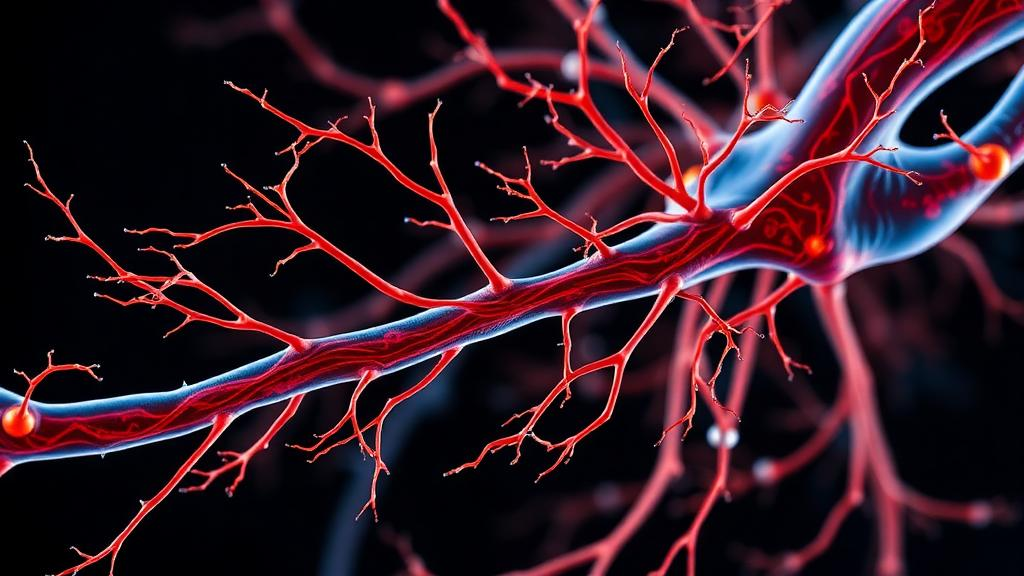
Peripheral nerve injury is one of the most common consequences of trauma, traffic accidents, and mechanical tension, and it imposes a heavy burden on global public health. Although peripheral nerves retain a remarkable capacity to regenerate, that regeneration is slow, and prolonged loss of innervation can leave patients with movement disorders, sensory abnormalities, pain sensitization, and muscle atrophy. Some face lifelong disability. A new review published in Experimental Biology and Medicine argues that the decisive battleground in this process is not the severed axon itself but the chemical microenvironment surrounding it—specifically, the delicate balance of reactive oxygen species, or ROS, and the Schwann cells that orchestrate nerve repair.
ROS are chemically reactive molecules derived from oxygen metabolism, including superoxide anion, hydroxyl radical, and hydrogen peroxide. Under physiological conditions, the cell’s endogenous antioxidant systems maintain an exquisite balance between ROS generation and scavenging. But after peripheral nerve injury, combined cellular damage and inflammation exacerbate leakage from the mitochondrial electron transport chain, while enzymes of the NADPH oxidase family and oxidative bursts during ischemia-reperfusion injury pour out additional ROS. When production overwhelms antioxidant defenses, oxidative stress ensues, and its harmful effects can overshadow the beneficial ones—inducing apoptosis, activating inflammation, and disrupting the environmental stability that regenerating nerves depend on.
The central paradox highlighted by the review is that ROS are not simply toxic byproducts. A moderate increase in ROS after injury actually promotes the proliferation and differentiation of Schwann cells and participates in signal transduction. Injury-induced hydrogen peroxide, for example, acts as a pro-regenerative signal: research cited in the review shows that it activates ERK1/2 and c-Jun to drive Schwann cell phenotype conversion, while simultaneously upregulating the gene Ctgf through the YAP/TEAD pathway to remodel the extracellular matrix in ways that guide Schwann cell migration and oriented axonal growth. Low concentrations of ROS also serve as redox signaling molecules that regulate cell proliferation, differentiation, and other basic life activities, and immune cells harness ROS bursts to clear pathogens during the inflammatory response.
Excessive ROS, however, pushes Schwann cells toward a senescent-like state that dismantles the regenerative microenvironment. The review details how oxidative damage begins with the polyunsaturated fatty acids in the Schwann cell membrane, the primary targets of ROS attack. Lipid peroxidation disrupts membrane integrity, and accumulated lipid peroxides cause neurological changes such as axonopathy and demyelination. Crucially, sustained oxidative stress can progress to ferroptosis, an iron-dependent form of cell death. Excessive ROS rapidly depletes intracellular glutathione, which inactivates glutathione peroxidase 4, the enzyme responsible for neutralizing toxic lipid hydroperoxides. The Fenton reaction, triggered by hydrogen peroxide and ferrous ions, then initiates lipid peroxidation that ruptures the cell membrane, while the enzyme ACSL4 exacerbates the damage by enriching the membrane with the very fatty acids most prone to peroxidation.
Oxidative stress also undermines Schwann cell function through more indirect routes. It inhibits proliferation in a dose-dependent manner, suppresses the secretion of neurotrophic factors such as brain-derived neurotrophic factor and nerve growth factor, and degrades key extracellular matrix components like laminin and fibronectin that provide the physical scaffolding for axonal regeneration. At the molecular level, cell fate hinges on a dynamic equilibrium between pro-survival pathways—Nrf2/ARE, MAPK/ERK, PI3K/Akt, and NF-κB—and pro-apoptotic pathways including JAK/STAT, ATM/p53, and MAPK/JNK/p38. Excessive ROS tips this balance toward apoptosis by boosting pro-apoptotic proteins such as Bax and Caspase-3, and it can arrest Schwann cells in the G0/G1 phase, leaving them quiescent or senescent and unable to clear myelin debris, secrete trophic factors, or support axon regrowth.
Schwann cells are not passive victims. The review describes a layered endogenous antioxidant arsenal. Damaged mitochondria are sequestered and degraded through mitophagy pathways involving PINK1/Parkin, BNIP3/NIX, and FUNDC1, limiting further ROS production. The AMPK and mTOR pathways bidirectionally regulate macroautophagy according to nutrient availability, sustaining cellular survival under energy stress. Enzymatic defenses—superoxide dismutase, catalase, and glutathione peroxidase—convert ROS into non-toxic metabolites, while non-enzymatic antioxidants such as vitamins C, E, and A, melatonin, and glutathione directly neutralize reactive species. Together these systems regenerate and recycle antioxidant enzymes, establishing a sustainable cycle of defense.
The translational centerpiece of the review is a new generation of nerve guidance conduits engineered around this oxidative axis. Traditional scaffolds are single-function designs that cannot respond to the dynamic changes of the regenerative microenvironment, and most FDA-approved conduits remain passive hollow tubes that perform well only for short defects under three centimeters. The emerging paradigm integrates living cells, scaffold matrices, and bioactive signaling factors into three-dimensional constructs that actively direct axon growth. Pore architecture matters enormously: sufficiently large, interconnected channels promote vascular ingrowth and nutrient exchange, reversing the energy depletion that oxidative stress imposes on Schwann cells, while excessively small pores act as physical barriers that starve cells and heighten their susceptibility to ferroptosis. Ideal conduits therefore adopt graded or composite pore structures, exemplified by multichannel GelMA hydrogels with 200-micrometer main channels and fiber scaffolds with nanoscale grooves that guide directional Schwann cell migration.
Material selection has evolved in parallel. Natural polymers such as chitosan and hyaluronic acid offer excellent biocompatibility—one composite conduit combining the two promoted Schwann cell proliferation while suppressing fibroblast overgrowth and scar formation—whereas synthetic polymers like polycaprolactone provide superior mechanical strength for long-gap repairs. Composite designs reconcile these trade-offs, as in mineralized collagen conduits that boost compressive strength without sacrificing bioactivity. Conductive scaffolds add another dimension: graphene-based composites establish three-dimensional electrical networks that promote coupling among Schwann cells, while their abundant π-electron clouds efficiently scavenge hydroxyl radicals, achieving simultaneous electrical conductivity and antioxidant capacity. Weak electrical signals from such scaffolds also activate endogenous calcium signaling and FAK/AKT pro-survival pathways, reversing oxidative suppression of neurotrophic factor secretion.
Perhaps the most striking advances are smart delivery systems that exploit ROS themselves as triggers. ROS-responsive hydrogels release their cargo only where and when oxidative stress flares, carrying antioxidants, neurotrophic factors, anti-inflammatory drugs, or gene therapies. One such system delivers engineered extracellular vesicles loaded with PINK1 mRNA that specifically target receptors on senescent Schwann cells, activating mitophagy to clear damaged mitochondria and reverse senescence. Another releases hydrogen sulfide in response to high ROS, simultaneously activating the Nrf2/HO-1 antioxidant axis and suppressing NF-κB-mediated inflammation. Engineered exosome platforms, magnetothermal release systems that activate TRPV1 channels to spur Schwann cell migration, and 4D bioprinted conduits that self-roll around injured nerves within seconds round out a toolkit that shifts nerve repair from passive support to active microenvironmental reprogramming.
The authors are candid about the distance to the clinic. Most current strategies act indirectly on the Schwann cell–ROS axis, no clinical trials yet directly target the interaction between the two, and the smartest systems face substantial barriers in long-term stability, scalable production, and standardized material benchmarks. Yet the trajectory is clear: by mapping how ROS dynamics govern Schwann cell fate—from mitochondrial electron leakage and reverse electron transport during reperfusion to ferroptosis and senescence—the field now possesses the mechanistic blueprint for intelligent neural repair systems that sense their chemical surroundings and respond in real time. If those systems mature, precise regeneration between peripheral nerves and their target organs could move from aspiration to routine practice, reducing the complications that currently condemn many injured nerves to permanent dysfunction.
Subject of Research: The dual role of reactive oxygen species in Schwann cell function and peripheral nerve regeneration
Article Title: The interaction between oxidative stress and Schwann cells
Article References: Yang, S., Zhang, Z., Liao, Q., Ouyang, Q., Ye, Y., Lu, W., & Jiang, Z. (2026). The interaction between oxidative stress and Schwann cells. Experimental Biology and Medicine, 251, Article 11146. https://doi.org/10.3389/ebm.2026.11146
Image Credits: AI Generated
Keywords: Schwann cells, reactive oxygen species, oxidative stress, peripheral nerve injury, nerve guidance conduits, ferroptosis, neural tissue engineering, mitophagy, Nrf2 pathway, drug delivery systems, 4D bioprinting, nerve regeneration
Cite Scienmag News
Gregory Coleman. (October 16, 2026). Reactive oxygen species hold the key to repairing damaged peripheral nerves. Scienmag. https://scienmag.com/reactive-oxygen-species-hold-the-key-to-repairing-damaged-peripheral-nerves/
Gregory Coleman. "Reactive oxygen species hold the key to repairing damaged peripheral nerves." Scienmag, 16 October 2026, https://scienmag.com/reactive-oxygen-species-hold-the-key-to-repairing-damaged-peripheral-nerves/. Accessed 16 October 2026.
Gregory Coleman. "Reactive oxygen species hold the key to repairing damaged peripheral nerves." Scienmag. October 16, 2026. https://scienmag.com/reactive-oxygen-species-hold-the-key-to-repairing-damaged-peripheral-nerves/


