


In 2011, the Mexican city of Guadalajara beat rivals including Monterrey, Puebla, Tijuana, and Querétaro in a national competition to host the country’s flagship Digital Creative City, an ambitious plan to transform 43 hectares of its decaying historic center into a smart-city hub for audiovisual production, software, video games, and animation. A new study tracking the project through 2026 finds that, more than a decade later, the district’s glass towers are architecturally aligned with the world’s best innovation districts, yet its social foundation is cracking: the surrounding neighborhood lost 37 percent of its residents between 2010 and 2020, and the very creative workers the project was meant to attract refuse to live there.
The research, published in Frontiers in Human Dynamics by Juan A. Demerutis-Arenas of the University of Guadalajara’s Planning Department, frames the project as a “disruption of a traditional grid” operating on three levels at once. Economically, it marks a break from Guadalajara’s 20th-century identity as an electronics manufacturing center toward a high-value knowledge economy. Institutionally, it dismantles rigid, vertical bureaucratic silos in favor of adaptive, project-based governance. Spatially, it aims to convert underutilized brownfields around Morelos Park into a dense “live-work-play” ecosystem. The study’s central finding, however, is a stubborn gap between the theoretical model and the district’s operational reality.
To evaluate the project, the author triangulated longitudinal evidence through 2026, combining systematic document analysis of official records from 2011 to the end of 2025, non-participant observation over a full workweek around the district, census data, and semi-structured interviews with two DCC employees and two nearby residents. The interviews, designed for qualitative validation rather than statistical representativeness, probed infrastructure, quality of life, perceived safety after dark, and trust in governance following the shift from a civil association to a state agency. Observations revealed a stark pattern: after 8 p.m. the streets are practically empty, most businesses close at 7 p.m., bus service slows, and workers commute home to other neighborhoods.
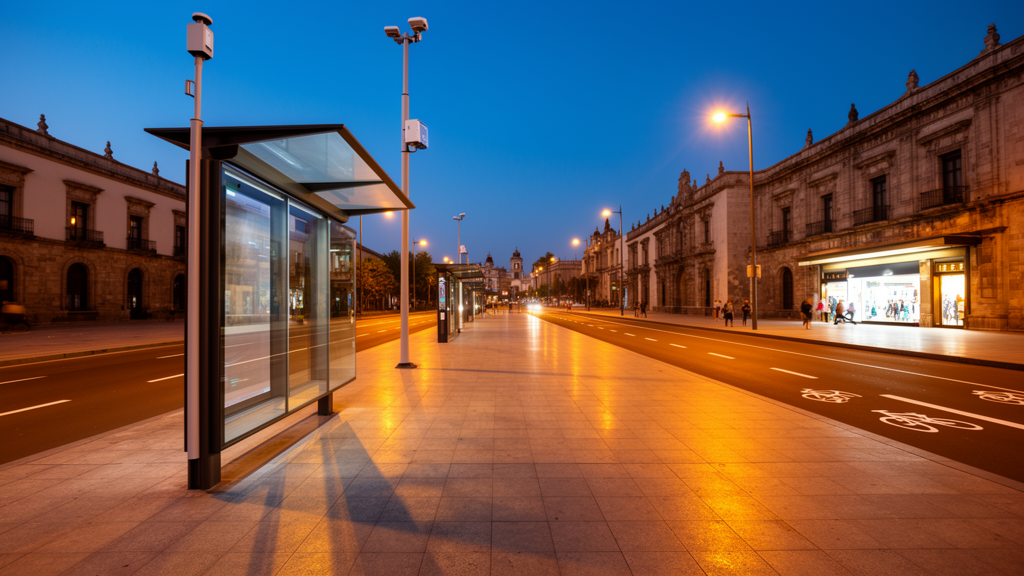
That pattern points to the study’s most striking empirical finding. Employees already working in the district’s towers reject the live-work-play model outright, citing persistent urban insecurity. They prefer to travel several kilometers to other parts of Guadalajara that offer more green space, better amenities, and, above all, safety for their families. The intended magnet for the so-called creative class—professionals, scientists, and artists aged roughly 26 to 45, along with digital nomads—has instead become a daytime-only destination. Neighbors interviewed near Morelos Park described the new buildings as drawing outsiders who arrive at 8 a.m., leave at 7 p.m., and generate morning and evening traffic without contributing any street life on weekends.
The project’s origins trace to 2009, when the federal agency ProMéxico conceived the idea of positioning Mexico as a strategic player in global digital content production. A 2010 partnership with the Massachusetts Institute of Technology helped evaluate candidate sites, and Guadalajara was chosen in 2011 on the strength of three decades of electronics and software industry experience, a rich cultural identity, recognized animation and digital media talent, and available public land left vacant after the 2011 Pan American Games village project was built in the neighboring municipality of Zapopan. In November 2012, an international consortium led by architect Carlo Ratti of MIT’s Senseable City Lab, together with Accenture, Arup, and Fundación Metrópoli, presented a master plan built on a “complex city” model harmonizing territory, mobility, energy, housing, and environment.
That plan organized the intervention as a mosaic of seven urban renewal axes radiating from the Digital Hub at Morelos Park, including pedestrian corridors, an eco-boulevard with green infrastructure, a health axis, and an eco-city covering the La Perla and San Juan de Dios neighborhoods. The strategy aimed to offer residents employment, education, health, and recreation in one compact area. Yet implementation faltered badly. A venture capital fund created in 2014 contributed 96 million pesos but was forced to return 30 million in 2016 amid administrative inefficiency and a shortage of qualified projects. The Federal Superior Audit Office later identified improper payments, simulated contracting, and incomplete work in the first complex totaling irregularities of more than 73 million pesos, and anchor tenant Bosch withdrew after years of waiting for promised buildings.
To overcome the stagnation, the state created a decentralized public agency for creative and digital industries in 2019, and in 2022 the project was rebranded as Distrito Creativo Guadalajara with a pragmatic focus on repopulation and profitability. By the end of 2022, the first creative complex was operational: two office towers housing fifteen economic units, including animation studio Demente, video game company Amber, software firm XTendOps, and pharmaceutical laboratory Pisa, alongside the Technological University of Jalisco and the Open Innovation Platform, an incubator training thousands of students. Tower B remains under construction, meaning the productive phase is still incomplete more than ten years after the project began. Only about 13,000 square meters across two towers have been built to date.
The demographic picture is the project’s hardest test. The municipality of Guadalajara peaked in 1990 at 1,650,205 inhabitants and has since lost more than 264,000 residents even as 67,000 homes were added. Far from reversing the trend, the intervention area’s population fell from 632 to 394 inhabitants between 2010 and 2020, and only 70 percent of existing homes are occupied. Housing developments on four tendered properties—ultimately planned to add more than 750 units plus commercial space—are meant to attract digital nomads, students, and creative workers, but the study warns there is no guarantee new residents will arrive without improvements to safety and neighborhood quality.
Using a comparative framework spanning urban design, location, governance, social impact, and institutions, the study finds the DCC congruent with global innovation district theory on design, location, and institutional presence, but fundamentally incongruent on governance and social equity. Theory calls for district management independent of political cycles, transparent budgets, open data, and the integration of civil society in quadruple-helix models. Instead, Guadalajara’s project has swung from a fragmented multi-stakeholder civil association to a state-controlled agency with little co-production, breeding mistrust among residents, particularly after the earlier Pan American Village project displaced existing businesses. The absence of the well-established University of Guadalajara as an active anchor, the author suggests, deprived the district of institutional depth that newly created universities cannot quickly supply.
The study concludes that no “one-size-fits-all” formula exists for innovation districts, and it proposes a future framework pairing adaptive, project-based governance with resilient urban design, demographic revitalization, and explicit safeguards against gentrification and displacement. The recommendations include completing Tower B, attracting recognized anchor technology companies, increasing investment in technology ventures, implementing open-data and digital monitoring tools, ensuring management continuity beyond three-year political terms, and integrating original residents into housing and commerce so the district does not harden into an elite enclave. Only then, the author argues, can Guadalajara convert its gleaming physical infrastructure into a living, equitable social fabric in which technology serves as an engine of shared development rather than merely a real estate label.
Subject of Research: Long-term evaluation of the Digital Creative City innovation district and smart city redevelopment in Guadalajara, Mexico
Article Title: The creative digital city of Guadalajara, Mexico. Disruption of a traditional grid
Article References: The creative digital city of Guadalajara, Mexico. Disruption of a traditional grid. (n.d.). https://doi.org/10.3389/fhumd.2026.1829357
Image Credits: AI Generated
DOI: 10.3389/fhumd.2026.1829357
Keywords: Guadalajara, innovation districts, smart cities, creative class, urban regeneration, governance, gentrification, digital economy, live-work-play, Mexico, urban planning, knowledge economy
Cite Scienmag News
Courtney Benton. (October 16, 2026). Guadalajara’s Smart City Dream Stumbles Over Insecurity and Empty Streets. Scienmag. https://scienmag.com/guadalajaras-smart-city-dream-stumbles-over-insecurity-and-empty-streets/
Courtney Benton. "Guadalajara’s Smart City Dream Stumbles Over Insecurity and Empty Streets." Scienmag, 16 October 2026, https://scienmag.com/guadalajaras-smart-city-dream-stumbles-over-insecurity-and-empty-streets/. Accessed 16 October 2026.
Courtney Benton. "Guadalajara’s Smart City Dream Stumbles Over Insecurity and Empty Streets." Scienmag. October 16, 2026. https://scienmag.com/guadalajaras-smart-city-dream-stumbles-over-insecurity-and-empty-streets/


