


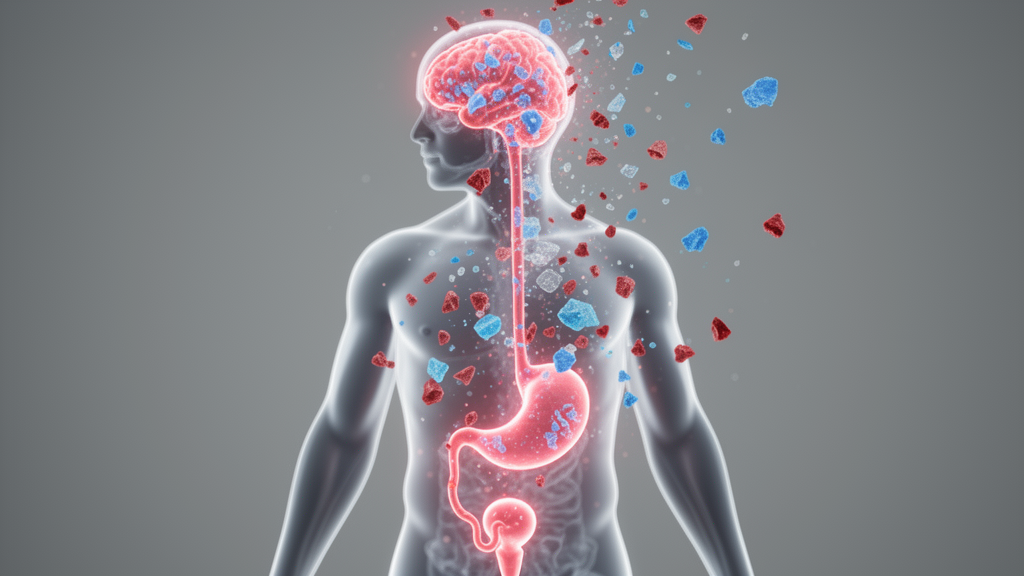
In a finding that reads like a diagnosis for the entire human species, researchers have systematically confirmed what a wave of individual studies has been suggesting for years: microplastics are not just in our oceans, our food, and our air — they are in our blood, our placentas, our breast milk, our semen, our lungs, our hearts, and even our brains. A new systematic review published in Environmental Science and Pollution Research synthesized 40 original human studies and found that microplastics have now been detected in virtually every biological matrix scientists have thought to examine, from urine and feces to amniotic fluid and meconium, the earliest stool a newborn produces.
The review, led by Israel Ríos-García and Belkis Sulbaran-Rangel at the Universidad de Guadalajara in Mexico, searched PubMed, Web of Science, and Scopus for observational studies involving human participants published in English up to 2025. The 40 included studies collectively confirmed the presence of microplastics in blood, urine, feces, placenta, breast milk, semen, lung tissue, and heart tissue, among other matrices. The particles were predominantly fragments and fibers, and the most commonly identified polymers were polyethylene, polypropylene, polystyrene, and polyethylene terephthalate — the same four plastics that dominate global production and packaging, suggesting the human body is effectively mirroring the industrial plastisphere that surrounds it.
What makes this review particularly valuable is not just the confirmation of widespread contamination but its unflinching assessment of how good the evidence actually is. Using the Newcastle–Ottawa Scale to evaluate quality and risk of bias, the authors found that 52.5 percent of the studies were of moderate quality, indicating that while the frequent detection of these particles suggests widespread human contact, significant methodological shortcomings and potential analytical overestimations limit the accurate quantification of systemic exposure. In other words, we know the particles are there, but we cannot yet say precisely how many, how toxic, or what they are doing to us over decades of chronic exposure.
The analytical techniques underpinning these detections are as varied as they are sophisticated. Fourier-transform infrared microspectroscopy, or μFTIR, works by bombarding a sample with infrared light and reading the unique vibrational fingerprint each polymer returns, allowing researchers to identify plastic type down to particles of roughly 10 to 20 micrometers. Micro-Raman spectroscopy uses laser light to excite molecular vibrations and can push detection down to even smaller particles, making it ideal for matrices like urine and kidney tissue where particles may be scarce and tiny. Laser direct infrared spectroscopy, or LDIR, automates the imaging process and can rapidly scan entire filters, while pyrolysis–gas chromatography/mass spectrometry, or Py-GC/MS, takes a fundamentally different approach: it heats the sample until the plastic decomposes into characteristic fragments that are then separated and identified by mass spectrometry, providing polymer identity and mass quantification simultaneously.
Yet this very diversity of techniques is part of the problem. The review observed substantial methodological heterogeneity in the analytical approaches, the reporting units, and the limits of detection across the 40 studies. Some studies report particles per liter of blood, others report mass per gram of tissue, and still others report particles per gram of feces. Without standardized units, comparing results across studies becomes nearly impossible, and the risk of analytical overestimation — where non-plastic particles are mistakenly counted as plastic, or where laboratory contamination inflates counts — remains a serious concern. The authors note that this heterogeneity limits not only accurate quantification but also the strength of causal inferences that can be drawn about health effects.
The detection of microplastics in the placenta, often referred to as plasticenta since the first evidence emerged in 2021, is among the most consequential findings. The placenta is the interface between mother and fetus, and particles found there — including in the intracellular compartment of placental cells — suggest that microplastics can cross this barrier and reach the developing fetus. Studies have now detected microplastics in placental tissue, amniotic fluid, meconium, fetal cord blood, and even placental blood, painting a picture of prenatal exposure that begins before birth. Similarly, the detection of microplastics in breast milk raises questions about postnatal exposure during a critical window of development, though the review emphasizes that detection alone does not establish harm.
Beyond the reproductive system, microplastics have been found in lung tissue — including in European citizens’ lower airways — and in heart tissue from patients undergoing cardiac surgery. The detection of microplastics in atheromas, the fatty plaques that build up in arteries, has been linked to cardiovascular events in a study published in the New England Journal of Medicine, one of the most cited and discussed findings in the field. The presence of microplastics in cirrhotic liver tissue, in thrombi, in endometrial tissue, in testis and semen, and in decedent human brains — where concentrations were notably higher than in other organs — suggests these particles are not merely passing through the body but accumulating in tissues over time.
Animal and cell studies provide mechanistic clues about what these particles might be doing. Polystyrene microplastics have been shown to cause granulosa cell apoptosis and fibrosis in ovaries through oxidative stress, disrupt the blood-testis barrier integrity, induce gut microbiota dysbiosis and hepatic lipid metabolism disorders in mice, and trigger cytotoxic effects on human cerebral and epithelial cells. Advanced epithelial lung and gut barrier models demonstrate that microplastic particles can pass through these protective layers, suggesting a plausible pathway for systemic distribution. Yet the review is careful to note that current evidence remains insufficient to establish causal relationships between microplastic exposure and human disease outcomes, underscoring the urgent need for rigorous epidemiological studies.
The review’s findings arrive at a moment of growing public concern about the human plastisphere — a term coined to describe the accumulation of plastic particles in and on the human body. Global plastic production continues to rise, with hundreds of millions of tonnes produced annually, and microplastics have now been detected in remote mountain catchments, in drinking water, in the air we breathe, and in the food we eat. The ubiquity of these particles in human biological matrices suggests that exposure is not a matter of lifestyle or geography but a universal condition of modern life, with every human on the planet likely carrying some burden of plastic particles in their tissues.
What happens next will depend on whether the field can move from detection to dose, from presence to pathology. The review’s authors call for standardized analytical protocols, harmonized reporting units, and rigorous epidemiological studies that can establish or refute causal links between microplastic exposure and specific health outcomes. Until then, the widespread detection of microplastics in human blood, placenta, breast milk, semen, lung, and heart tissue raises legitimate public health concerns about chronic exposure and potential health implications — but the honest scientific answer to the question of what these particles are doing to us remains, for now, that we do not yet know. What we do know, with increasing confidence, is that the human body is no longer separate from the plastic pollution crisis. It is part of it.
Subject of Research: Detection, characterization, and quantification of microplastics in human biological matrices: a systematic review
Article Title: Detection, characterization, and quantification of microplastics in human biological matrices: a systematic review
Article References: Detection, characterization, and quantification of microplastics in human biological matrices: a systematic review. (n.d.). https://doi.org/10.1007/s11356-026-38311-9
Image Credits: AI Generated
DOI: 10.1007/s11356-026-38311-9
Keywords: Detection, characterization, quantification, microplastics, human, biological, matrices, systematic, review, scientific research
Cite Scienmag News
Cassandra Pierce. (October 16, 2026). Microplastics Found in Blood, Placenta, and Brain: Systematic Review Maps the Human Plastisphere. Scienmag. https://scienmag.com/microplastics-found-in-blood-placenta-and-brain-systematic-review-maps-the-human-plastisphere/
Cassandra Pierce. "Microplastics Found in Blood, Placenta, and Brain: Systematic Review Maps the Human Plastisphere." Scienmag, 16 October 2026, https://scienmag.com/microplastics-found-in-blood-placenta-and-brain-systematic-review-maps-the-human-plastisphere/. Accessed 16 October 2026.
Cassandra Pierce. "Microplastics Found in Blood, Placenta, and Brain: Systematic Review Maps the Human Plastisphere." Scienmag. October 16, 2026. https://scienmag.com/microplastics-found-in-blood-placenta-and-brain-systematic-review-maps-the-human-plastisphere/


