


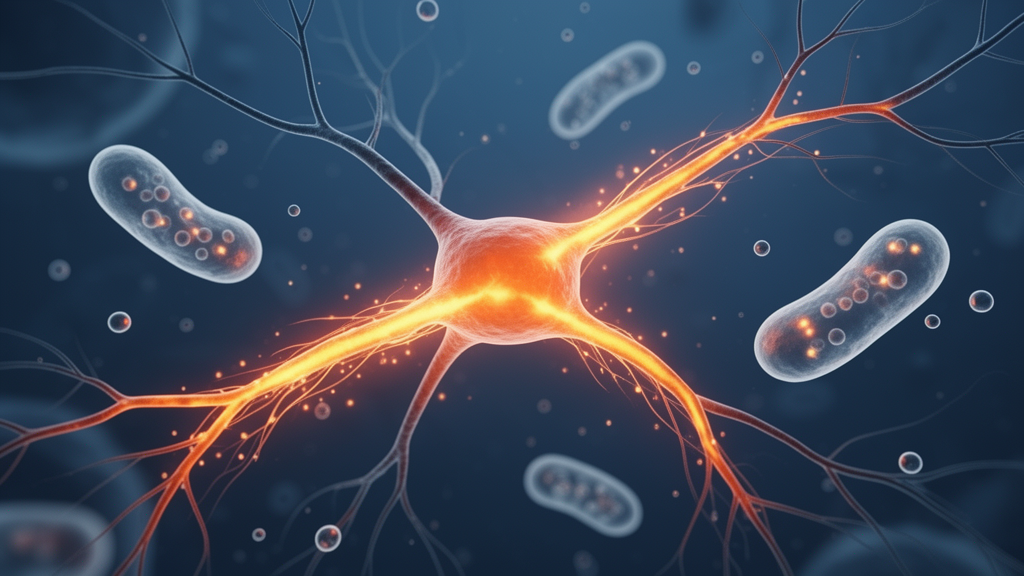
Calcium is best known as the universal cellular messenger that switches on secretion, contraction, neurotransmission and gene expression, but a new opinion article in Frontiers in Synaptic Neuroscience argues that this humble ion may sit at the very center of schizophrenia’s most stubborn clinical problems. The authors, led by Milica M. Borovcanin of the University of Kragujevac in Serbia, together with Monojit Debnath of India’s National Institute of Mental Health and Neurosciences, propose that dysregulated calcium signaling is not merely a side effect of antipsychotic treatment but a candidate trigger and amplifier of both the psychiatric disease itself and the asthma, diabetes and metabolic syndrome that so frequently travel alongside it. The argument rests on a striking convergence of genetics, endocrinology and immunology around a single signaling hub.
The clinical observation that first drew attention to calcium in schizophrenia is deceptively simple. Hypocalcemia, a lowered concentration of calcium in the blood, has been consistently reported in patients with the disorder, yet clinicians have long treated it as a sequela rather than a causal determinant. A large cohort analysis did associate hypocalcemia with use of the atypical antipsychotic risperidone, and antipsychotics are known to modulate the immune system and bone metabolism, producing secondary metabolic effects that are well documented in this population. Recent interpretations of akathisia, the distressing syndrome of inner restlessness and objective fidgeting, rocking and pacing that can accompany antipsychotic therapy, also implicate the calcium channel blockade that these drugs perform. Evidence from a Mendelian randomization study adds a genetic dimension, suggesting that calcium regulatory hormones are linked to psychiatric phenotypes and that innate differences in calcium regulation could influence both disease biology and individual sensitivity to drug-induced movement disorders.
Calcium channels themselves have a strong neuropsychiatric pedigree. Mutations and polymorphisms in these channels have been associated with the onset of migraine, cerebellar ataxia, autism, depression, bipolar disorder and schizophrenia. Because calcium entry through voltage-gated channels depolarizes the cell surface membrane and triggers gene expression, secretion and contraction in neuronal cells, any inherited or acquired disturbance of channel function has the potential to reshape synaptic plasticity across the brain. The authors emphasize that a host of vulnerability factors, including unhealthy lifestyle, reduced physical activity, smoking, poor diet and genetic elements, confer risk for schizophrenia, and that a substantial number of patients are predisposed to the cumulative side effects of their medications. All of these factors converge on systemic changes, especially along immune and metabolic trajectories.
The genuinely new perspective comes from the immune side. The research group previously demonstrated elevated levels of soluble Suppressor of Tumorigenicity-2, or sST2, a member of the interleukin-1 family, during the exacerbation of psychosis. When sST2 binds IL-33, it dampens the effects of that alarmin cytokine, and in schizophrenia sST2 was found to exert beneficial effects by negatively correlating with scores reflecting negative symptoms. In a subsequent study of 27 patients with schizophrenia in remission, the team observed something unexpected: a statistically significant positive correlation between serum sST2 concentrations and calcium levels, with a correlation coefficient of 0.454 and a p value of 0.020. These findings suggest a connection between calcium and a key substrate of sterile inflammation in the disorder, positioning calcium as a potential regulator of immune-metabolic signaling rather than a passive bystander.
To understand why this correlation matters, one must follow calcium into the endoplasmic reticulum, the intracellular store that fine-tunes signaling in neurons and pancreatic beta cells alike. A review by Luiz Bergantin provided critical insights into the functional implications of dysregulated intracellular calcium released from the endoplasmic reticulum, unfolding the basis of cyclic adenosine monophosphate stimulation in schizophrenia, asthma and diabetes. Under this framework, increased intracellular calcium concentration may precede dysregulation of the dopamine system, airway smooth muscle hypercontractility and decreased insulin release. In other words, a single intracellular disturbance could set the stage for the dopaminergic dysfunction of psychosis, the bronchial hypercontractility of asthma and the insulin secretory failure of diabetes simultaneously.
The molecular bridge between these processes is the protein Disrupted-In-Schizophrenia 1, or DISC1, one of the most significant susceptibility genes for the disorder. DISC1 is localized to the endoplasmic reticulum membrane and functionally interacts with components that regulate calcium release. Loss of DISC1 function leads to dysregulation of calcium handling, with increased release of the ion into the cytosol. Based on these findings, DISC1 acts as a fine-tuning regulator of calcium release from the endoplasmic reticulum and of intracellular calcium dynamics, while its dysfunction produces significant disruption of intracellular signaling. These disturbances are accompanied by disruption of synaptic homeostasis and of dopaminergic and glutamatergic neurotransmission, which are central characteristics of schizophrenia. Mutations in DISC1 have been shown to alter the functioning of IP3 receptors and voltage-gated calcium channels, directly implicating endoplasmic reticulum calcium dynamics in major mental illness.
Pancreatic beta cells tell a parallel story. Under conditions of chronic hyperinsulinemia and endoplasmic reticulum stress, the synthesis of proinsulin and the organelle’s regulatory role in maintaining intracellular calcium homeostasis are disrupted, accompanied by increased calcium leakage from the endoplasmic reticulum and a resulting chronic rise in cytosolic calcium. This imbalance may begin with enhanced insulin secretion, but over time it depletes secretory capacity and drives functional decompensation of the beta cells. Chronically elevated cytosolic calcium activates calcium-dependent proteases, mitochondrial pathways and oxidative stress, leading to apoptotic mechanisms and loss of beta-cell mass. Chronic low-grade inflammation through secreted cytokines further enhances endoplasmic reticulum stress and destabilizes calcium homeostasis, creating a vicious cycle in which immune signaling and calcium handling destroy each other’s equilibrium.
The IL-33/ST2 pathway weaves the immune and metabolic threads together. Under physiological conditions, IL-33 activates regulatory T cells and type 2 innate lymphoid cells, promoting an anti-inflammatory milieu and adipose thermogenesis. In obesity, however, an expression-function paradox emerges: although IL-33 expression is elevated in obese adipose tissue, effector cell dysfunction impairs its protective attributes, including sST2-mediated neutralization. The authors also draw parallels between the immune responses of asthma, the prototype of a type 2 immune response, and schizophrenia, noting that patients with the psychiatric disorder appear to have a more pronounced type 2 immune response, as indicated by elevated sST2 during exacerbations, a response that may be corrected with antipsychotics. Repeated exacerbations in both diseases, accompanied by inflammation in the microvascular network, could lead to deterioration of joint tissues, fibrosis and gliosis. Consistent with this, one etiological model of asthma proposed calcium elevation within the endoplasmic reticulum as an endogenous inducer of inflammation, and in vitro studies observed that ST2 was less expressed in bronchial epithelial cells in asthma, with stimulation by IL-33 increasing intracellular calcium in that proinflammatory environment.
The clinical implications are considerable. A meta-review of first-episode psychosis has framed the condition as a multisystem disorder, with central nervous system, immune, cardiometabolic and endocrine alterations present from the outset, and the authors suggest that calcium is involved not only in early programming but in the orchestration of a unique immunometabolic and mental profile later in life. Cumulative effects could drive neurodegeneration and neuroprogression in patients, and frequent exacerbations and deterioration may be linked to disturbances in calcium/ST2 dynamics. Inflammation and calcium homeostasis are among the hallmarks of aging pathways used to identify potential frailty biomarkers. A considerable number of patients with schizophrenia have chronic low-grade inflammation and constitute an inflammatory subgroup of the disorder, with notable immune differences observed in those resistant to conventional therapy. Immune markers are increasingly suggested as potential targets of pharmacotherapy, and the IL-33/ST2 signaling pathway is emerging as a viable new target across neuroinflammatory conditions, since targeting sST2 could attenuate neuroinflammation and promote repair mechanisms in the brain.
Novel antipsychotic drugs are already moving in this direction. The Trace Amine-Associated Receptor 1 agonist has been demonstrated to reduce microglia-mediated inflammatory response, acts as an inhibitory modulator of the dopaminergic system, and is considered a promising new target for improving beta-cell health in type 2 diabetes. Notably, TAAR1 impacts the signaling and internal mobilization of calcium, and the authors argue that the crosstalk among TAAR1, calcium and the IL-33/ST2 pathway needs further exploration in schizophrenia. Improvement of the negative and cognitive symptoms with more viable anti-inflammatory or immunomodulatory agents should be the main focus of future pharmacotherapeutic strategies. The authors close with a call to incorporate these findings rapidly into clinical practice: a better understanding of calcium-dependent immune-metabolic signaling may improve the identification of biologically distinct schizophrenia phenotypes and of patients at increased risk of metabolic comorbidity, and future studies should determine whether calcium/ST2 interactions could serve as clinically relevant biomarkers or therapeutic targets. If the hypothesis holds, the ion that fires every synapse may also explain why the mind and the metabolism fail together.
Subject of Research: Calcium at the crossroads of the immunometabolic signaling and comorbidity in schizophrenia
Article Title: Calcium at the crossroads of the immunometabolic signaling and comorbidity in schizophrenia
Article References: Calcium at the crossroads of the immunometabolic signaling and comorbidity in schizophrenia. (n.d.). https://doi.org/10.3389/fnsyn.2026.1882307
Image Credits: AI Generated
DOI: 10.3389/fnsyn.2026.1882307
Keywords: calcium signaling, schizophrenia, sST2, IL-33/ST2 pathway, DISC1, immunometabolism, Calcium, crossroads, immunometabolic, signaling, comorbidity, scientific research
Cite Scienmag News
Juliet Wilcox. (October 16, 2026). Calcium signaling emerges as a shared driver of schizophrenia and its metabolic comorbidities. Scienmag. https://scienmag.com/calcium-signaling-emerges-as-a-shared-driver-of-schizophrenia-and-its-metabolic-comorbidities/
Juliet Wilcox. "Calcium signaling emerges as a shared driver of schizophrenia and its metabolic comorbidities." Scienmag, 16 October 2026, https://scienmag.com/calcium-signaling-emerges-as-a-shared-driver-of-schizophrenia-and-its-metabolic-comorbidities/. Accessed 16 October 2026.
Juliet Wilcox. "Calcium signaling emerges as a shared driver of schizophrenia and its metabolic comorbidities." Scienmag. October 16, 2026. https://scienmag.com/calcium-signaling-emerges-as-a-shared-driver-of-schizophrenia-and-its-metabolic-comorbidities/


