


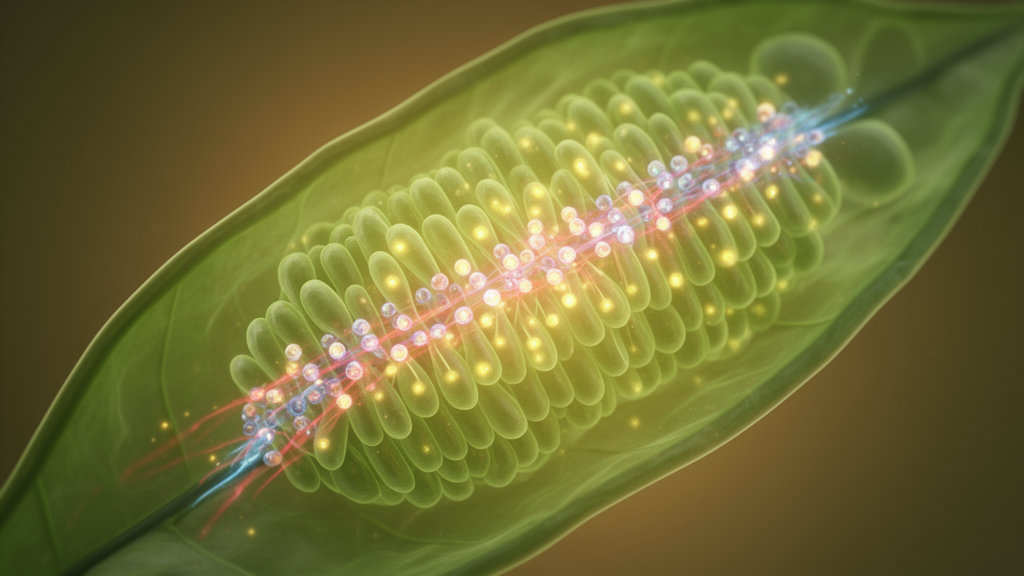
For roughly half a century, scientists have tried to rewire photosynthetic organisms so that the energy they harvest from sunlight flows into useful products instead of ordinary metabolism. Cyanobacteria have been engineered to make hydrogen, ethylene and other valuable compounds by removing native energy pathways or adding exogenous ones. Yet a new perspective article published in Frontiers in Photobiology argues that these strategies often fail for a reason that has been hiding in plain sight: the photosynthetic machinery itself is not a fixed assembly of proteins but a remarkably plastic system that reshapes its own structure and function whenever downstream electron utilization is perturbed.
The authors, a team from the National Laboratory of the Rockies Biosciences Center led by Carolyn E. Lubner, focus on the cyanobacterium Synechocystis sp. PCC 6803, a workhorse organism for photosynthesis research. Their central claim is that the interplay between primary light capture, the conversion of photons into high-energy electrons, and the downstream sinks that consume those electrons forms a feedback loop. When engineers redirect electrons toward a desired product, the organism compensates by altering the light capture and conversion machinery in ways that can profoundly affect photosynthetic efficiency and product yield.
The perspective highlights four components where this plasticity is emerging. Phycobilisomes, the large light-harvesting antennae of cyanobacteria, exist in two major forms that differentially associate with specific configurations of the reaction centers. Photosystem I, the reaction center that converts photons into high-energy electrons, can be found predominantly as a trimer or, under dynamic environmental conditions, as a monomer. The [NiFe]-hydrogenase complex known as HOX consists of five subunits catalyzing reversible oxidation of molecular hydrogen linked to NAD(P)H and ferredoxin reactivity, as well as a three-subunit subcomplex with diaphorase activity. Finally, four distinct flavodiiron enzymes can form homo- or heterodimer pairs that link oxidation of photosynthetic carrier pools to the reduction of oxygen to water.
Phycobilisomes are supramolecular protein complexes ranging from 3 to 18 megadaltons, containing thousands of covalently bound linear tetrapyrrole chromophores called bilins. These absorb light between roughly 500 and 600 nanometers and give the isolated complexes their brilliant blue color. Excitation energy transfer through the phycobilisome is nearly quantum efficient, proceeding via both Förster and coherent mechanisms. The precise orientation of the highly conjugated bilin pi-systems underlies all phycobilisome architecture, with large uninterrupted rows of these pi-systems funneling light energy down the antennae toward the reaction centers. The rods, made of multimeric disks of phycobiliproteins such as phycocyanin and phycoerythrin, are assembled via rod-specific linkers and either link directly to the thylakoid membrane through the CpcL linker or arrange into fanned supramolecular rods emanating from cores of allophycocyanin via CpcG-type linkers.
Both CpcL single-rod phycobilisomes and the massive CpcG complexes with fanned rods associate with Photosystem I and Photosystem II to form the largest categorizable molecular superstructures in nature, deemed mega- or super-complexes. Within minutes of altered incident light, cyanobacteria undergo so-called state transitions, adjusting excitation energy transfer from phycobilisomes to Photosystem I, Photosystem II, or both. Fluorescence studies have shown preferential transfer to Photosystem II during state 1 and to Photosystem I during state 2, but exactly how this redistribution occurs remains under debate. Do state transitions arise primarily from phycobilisome rearrangement between super-complexes, or does excess energy migrate via emergent transfer funnels in response to over-reduced Photosystem II within fixed supercomplexes? Recent kinetic modeling of time-resolved fluorescence spectra suggests that phycobilisome structural changes dictate state transitions within supercomplexes, and the authors’ own laboratory found evidence of structural alterations in both Photosystem I and CpcL-phycobilisomes caused by knocking out a flavodiiron gene, begging the question of what role single-rod phycobilisomes play in cyanobacterial state transitions.
Photosystem I itself displays marked plasticity. Under continuous light conditions, it exists in a uniform and packed state, but under light-dark periods it becomes more dispersed throughout the thylakoid membrane. Under times of high and fluctuating light stress, Photosystem I shifts from predominantly trimeric to increased monomeric forms in a mutant background where a downstream electron utilization pathway involving flavodiiron proteins is absent. In addition to changes in oligomeric state, Photosystem I displays changes in photooxidation capacity, spectral properties, pigment composition and an altered PsaL subunit environment. The authors contend that multiple mechanisms regulate overexcitation in Photosystem I, including chemical modifications, carotenoid biosynthesis and conversion, non-photochemical quenching, and changes to supramolecular organization and architecture.
The thylakoid membrane itself may play a role in this regulation through the lateral segregation of lipids. Trimeric Photosystem I isolated from Thermosynechococcus elongatus using styrene maleic acid copolymers, rather than detergents, retains an annulus of nearly 1,300 native thylakoid lipids. Lipidomic analysis of these nanodiscs shows a distinct profile in the proximal environment of Photosystem I, highly enriched in the negatively charged glycerolipid sulfoquinovosyldiacylglycerol, which accounts for 62 percent of the lipid annulus despite being a minor constituent of the bulk membrane. Sulfoquinovosyldiacylglycerol was found to spontaneously self-associate into microdomains within Langmuir monolayers, and these microdomains allow faster migration and deeper insertion of the copolymer compared to any other thylakoid lipid. The authors suggest that the thylakoid lipids may exhibit lateral segregation and the formation of microdomains that only allow the copolymer to insert in the region of trimeric Photosystem I, raising the question of whether the lipid environment is altered when the oligomeric state of Photosystem I changes and vice versa.
Flavodiiron enzymes are metallo-enzymes comprising a pair of core domains that bind a flavin mononucleotide and a non-heme diiron cofactor to catalyze the reduction of either nitric oxide to nitrous oxide or oxygen to water. Synechocystis encodes four flavodiiron proteins and Anabaena encodes six, which are differentially regulated and proposed to have distinct physiological roles. Kinetic studies of Flv1 and Flv3 homodimers show turnover numbers of 10 to 100 per second, with structural models predicting a head-to-tail orientation of monomers and electron transfer likely occurring across the dimer interface. How electron transfer in flavodiiron proteins is controlled to achieve selective four-electron reduction of oxygen to water remains a key question. Cellular studies suggest that flavodiiron proteins can function as heterodimers, with indirect evidence suggesting they may couple to ferredoxins or, in the case of Flv2 and Flv4, to the Q(B) site of Photosystem II. Strains lacking either Flv1 or Flv3, or both, show distinct differences in growth rate, pigment composition and susceptibility to high-light or low carbon dioxide conditions, and microarray analysis of a Flv3 knockout mutant reveals significant changes among proteins functioning in stress responses, metal homeostasis and electron flow, including downregulation of Photosystem I subunits B, C, D, E, J and L, increases in orange carotenoid protein, and only minimal effects on Photosystem II expression.
The cyanobacterial HoxEFUYH [NiFe]-hydrogenase complex comprises diaphorase and hydrogenase subcomplexes that can associate to form the full hydrogenase, catalyzing the interconversion of ferredoxins, flavodoxins and pyridine nucleotides with molecular hydrogen. The bidirectional nature of the hydrogenase affords the ability to store excess electrons in the form of hydrogen or to uptake electrons from hydrogen under oxidizing conditions. The HoxEFU diaphorase subcomplex has been shown to function independently from HoxYH, catalyzing the interconversion of ferredoxins and flavodoxins with NAD(P)(H), and the HoxEFU subunits share primary sequence homology to Complex I subunits containing multiple iron-sulfur clusters and a flavin cofactor. Through complementary electron paramagnetic resonance and electrochemical measurements, the authors identified a quaternary structure dependent shift in the reduction potential of a [2Fe-2S] cluster in the HoxE subunit, which is adjacent to a proposed ferredoxin binding site and within electron transfer distance to the NAD(P)H flavin binding site. This observation underscores the dynamic structural nature of the complex, and the authors hypothesize that conformational gating plays a role in the allosteric control of reactivity based on the presence of substrates, with cooperative reaction kinetics between ferredoxin and NAD(P)+ suggesting a possible functional role for higher-ordered complexes in managing photosynthetic electron flow.
Collectively, the work highlighted in this perspective has profound implications for the design and re-engineering of photosynthetic organisms for biotechnology applications. The authors argue that until the mechanistic diversity of these intertwined pathways is well understood and factored into an engineering strategy, the organism may simply override the desired metabolic outcome by adapting in another manner. Expanding understanding of the natural variation of reaction centers is expected to support novel approaches for engineering natural systems and designing synthetic and biohybrid energy-converting complexes. The authors conclude that photosynthesis is wonderfully complex in ways that are currently not fully understood, and that more research will only lead to more successful efforts in redirecting function to meet applied goals.
Subject of Research: Photosynthesis
Article Title: Influence of cellular redox reactions on the structure and function of light harvesting and photosystems
Article References: Laughlin, A. L., Brady, N. G., Kisgeropoulos, E. C., Stroeva-Dahl, E. M., Dawson, M. E., Mulder, D. W., King, P. W., & Lubner, C. E. (2026). Influence of cellular redox reactions on the structure and function of light harvesting and photosystems. Frontiers in Photobiology, 4, Article 1835508. https://doi.org/10.3389/fphbi.2026.1835508
Image Credits: AI Generated
DOI: 10.3389/fphbi.2026.1835508
Keywords: Influence, cellular, redox, reactions, structure, function, light, harvesting, photosystems, scientific research
Cite Scienmag News
Drew Townsend. (October 16, 2026). Cellular redox reactions reshape the machinery of photosynthesis. Scienmag. https://scienmag.com/cellular-redox-reactions-reshape-the-machinery-of-photosynthesis/
Drew Townsend. "Cellular redox reactions reshape the machinery of photosynthesis." Scienmag, 16 October 2026, https://scienmag.com/cellular-redox-reactions-reshape-the-machinery-of-photosynthesis/. Accessed 16 October 2026.
Drew Townsend. "Cellular redox reactions reshape the machinery of photosynthesis." Scienmag. October 16, 2026. https://scienmag.com/cellular-redox-reactions-reshape-the-machinery-of-photosynthesis/


