


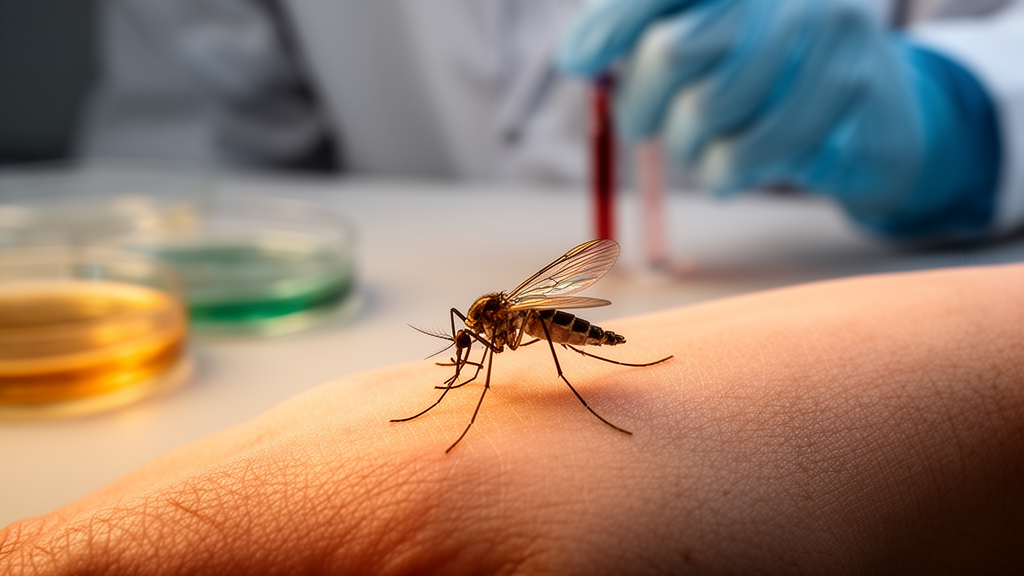
Insecticide resistance in mosquitoes has become one of the most consequential challenges in global public health, quietly eroding the effectiveness of the tools that underpin malaria, dengue, and Zika control programs. A comprehensive narrative review published in Frontiers in Malaria maps the shifting evolutionary landscape of vector control, synthesizing decades of research on how mosquitoes evade the chemical arsenal deployed against them. The review arrives at a pivotal moment: national malaria programs across Asia and Africa are reporting widening gaps between the insecticides they deploy and the mortality they achieve in wild vector populations, a discrepancy that threatens the elimination targets set by international health agencies.
At the heart of the resistance problem lie four primary, universally recognized mechanisms. The first is target-site insensitivity, in which point mutations alter the molecular docking sites that insecticides must bind to be lethal. The best documented of these are the knockdown resistance mutations, known as kdr, in the voltage-gated sodium channel that pyrethroids and DDT attack. Mutations such as L1014F and L1014S, and the less common V1010L allele, change single amino acids in the channel pore, reducing the binding affinity of neurotoxic compounds by orders of magnitude without crippling the channel’s normal function. A parallel story unfolds at acetylcholinesterase, encoded by the ace-1 gene, where substitutions blunt the inhibition caused by organophosphates and carbamates, and at the GABA-gated chloride channel, where Rdl mutations confer resistance to cyclodiene insecticides.
The second major mechanism is metabolic detoxification, a strategy in which mosquitoes amplify the enzymatic machinery that degrades insecticides before they reach their targets. Three enzyme families dominate this landscape. Cytochrome P450 monooxygenases catalyze oxidative metabolism of pyrethroids and many other chemistries, and their overexpression, often driven by duplications and regulatory changes, is among the most widespread resistance signatures in Anopheles and Aedes populations. Carboxylesterases hydrolyze ester-containing compounds such as organophosphates, while glutathione S-transferases conjugate electrophilic insecticide metabolites and also buffer oxidative stress induced by chemical exposure. Because these enzymes are broad-spectrum, their amplification produces cross-resistance, meaning a mosquito selected by one insecticide class may simultaneously withstand several others, a phenomenon that has repeatedly compromised sequential rotation strategies.
The third mechanism is cuticular thickening. The insect cuticle is the first barrier an insecticide must cross, and mosquitoes subjected to prolonged selection can increase the thickness or alter the composition of their epicuticular hydrocarbons, slowing uptake and buying time for internal detoxification enzymes to act. Studies in both Anopheles funestus and Anopheles gambiae have linked cuticular hydrocarbon profiles and structural changes to reduced susceptibility, demonstrating that resistance is not confined to molecular targets inside the body but can be built into the mosquito’s outer armor.
The fourth mechanism is behavioral avoidance, an evolutionary response that operates before any chemical contact occurs. Mosquito populations under intense insecticide pressure have shifted their biting times from late night, when indoor residual spraying and insecticide-treated nets offer maximum protection, to earlier evening or dawn hours when humans are outdoors or unprotected. Others have moved from indoor to outdoor resting and biting, or shifted host preferences from humans to livestock. Because these behaviors reduce exposure without requiring any biochemical change, they are notoriously difficult to detect with standard susceptibility assays, yet they can substantially dilute the protective effect of indoor-based interventions.
Beyond these classical frameworks, the review highlights contemporary discoveries that are reshaping how scientists conceptualize resistance. Among the most striking is the functional role of the commensal midgut microbiota in escalating phenotypic pyrethroid resistance. Bacteria resident in the mosquito gut can metabolize insecticides or modulate host detoxification pathways, so that the resistance phenotype is not solely a property of the mosquito genome but of an integrated holobiont. This microbial dimension opens both diagnostic and intervention possibilities, since manipulating gut communities could in principle restore susceptibility. The review also underscores novel extracellular metabolic markers such as the CSDIR protein, which may serve as an early indicator of resistance before it becomes fixed in a population, offering surveillance programs a molecular early-warning system.
These adaptation networks have forced a paradigm shift in public health programming, away from traditional neurotoxic monotherapies and toward next-generation chemistries designed to circumvent legacy cross-resistance. The World Health Organization has prequalified several such interventions. Neonicotinoids such as clothianidin act on nicotinic acetylcholine receptors at sites distinct from those targeted by organophosphates, and have shown efficacy in indoor residual spraying against pyrethroid-resistant Anopheles. The pyrrole chlorfenapyr is a pro-insecticide that becomes activated inside the mosquito’s mitochondria, disrupting oxidative phosphorylation through a mechanism with no cross-resistance to neurotoxic compounds. Novel meta-diamides such as broflanilide act as allosteric modulators of GABA-gated chloride channels, binding at sites remote from the classical Rdl mutations. Biorational insect growth regulators, exemplified by pyriproxyfen, do not kill adult mosquitoes directly but sterilize females or disrupt larval development, attacking the population through reproduction rather than neurotoxicity.
The review grounds these global dynamics in the geographically and epidemiologically diverse landscape of India, where both rural and urban transmission systems coexist. Anopheles culicifacies, the primary rural vector, has developed mapped multi-insecticide resistance profiles spanning DDT, organophosphates, carbamates, and pyrethroids, complicating indoor residual spraying campaigns across large parts of the country. Meanwhile, Anopheles stephensi, historically an urban vector, has been expanding its footprint and presents its own resistance challenges, a concern amplified by its recent detection in African cities. India’s national sentinel networks, operated by the National Centre for Vector Borne Diseases Control and ICMR-National Institute of Malaria Research, have generated PCR-based target-site genotyping data documenting the distribution of L1014F, L1014S, and V1010L kdr alleles across vector populations, providing a molecular map that complements phenotypic bioassays. Localized evaluations of novel allosteric chemistries are also underway, testing whether broflanilide-class compounds and other next-generation tools can restore effective mortality in Indian field conditions.
The strategic significance of bridging India’s field surveillance data with international resistance management frameworks lies in the design of integrated strategies that delay the selection of multi-resistant phenotypes. Rotation of insecticide classes with unrelated modes of action, combination interventions that pair a pyrethroid with a second active ingredient on the same net or spray, and mosaic deployment across landscapes all aim to impose multiple, independent selection pressures that no single mutation or enzyme amplification can simultaneously overcome. Complementing chemical tactics, the review’s emphasis on microbiome-mediated resistance suggests that biological manipulations could one day be layered onto existing programs, while behavioral resistance underscores the need for tools that act outdoors or at novel times of exposure.
The stakes of this evolutionary contest could hardly be higher. Malaria alone still causes hundreds of thousands of deaths annually, and dengue and Zika continue to expand their geographic range as urbanization and climate change enlarge mosquito habitats. Every percentage point of susceptibility lost in a vector population translates into infections that prevention programs fail to avert. The review’s synthesis makes clear that resistance is not a single problem but a constellation of mechanisms, molecular, metabolic, structural, behavioral, and now microbial, each evolving under the selection pressure that control programs themselves apply. Sustaining progress toward vector elimination will depend on continuous surveillance, rapid deployment of prequalified next-generation tools, and the intellectual integration of field data from diverse epidemiological settings into a coherent global resistance management strategy. The mosquitoes, meanwhile, continue to adapt, making the race between chemical innovation and evolutionary response a permanent feature of infectious disease control.
Subject of Research: Mechanisms of insecticide resistance in mosquito vectors and their implications for malaria and arbovirus control
Article Title: Mechanisms of insecticide resistance in mosquitoes and their implications for disease control
Article References: Padhan, R., Kumar, J., Goyal, B., Das, R., Kumar, V., Pradhan, S., Pandey, K. C., Vats, T. K., & Dixit, B. (2026). Mechanisms of insecticide resistance in mosquitoes and their implications for disease control. Frontiers in Malaria, 4, Article 1890327. https://doi.org/10.3389/fmala.2026.1890327
Image Credits: AI Generated
DOI: 10.3389/fmala.2026.1890327
Keywords: insecticide resistance, mosquitoes, malaria, kdr mutations, metabolic detoxification, pyrethroids, Anopheles, vector control, microbiota, next-generation insecticides, India, public health
Cite Scienmag News
Morgan Morrow. (October 16, 2026). How Mosquitoes Outsmart Insecticides: Resistance Mechanisms Reshape Disease Control. Scienmag. https://scienmag.com/how-mosquitoes-outsmart-insecticides-resistance-mechanisms-reshape-disease-control/
Morgan Morrow. "How Mosquitoes Outsmart Insecticides: Resistance Mechanisms Reshape Disease Control." Scienmag, 16 October 2026, https://scienmag.com/how-mosquitoes-outsmart-insecticides-resistance-mechanisms-reshape-disease-control/. Accessed 16 October 2026.
Morgan Morrow. "How Mosquitoes Outsmart Insecticides: Resistance Mechanisms Reshape Disease Control." Scienmag. October 16, 2026. https://scienmag.com/how-mosquitoes-outsmart-insecticides-resistance-mechanisms-reshape-disease-control/


