


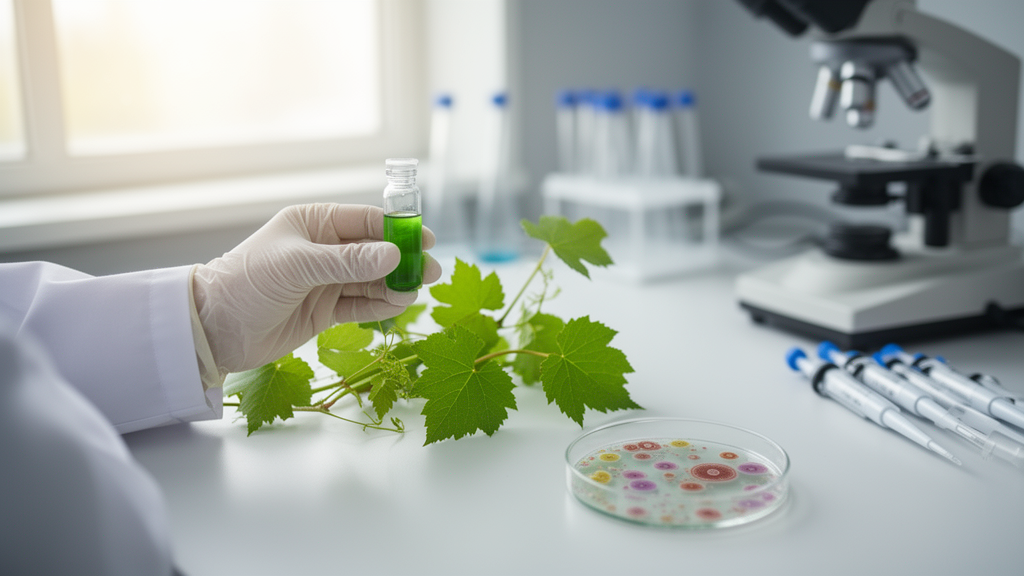
A sprawling new review has pulled together a decade of evidence on an unlikely candidate in the war against antimicrobial resistance: a climbing succulent vine long used in traditional Indian medicine to knit broken bones. Cissus quadrangularis, known in Ayurveda as hadjod or the bone-setter plant, has quietly become one of the most versatile biological factories for manufacturing nanoparticles, and researchers at Vellore Institute of Technology argue that the materials it produces could eventually help clinicians fight multidrug-resistant bacteria, heal chronic wounds, and regenerate bone. The review, published in Frontiers in Nanotechnology, synthesizes findings from studies spanning 2015 to 2026 and lays out both the promise and the considerable obstacles standing between laboratory bench and hospital bedside.
The stakes could hardly be higher. Antimicrobial resistance already claims more than 700,000 lives annually, and the review cites projections warning that figure could climb to 10 million deaths per year by 2050 if current trends persist. Beyond the direct death toll, resistant pathogens undermine the foundations of modern medicine, reducing the effectiveness of surgical procedures, cancer therapy, and routine infection prevention. When conventional antibiotics fail against multidrug-resistant organisms, clinicians are left with few options, often resorting to expensive and toxic alternatives. This grim arithmetic is precisely what has driven researchers toward nanotechnology, which offers multiple simultaneous mechanisms of attack against pathogens and a reduced likelihood that bacteria will develop resistance in the first place.
What makes Cissus quadrangularis particularly interesting is the chemistry locked inside its stems and leaves. The plant is rich in flavonoids, triterpenoids, stilbenes, phytosterols, iridoids, carotenoids, vitamin C, and assorted phenolic compounds, and these molecules do double duty in nanoparticle synthesis. They act as reducing agents, converting dissolved metal ions into solid nanoparticles; as capping agents, adsorbing onto particle surfaces to prevent clumping; and as stabilizing agents that keep the finished particles dispersed in solution. In effect, the plant extract replaces the hazardous chemicals and energy-intensive processes of conventional nanomaterial manufacturing with a simple aqueous brew, generating minimal waste in the bargain. The quality of the resulting particles, however, is exquisitely sensitive to reaction conditions, with pH, temperature, reaction time, and precursor concentration all influencing particle size, shape, and stability.
Silver nanoparticles dominate the Cissus literature by a wide margin. Under optimized conditions, synthesis can complete within an hour, and in some cases within 20 to 30 minutes, producing crystalline, mostly spherical particles ranging from roughly 8.7 nanometers to 100 nanometers in diameter depending on the protocol. The characteristic surface plasmon resonance peak appears between 430 and 450 nanometers on ultraviolet-visible spectroscopy, a signature that confirms particle formation. But the review emphasizes that the plant’s synthetic repertoire extends well beyond silver. Researchers have used Cissus extracts to produce zinc oxide, copper oxide, calcium oxide, and titanium dioxide nanoparticles, along with more elaborate architectures including mesoporous silica, nanohydroxyapatite, a tripartite silver-silica-hydroxyapatite composite, zinc-doped iron oxide, chitosan-based nanocomposites, and even cellulose nanocrystals measuring 200 to 300 nanometers long with a crystallinity index above 82 percent.
The antimicrobial results are where the field gets genuinely exciting. Biosynthesized silver nanoparticles from Cissus extracts inhibited both Gram-positive and Gram-negative bacteria at minimum inhibitory concentrations as low as 10 micrograms per milliliter, with complete inhibition at 20 micrograms per milliliter against waterborne organisms. Even more striking, silver chloride nanoparticles produced from the leaf extract showed MIC values between 3 and 7 micrograms per milliliter against Staphylococcus aureus, Streptococcus pyogenes, Escherichia coli, and Proteus vulgaris, figures that undercut tetracycline, which required 9 to 12 micrograms per milliliter in the same comparisons. The clearest evidence against multidrug-resistant strains comes from work on silver chloride nanoparticles, which were evaluated directly against resistant bacterial isolates. Zinc oxide nanoparticles showed their strongest effect against Mycobacterium smegmatis at 50 micrograms per milliliter, while copper oxide particles suppressed the fungi Aspergillus niger and Aspergillus flavus by 81 to 86 percent at concentrations between 500 and 1000 parts per million.
The proposed mechanisms of action center on physical and chemical assault at the cellular level. Because nanoparticles are so small, their surface area to volume ratio is enormous, allowing intimate contact with bacterial membranes. Silver nanoparticles appear to penetrate the bacterial cell wall, disrupt membrane structure, increase permeability, and damage transport processes. Studies also point to the generation of reactive oxygen species, which inflict oxidative damage on cellular components, alongside the release of silver ions that interfere with essential enzymes and DNA. The review is careful to note, however, that some proposed mechanisms, including biofilm disruption, quorum sensing interference, and direct DNA damage, are inferred from the broader literature on plant phytochemicals and metallic nanoparticles rather than demonstrated specifically for Cissus-derived materials. Membrane disruption and reactive oxygen species remain the best-supported pathways.
Antimicrobial activity is only one facet of the therapeutic portfolio. The nanoparticles have demonstrated antioxidant effects in DPPH radical scavenging assays, with one silver nanoparticle preparation outperforming ascorbic acid as a reference compound. Anti-inflammatory activity has been documented in vitro, with silver nanoparticles inhibiting protein denaturation in egg albumin and bovine serum albumin assays by 81 and 85 percent respectively, and titanium dioxide nanoparticles suppressing the inflammatory cytokines IL-6, IL-8, and TNF-alpha in human periodontal ligament cells. On the anticancer front, zinc oxide nanoparticles showed the most potent anti-proliferative effect, with an IC50 of just 7.02 micrograms per milliliter against MIA PaCa-2 pancreatic cancer cells after 24 hours, while chitosan-coated iron oxide composites reached an IC50 of 54 micrograms per milliliter against MG-63 osteosarcoma cells. Silver nanoparticles showed more moderate activity against breast and lung cancer cell lines, roughly tenfold weaker than cisplatin in the same models, though they displayed some selectivity, with normal macrophage cells tolerating higher concentrations than cancer cells.
Perhaps the most clinically tangible applications lie in wound healing and bone regeneration, areas where the plant’s traditional reputation finds modern mechanistic support. Cissus-loaded chitosan bilayer dressings released 78 to 80 percent of their payload over four days while promoting dermal cell proliferation, collagen deposition, and antibacterial protection. Chitosan-conjugated zinc oxide nanocomposites achieved wound contraction rates of 98.92 and 99.58 percent in excision wound models at two different doses, outperforming both the standard treatment and unconjugated nanoparticles. In bone, Cissus-functionalized scaffolds improved compression modulus, osteoblast proliferation, and mineralization, while nanoparticulate extract applied to implant surfaces increased peri-implant bone density and accelerated osseointegration in rats, with early integration detectable within two weeks of surgery. Dental applications are particularly well represented, including a silver-silica-hydroxyapatite composite that supported dental pulp stem cell proliferation with reduced cytotoxicity compared to silver nanoparticles alone.
Safety data, while encouraging, remain thin. The available studies suggest reasonable cytocompatibility, with chitosan-zinc oxide composites showing reduced toxicity toward human erythrocytes, dermal fibroblasts, and kidney-derived HEK-293 cells, and hemolysis testing indicating acceptable blood compatibility. But the review flags a critical gap: nearly all evidence comes from short-term in vitro experiments, and the pharmacokinetics, biodistribution, metabolism, and excretion of these nanoparticles in living organisms remain almost entirely uncharacterized. There is also a cautionary note from ecotoxicology, as one study found that Cissus-synthesized silver nanoparticles caused increased mortality, DNA fragmentation, and tissue damage in fish and microcrustaceans, a reminder that environmental release of engineered nanomaterials carries real risks. Nanoparticle toxicity in general depends on size, surface charge, aggregation state, dosage, and route of administration, variables that most Cissus studies have not systematically controlled.
The path forward, according to the review’s authors, requires standardized synthesis protocols, rigorous in vivo toxicology, good manufacturing practice for scale-up, and eventually clinical trials, none of which yet exist for these materials. Plant-based synthesis introduces its own variability, since differences in geographic provenance, harvest conditions, and extraction parameters can yield nanoparticles with divergent physicochemical and biological properties. Long-term exposure studies are needed to assess organ accumulation, immune responses, genotoxicity, and reproductive effects that short-term experiments cannot capture. Still, the convergence of an ancient medicinal plant with modern nanotechnology represents a genuinely promising frontier, one where the same phytochemicals that have healed fractures in Ayurvedic practice for centuries may soon be engineered into precision antimicrobial weapons, regenerative scaffolds, and targeted drug delivery vehicles, provided the field can navigate the difficult translation from promising preclinical data to proven clinical therapies.
Subject of Research: Green synthesis and therapeutic applications of nanoparticles derived from the medicinal plant Cissus quadrangularis
Article Title: Plant mediated nanoparticles from Cissus quadrangularis L.: a comprehensive review on antimicrobial resistance, biological activities and therapeutic applications
Article References: Vinoth, K., & Kumar, S. R. (2026). Plant mediated nanoparticles from Cissus quadrangularis L.: a comprehensive review on antimicrobial resistance, biological activities and therapeutic applications. Frontiers in Nanotechnology, 8, Article 1945218. https://doi.org/10.3389/fnano.2026.1945218
Image Credits: AI Generated
DOI: 10.3389/fnano.2026.1945218
Keywords: Cissus quadrangularis, green synthesis, nanoparticles, antimicrobial resistance, silver nanoparticles, wound healing, bone regeneration, phytochemicals, nanomedicine, antibacterial activity, zinc oxide nanoparticles, biocompatibility
Cite Scienmag News
Denise Maddox. (October 16, 2026). Veldt Grape Nanoparticles Emerge as a Green Weapon Against Drug-Resistant Superbugs. Scienmag. https://scienmag.com/veldt-grape-nanoparticles-emerge-as-a-green-weapon-against-drug-resistant-superbugs/
Denise Maddox. "Veldt Grape Nanoparticles Emerge as a Green Weapon Against Drug-Resistant Superbugs." Scienmag, 16 October 2026, https://scienmag.com/veldt-grape-nanoparticles-emerge-as-a-green-weapon-against-drug-resistant-superbugs/. Accessed 16 October 2026.
Denise Maddox. "Veldt Grape Nanoparticles Emerge as a Green Weapon Against Drug-Resistant Superbugs." Scienmag. October 16, 2026. https://scienmag.com/veldt-grape-nanoparticles-emerge-as-a-green-weapon-against-drug-resistant-superbugs/


