


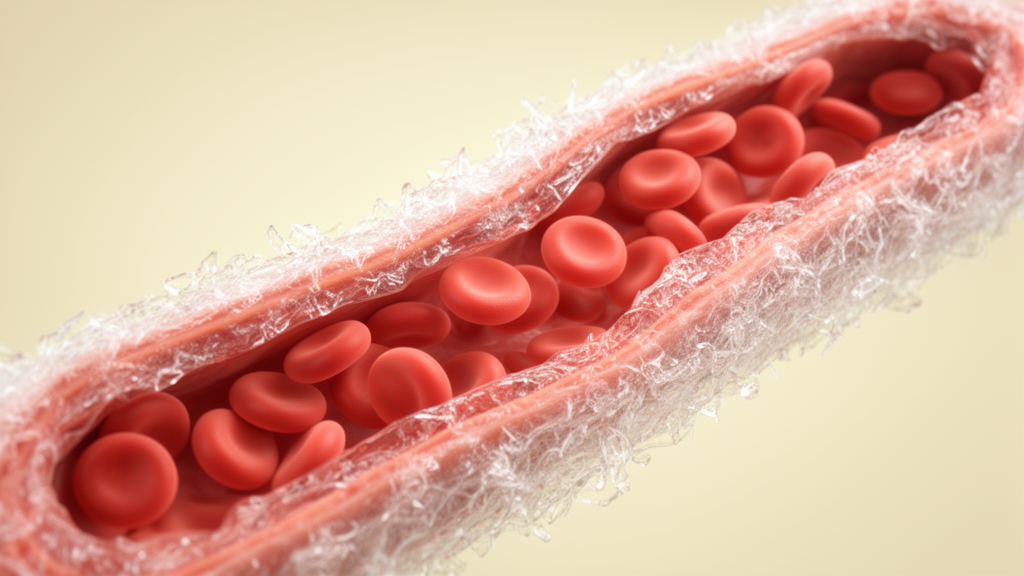
Deep inside every blood vessel lies a delicate, gel-like coating that most people have never heard of, yet it quietly governs how blood interacts with the vessel wall. This structure, called the endothelial glycocalyx, is a microscopic meshwork of sugar molecules and proteins that lines the inner surface of all blood vessels. It acts as a molecular gatekeeper, controlling vascular permeability, protecting the vessel wall from direct contact with flowing blood cells, and playing a surprising role in everything from inflammation to organ function. Now, a team of veterinary researchers in New Zealand has put this fragile layer to the test in an unexpected way: by deliberately flooding the bloodstream of healthy cats with intravenous fluid and watching what happened to the glycocalyx in real time.
The study, conducted at Massey University and published in Frontiers in Veterinary Science, set out to answer a question that has divided researchers for years. Does a rapid surge of intravenous fluid damage the endothelial glycocalyx, or does the protective layer simply shrug it off? The answer, at least in healthy cats, appears to be the latter, but with a twist that the researchers did not fully anticipate. Rather than the fluid itself, it was the anesthesia used during the experiment that seemed to leave the most visible mark on this microscopic barrier.
Volume overload, the excessive accumulation of fluid within the blood vessels, is a well-recognized danger in both human and veterinary medicine. It can arise when clinicians administer intravenous fluids too aggressively, particularly in critically ill patients whose bodies have lost the capacity to compensate. The consequences are serious: fluid leaks into surrounding tissues, causing swelling and edema, oxygen delivery to cells becomes impaired, and in severe cases, multiple organs begin to fail. Previous research has suggested a specific mechanism behind this damage. When the heart detects increased blood volume, it releases hormones called natriuretic peptides, which trigger the kidneys to excrete more sodium and water. But these same hormones also appear to increase the permeability of blood vessels, potentially by stripping away or degrading the endothelial glycocalyx, the very layer that normally keeps fluid where it belongs.
Cats were chosen for this study for compelling reasons. Their blood volume is proportionally smaller than that of dogs or humans, making them inherently more vulnerable to fluid overload. They also have a high incidence of silent heart disease, which further limits their ability to cope with sudden volume changes, and they eliminate fluids more slowly than many other species. These factors combine to make cats a particularly sensitive model for studying what happens when the vascular system is pushed beyond its normal capacity.
To peer inside the microscopic world of the glycocalyx, the researchers employed a technique called sidestream dark field videomicroscopy, paired with specialized software known as GlycoCheck. The method works by illuminating the blood vessels of the sublingual mucosa, the thin tissue beneath the tongue, with green light at a wavelength of 540 nanometers. This light is absorbed by the hemoglobin inside red blood cells, causing the vessels to appear as dark channels against a bright background. The software then tracks the movement of red blood cells within these vessels, measuring how far they penetrate toward the vessel wall. The key measurement is called the perfused boundary region, or PBR. It represents the gap between the edge of the red blood cell column and the actual vessel wall, and it serves as an inverse estimate of glycocalyx thickness. A higher PBR means the glycocalyx is thinner and potentially damaged, while a lower PBR indicates a thicker, healthier layer.
Twenty healthy research cats were enrolled in the study, each thoroughly screened for underlying disease through bloodwork, physical examination, and cardiac ultrasound. The cats were randomly assigned to receive either a rapid infusion of Hartmann’s solution, a balanced crystalloid fluid, at a dose of 30 milliliters per kilogram of body weight over just 10 minutes, or no fluids at all. After a seven-day washout period, each cat received the opposite treatment, allowing every animal to serve as its own control. The researchers captured images at four time points: before the intervention, immediately after, three hours later, and again at 24 hours. All measurements were performed while the cats were anesthetized with propofol, a commonly used intravenous anesthetic agent.
The results were unexpected. The perfused boundary region did increase over time in both groups, reaching statistical significance at the three-hour mark for vessels measuring between 5 and 25 micrometers in diameter. But critically, this increase occurred in both the fluid-treated and control groups, meaning it could not be attributed to the volume overload itself. Instead, the researchers concluded that the anesthesia, rather than the fluid bolus, was the most likely culprit behind the transient thinning of the glycocalyx. Propofol, the anesthetic agent used throughout the study, has been shown in previous research to affect microcirculatory function and may have direct effects on the endothelium. Cats are also known to be particularly sensitive to propofol-related oxidative stress, and the drug is metabolized more slowly in this species than in many others.
Perhaps the most surprising finding was that the smallest vessels measured, those between 5 and 9 micrometers in diameter, actually showed lower PBR values in the fluid-treated group at the later time points. This suggests that the intravenous fluids may have partially protected or even restored the glycocalyx in these tiny vessels, possibly by diluting circulating anesthetic agents or by rehydrating the glycocalyx layer itself. The researchers noted that this finding warrants further investigation with studies specifically designed to disentangle the effects of anesthesia from those of fluid administration.
The study also revealed an important methodological consideration. Packed cell volume, a measure of the proportion of blood made up by red blood cells, was significantly associated with several GlycoCheck parameters. When packed cell volume decreased, the perfused boundary region tended to increase, even though the underlying glycocalyx may not have changed at all. This makes sense when one considers how the technology works: the software relies on detecting red blood cells against a contrasting background, and fewer red blood cells in the bloodstream could artificially widen the apparent gap between the cell column and the vessel wall. The researchers emphasized that this finding should be explored further, as it may require adjustments to how PBR measurements are interpreted in clinical settings.
The implications of this research extend beyond feline medicine. The endothelial glycocalyx is increasingly recognized as a critical player in human health, with damage to this layer implicated in sepsis, trauma, diabetes, and cardiovascular disease. Understanding how intravenous fluids interact with the glycocalyx in a controlled experimental setting provides valuable insight into the broader question of whether aggressive fluid resuscitation helps or harms the microcirculation. The answer, at least for now, appears to be nuanced: in healthy individuals, a transient fluid surge may not be the glycocalyx-destroying event that some earlier studies suggested, but the full picture remains far from complete. The researchers call for further studies designed with a deeper understanding of feline volume kinetics, acknowledging that the current findings represent an exploratory step rather than a definitive answer.
Subject of Research: Effects of transient intravascular volume overload on endothelial glycocalyx thickness in healthy anesthetized cats
Article Title: Effects of transient intravascular volume overload on endothelial glycocalyx thickness in healthy anesthetized cats
Article References: Yozova, I. D., Thomson, N., Irie, M., Owen, R., & Munday, J. S. (2026). Effects of transient intravascular volume overload on endothelial glycocalyx thickness in healthy anesthetized cats. Frontiers in Veterinary Science, 13, Article 1742967. https://doi.org/10.3389/fvets.2026.1742967
Image Credits: AI Generated
DOI: 10.3389/fvets.2026.1742967
Keywords: endothelial glycocalyx, volume overload, intravenous fluids, cats, sidestream dark field videomicroscopy, GlycoCheck, perfused boundary region, propofol anesthesia, microcirculation, packed cell volume, veterinary medicine, fluid therapy
Cite Scienmag News
William Thompson. (October 16, 2026). Fluid Overload May Not Thin the Vascular Sugar Layer in Healthy Cats, Study Finds. Scienmag. https://scienmag.com/fluid-overload-may-not-thin-the-vascular-sugar-layer-in-healthy-cats-study-finds/
William Thompson. "Fluid Overload May Not Thin the Vascular Sugar Layer in Healthy Cats, Study Finds." Scienmag, 16 October 2026, https://scienmag.com/fluid-overload-may-not-thin-the-vascular-sugar-layer-in-healthy-cats-study-finds/. Accessed 16 October 2026.
William Thompson. "Fluid Overload May Not Thin the Vascular Sugar Layer in Healthy Cats, Study Finds." Scienmag. October 16, 2026. https://scienmag.com/fluid-overload-may-not-thin-the-vascular-sugar-layer-in-healthy-cats-study-finds/


