


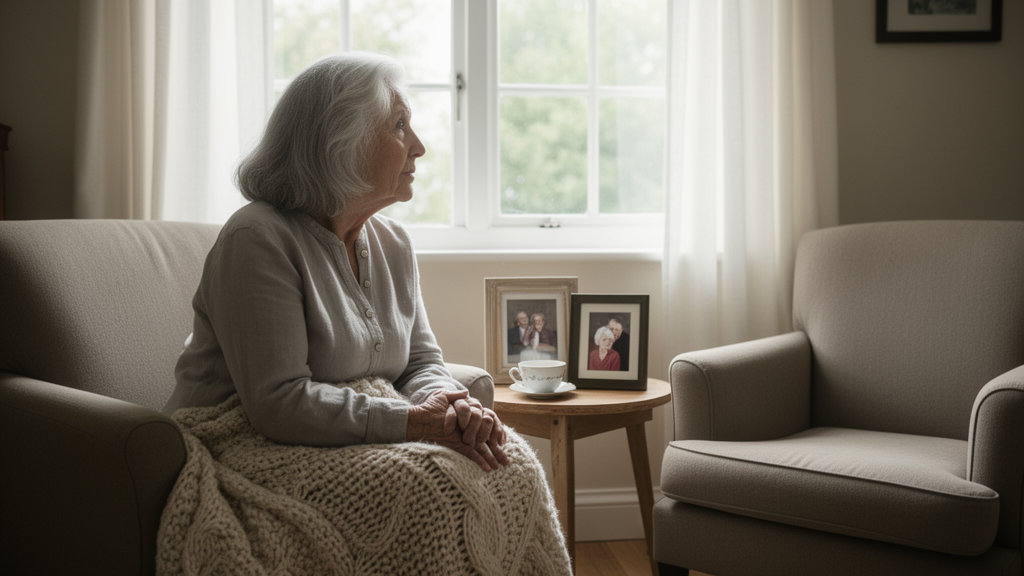
When COVID-19 swept across the globe in early 2020, public health messaging had a seemingly simple target: protect the vulnerable. But who exactly counted as vulnerable, and what did that framing do to how society viewed older adults? A new study from the University of Queensland, published in Frontiers in Psychology, offers one of the most detailed psychological dissections yet of how pandemic-era attitudes toward older Australians took shape—and the findings are more nuanced, and more unsettling, than the well-meaning slogans might suggest.
The research team, led by Theresa L. Scott alongside Melissa Kugelman and Amanda Salmon, surveyed 273 Australian residents aged between 19 and 82 years. Their goal was to untangle the psychological threads connecting pandemic stress, expectations about aging, and the quality of everyday contact between generations. What they found challenges the assumption that kindness and good intentions necessarily translate into non-ageist attitudes.
At the heart of the study lies a crucial distinction between two forms of ageism. Hostile ageism involves explicit negative beliefs—that older adults are burdensome, selfish, or dispensable. Benevolent ageism, by contrast, wears a friendlier mask: it frames older people as warm but incompetent, frail, and in need of protection. Both forms, researchers argue, can cause real harm. During the pandemic, these two faces of ageism played out publicly in starkly different ways.
Australian media coverage became a case study in benevolent ageism. Headlines urged the public to “protect the elderly, who are most at risk of death,” while the Prime Minister at the time warned young Australians not to endanger “an elder, vulnerable Australian” through their behavior. Such messaging, while well-intentioned, homogenized a diverse population into a single vulnerable category and positioned younger people as responsible guardians rather than equals. On the hostile end, commentary emerged questioning whether the lives of those in their 70s, 80s, or 90s deserved the same priority as those of younger adults—a sentiment that echoed the infamous “#BoomerRemover” hashtag circulating on social media internationally.
To measure these attitudes rigorously, the researchers adapted the Ambivalent Ageism Scale, originally developed by Cary and colleagues in 2017, tailoring items to the COVID-19 context. They paired this with the Expectations Regarding Aging survey (ERA-12), which probes beliefs about physical health, mental health, and cognitive functioning in later life. Participants also rated how frequently they experienced positive and negative contact with older adults, and reported how well they felt they were coping emotionally before and after March 2020.
The results painted a complex picture. Perhaps most strikingly, perceived changes in emotional coping showed no association with ageist beliefs whatsoever—a finding that contradicted the researchers’ initial hypothesis that pandemic-related emotional decline would fuel ageist attitudes. More positive expectations about aging, however, were linked to lower hostile ageism, though they bore no relationship to benevolent ageism. This asymmetry suggests that hostile and benevolent ageism, while conceptually related, may be driven by partly distinct psychological mechanisms.
Contact quality emerged as the most revealing variable. More frequent positive contact with older adults was associated with lower hostile ageism and more positive aging expectations—consistent with the classic contact hypothesis, which holds that meaningful intergroup interaction reduces prejudice. But here lies the paradox: positive contact was also associated with higher benevolent ageism. Meanwhile, negative contact showed the reverse pattern, correlating with greater hostile ageism and lower benevolent ageism. In other words, the kinder someone’s interactions with older adults, the more likely they were to hold paternalistic views of them as fragile and dependent.
The researchers offer several explanations for this counterintuitive finding. One possibility relates to the self-report nature of the contact measures: an individual performing an unsolicited “good deed” for an older adult might classify this as positive contact without recognizing the paternalistic assumptions embedded in the act. Another interpretation draws on prior research showing that positive intergroup contact can sometimes reinforce the societal status quo, perpetuating views of outgroup members as incompetent even as it reduces overt hostility. Studies of healthcare professionals have found a similar pattern—more contact with older patients correlated with warmer attitudes but also more benevolent stereotyping.
When participants were asked to describe older adults in two words, the results were telling. The most common benevolent descriptors were “vulnerable,” “slow,” “frail,” and “fragile,” while hostile descriptors included “stubborn,” “entitled,” “selfish,” and “ignorant.” Over one third of participants used words characteristic of either form of ageism. Statistical analysis confirmed that those who used hostile adjectives scored significantly higher on hostile ageism measures, and those using benevolent adjectives scored higher on benevolent ageism—suggesting that everyday language choices may serve as a window into underlying attitudinal structures.
Exploratory analyses comparing older participants (aged 65 and above) with younger ones revealed additional layers. Older adults held significantly more positive expectations about aging than their younger counterparts and reported more positive contact with other older adults. Crucially, the relationships between contact and ageism were significant only among younger adults, hinting that the contact hypothesis operates most powerfully across group boundaries rather than within them. The researchers caution, however, that the older adult subgroup was small, limiting statistical power for those comparisons.
The study’s practical implications are significant for anyone designing interventions to combat ageism. Simply increasing intergenerational contact—the strategy most commonly championed in the literature—may be insufficient, and could even backfire by reinforcing benevolent stereotypes if the nature and quality of interactions are not carefully considered. Programs that bring generations together must attend not just to frequency but to whether encounters position older adults as equals or as recipients of care.
The researchers acknowledge limitations: the sample was predominantly female and drawn largely from Queensland, recruitment relied on non-probability methods vulnerable to self-selection bias, and the adapted ageism scale showed questionable internal reliability for the benevolent subscale. The cross-sectional design also prevents any causal conclusions—perhaps ageist attitudes shaped contact quality rather than the reverse, or both were influenced by unmeasured factors.
Yet the broader message resonates beyond the pandemic. Ageism is a longstanding societal problem with documented consequences for mental health, physical functioning, and even life expectancy. As populations worldwide grow older, understanding how seemingly compassionate messaging can entrench stereotypes of vulnerability becomes increasingly urgent. The study suggests that the language we use to “protect” older adults may carry hidden costs—and that genuine respect, not paternalistic care, should be the goal of intergenerational relations. After all, as the researchers note, most people expect to become older adults themselves one day, making ageism an issue that ultimately affects everyone.
Subject of Research: Psychological drivers of hostile and benevolent ageism toward older adults during the COVID-19 pandemic in Australia
Article Title: Ageism toward older adults during COVID-19: associations with emotional coping and intergenerational contact
Article References: Scott, T. L., Kugelman, M., & Salmon, A. (2026). Ageism toward older adults during COVID-19: associations with emotional coping and intergenerational contact. Frontiers in Psychology, 17, Article 1949869. https://doi.org/10.3389/fpsyg.2026.1949869
Image Credits: AI Generated
DOI: 10.3389/fpsyg.2026.1949869
Keywords: ageism, COVID-19, older adults, benevolent ageism, hostile ageism, intergenerational contact, aging expectations, Australia, psychology, stereotypes, prejudice, pandemic
Cite Scienmag News
Kristina Jarvis. (October 16, 2026). When ‘Protecting’ Grandma Turns Toxic: The Two Faces of Pandemic Ageism. Scienmag. https://scienmag.com/when-protecting-grandma-turns-toxic-the-two-faces-of-pandemic-ageism/
Kristina Jarvis. "When ‘Protecting’ Grandma Turns Toxic: The Two Faces of Pandemic Ageism." Scienmag, 16 October 2026, https://scienmag.com/when-protecting-grandma-turns-toxic-the-two-faces-of-pandemic-ageism/. Accessed 16 October 2026.
Kristina Jarvis. "When ‘Protecting’ Grandma Turns Toxic: The Two Faces of Pandemic Ageism." Scienmag. October 16, 2026. https://scienmag.com/when-protecting-grandma-turns-toxic-the-two-faces-of-pandemic-ageism/


