


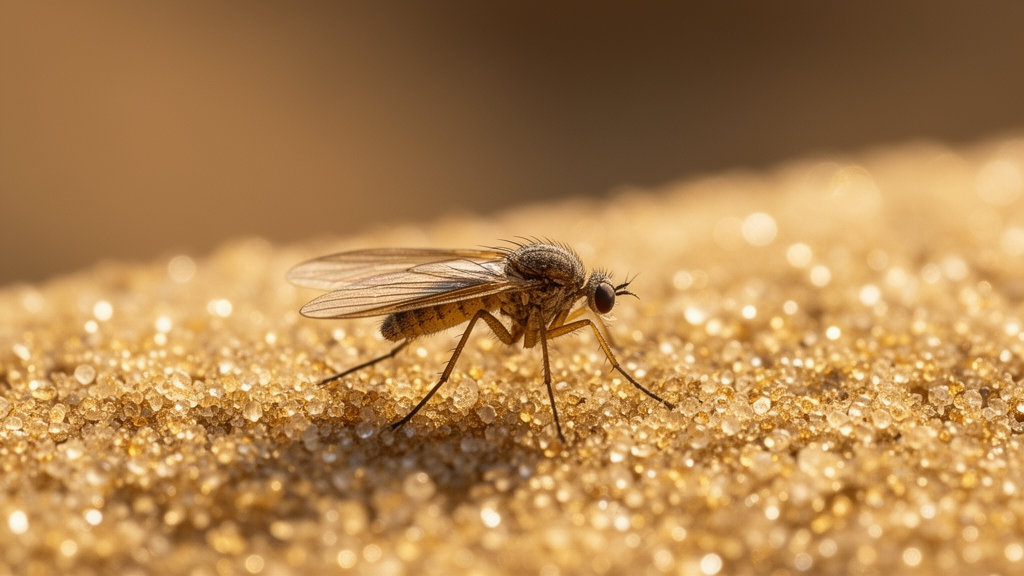
Deep in the dry tropical forests and agricultural heartlands of Sri Lanka’s North Central Province, a tiny insect carries a devastating parasite. Phlebotomine sand flies, barely visible to the naked eye, are the primary vectors of cutaneous leishmaniasis, a disfiguring disease that has become a major public health concern in the country. Now, a team of researchers from Rajarata University of Sri Lanka has conducted the first comprehensive molecular survey of Wolbachia endosymbionts in the country’s sand fly populations, revealing a surprising absence that could reshape how scientists approach biological control strategies in the region.
Wolbachia is one of the most successful intracellular bacteria on Earth, infecting an estimated 40 to 76 percent of all arthropod species. This remarkable endosymbiont has captured the attention of vector biologists worldwide because of its ability to manipulate host reproduction through mechanisms such as cytoplasmic incompatibility, male killing, feminization, and the induction of parthenogenesis. These reproductive alterations give infected females a significant advantage, allowing Wolbachia to spread rapidly through host populations. More importantly for disease control, certain Wolbachia strains can inhibit the replication and transmission of pathogens, including viruses and protozoan parasites, through mechanisms that may involve competition for host cellular resources and modulation of the host’s innate immune responses.
The success of Wolbachia-based biocontrol against mosquito-borne diseases, particularly dengue fever, has been well documented. The wMel strain of Wolbachia, for example, has been shown to block dengue virus transmission in Aedes aegypti mosquitoes and successfully invade wild populations. This proven track record has led researchers to explore whether similar strategies could be applied to other vector-borne diseases, including leishmaniasis. However, the biological challenges are considerable. Unlike many viral pathogens that replicate inside host cells, Leishmania parasites develop predominantly as extracellular organisms within the sand fly alimentary tract, a fundamentally different biological context that may limit the effectiveness of Wolbachia-mediated pathogen blocking.
To investigate whether Wolbachia naturally infects Sri Lankan sand fly populations, the research team conducted a six-month entomological survey across four endemic sampling areas in the North Central Province: Medawachchiya, Mihintale, Habarana, and Bakamuna. These locations were selected because they represent established cutaneous leishmaniasis hotspots characterized by agricultural landscapes, irrigation systems, scrub vegetation, wet-soil habitats, leaf litter, and termite mounds, all of which provide suitable breeding and resting microhabitats for phlebotomine sand flies. The proximity of these vector-supporting habitats to agricultural and outdoor human activities increases opportunities for human-sand fly contact, making these sites ideal sentinel locations for investigating sand fly ecology and the occurrence of natural Wolbachia infections.
Between October 2024 and March 2025, the team collected a total of 331 sand flies using CDC light traps deployed monthly at each site. Two traps were positioned approximately 50 meters apart in optimal microhabitats, targeting areas adjacent to potential breeding grounds, human dwellings, and domestic animal shelters. The traps were operated continuously over 12-hour overnight periods to align with the nocturnal activity patterns of adult sand flies. The collection was strongly male-biased, comprising 241 males and 90 females. Of the total, 183 specimens were morphologically identified as belonging to the genus Phlebotomus and 146 as Sergentomyia, while two damaged male specimens could not be assigned to genus. A significant association was observed between genus and sex among the 329 specimens identified to genus level, with Phlebotomus comprising 121 males and 62 females, while Sergentomyia comprised 118 males and 28 females.
The molecular screening focused on all 90 female sand flies, as females are the blood-feeding sex responsible for disease transmission. Genomic DNA was extracted from each individual specimen, and polymerase chain reaction amplification targeting the Wolbachia surface protein gene, known as wsp, was performed. This gene is a commonly used molecular marker for the detection and preliminary characterization of Wolbachia strains, producing expected amplicons ranging from 590 to 632 base pairs. The PCR protocol included rigorous controls: genomic DNA from dissected ovaries of three Wolbachia-infected female Culex pipiens specimens served as the positive control, while nuclease-free water served as the no-template negative control in each run. The positive control produced an amplicon of the expected size, confirming that the assay was functioning correctly, while the negative control showed no amplification, ruling out contamination in the PCR reagents.
The results were striking: Wolbachia was not detected in any of the 90 individually screened specimens. The observed prevalence was 0.0 percent, with an approximate rule-of-three upper 95 percent prevalence limit of 3.3 percent. This statistical framework means that while the researchers can be confident that Wolbachia is not highly prevalent in the sampled population, a low-frequency infection below approximately 3.3 percent could theoretically have been missed. To provide complementary evidence and characterize the broader sand fly-associated bacterial community, the team also performed high-throughput 16S rRNA gene amplicon sequencing on a pooled sample of 25 female Phlebotomus specimens. This approach targets multiple hypervariable regions of the bacterial 16S rRNA gene, providing broad coverage of bacterial diversity.
The 16S rRNA sequencing generated 432,078 raw reads, of which 220,698 non-chimeric reads remained after quality filtering and chimera removal. The final feature table contained 883 amplicon sequence variants, or ASVs. Domain-level classification assigned 113,473 reads to Bacteria, 15,979 to Eukaryota, and only 3 to Archaea, while 91,243 reads remained unassigned. After excluding mitochondrial sequences, the bacterial dataset contained 113,332 reads representing 125 ASVs. Proteobacteria overwhelmingly dominated, accounting for 99.75 percent of bacterial reads. Within this phylum, the order Enterobacterales was predominant at 89.69 percent, followed by Xanthomonadales at 5.28 percent. Critically, no ASV was assigned to Wolbachia by the SILVA-based Naive Bayes classifier, and a preliminary search restricted to an NCBI-derived Wolbachia reference collection returned 24 provisional candidates that were all reassigned to non-Wolbachia taxa upon competitive alignment against the complete SILVA 138.1 database.
The most abundant identifiable bacterial genus in the pooled sample was Serratia, accounting for 47,274 reads, equivalent to 41.71 percent of bacterial reads and 21.42 percent of all non-chimeric reads. Stenotrophomonas was the second most abundant named genus at 4.69 percent of bacterial reads, while all other named genera each represented less than 1 percent. The dominance of Serratia is particularly intriguing given what is known about this bacterium in other dipteran vectors. In Lutzomyia longipalpis, the New World sand fly vector, experimental exposure to Serratia marcescens has been shown to elicit a reactive oxygen species-mediated immune response. Some Serratia strains have also demonstrated lytic activity against Leishmania promastigotes, although this effect appears to be strain- and mechanism-dependent. In Aedes aegypti mosquitoes, Serratia density increases markedly following a blood meal, suggesting a potential role in vector physiology and pathogen transmission dynamics.
The absence of detectable Wolbachia in Sri Lankan sand flies contrasts sharply with findings from other geographic regions. Molecular surveys conducted in Iran, Türkiye, Spain, and Morocco have reported prevalence estimates ranging from undetectable levels in some populations to approximately 70 to 81 percent in others, with detected strains belonging predominantly to Wolbachia supergroups A and B. A large survey of 858 specimens from Türkiye reported an overall prevalence of 16.67 percent, though this varied dramatically among taxa, from 0.83 percent in Phlebotomus tobbi to 62.74 percent in Phlebotomus major. In Panama, Wolbachia was detected in only three of 20 sand fly species examined, while a Brazilian Lutzomyia sample showed a prevalence of just 2.5 percent. These findings collectively illustrate that Wolbachia occurrence in sand flies is highly heterogeneous, varying according to host taxon and geographic setting.
Several non-mutually exclusive explanations could account for the lack of detectable Wolbachia in the present samples. The examined populations may simply be uninfected, or the infection may occur at a prevalence or bacterial density below the detection limits of the methods used. Environmental conditions could also influence infection dynamics. Experimental studies in Aedes aegypti have shown that cyclical heat stress, particularly developmental exposure to temperatures reaching approximately 37 degrees Celsius, can reduce the density and maternal transmission of some Wolbachia strains. Given the dry tropical climate of Sri Lanka’s North Central Province, where temperatures can be extreme, such thermal effects on Wolbachia density represent a plausible but untested hypothesis. Interactions with other members of the microbiota may also play a role. Studies in Anopheles mosquitoes have demonstrated that the native microbiota can restrict the vertical transmission of introduced Wolbachia infections, while reciprocal interference between Asaia and Wolbachia has been observed in the reproductive tissues of some mosquito species.
Methodological limitations must also be considered when interpreting these findings. Screening with a single conventional PCR marker may fail to detect infections with low bacterial densities or sequence variation at the wsp primer-binding regions, as no single PCR protocol detects all known Wolbachia lineages with equal sensitivity. The pooled 16S rRNA gene amplicon dataset provides useful complementary evidence but does not verify the infection status of each PCR-screened individual. Pooling may dilute a rare or low-density infection, while amplification and taxonomic-classification biases may also affect detection. Additionally, the specimens were identified only to genus level, meaning that while the 16S sequencing was restricted to Phlebotomus females, the specific species within this genus, including the principal vector Phlebotomus argentipes, could not be confirmed. Accurate species identification of phlebotomine sand flies is crucial for developing effective preventive and control measures.
Despite these limitations, the study provides valuable baseline evidence from Sri Lanka and is consistent with previous observations that natural sand fly-Wolbachia associations can vary considerably among host taxa, populations, and geographical locations. The findings do not exclude low-density or geographically restricted infections, and larger, multi-site, multi-season investigations incorporating species-level host identification, multiple Wolbachia markers such as 16S rRNA and ftsZ, quantitative or digital PCR, and broader individual-level sampling across sites and seasons would provide a more sensitive and comprehensive assessment. Controlled laboratory studies are also needed to establish whether Wolbachia can be artificially introduced into sand flies, maintained across generations, and localized within reproductive tissues, as well as whether such infections affect host fitness, Leishmania development, or vector competence.
The broader bacterial profile identified in this study also opens new avenues for exploration. The overwhelming dominance of Serratia in the pooled sample suggests that this genus may play a significant role in sand fly biology and could be investigated as a potential candidate for microbiome-informed or paratransgenic control strategies. However, any candidate bacterium would require isolate-level characterization and experimental assessment of its safety, colonization stability, transmission dynamics, and anti-Leishmania activity before its suitability for vector-control applications could be determined. As Sri Lanka continues to grapple with a rising burden of cutaneous leishmaniasis, with annual incidence exceeding 4,000 new cases, understanding the intricate relationships between sand flies, their microbial communities, and the parasites they transmit will be essential for developing innovative and sustainable control strategies tailored to this unique epidemiological setting.
Subject of Research: Wolbachia endosymbiont prevalence in phlebotomine sand flies and sand fly microbiome characterization in Sri Lanka
Article Title: Molecular screening for Wolbachia endosymbionts in phlebotomine sand flies within the North Central Province, Sri Lanka
Article References: Kumara, F. B. R. P., Hettiarachchi, D. K., & Wijegunawardana, N. D. A. D. (2026). Molecular screening for Wolbachia endosymbionts in phlebotomine sand flies within the North Central Province, Sri Lanka. Frontiers in Microbiomes, 5, Article 1905698. https://doi.org/10.3389/frmbi.2026.1905698
Image Credits: AI Generated
DOI: 10.3389/frmbi.2026.1905698
Keywords: Wolbachia, sand flies, leishmaniasis, Sri Lanka, Phlebotomus, Sergentomyia, Serratia, 16S rRNA sequencing, vector control, microbiome, cutaneous leishmaniasis, endosymbionts
Cite Scienmag News
Morgan Morrow. (October 16, 2026). The Hidden Bacterial World of Sand Flies: New Clues for Fighting Leishmaniasis in Sri Lanka. Scienmag. https://scienmag.com/the-hidden-bacterial-world-of-sand-flies-new-clues-for-fighting-leishmaniasis-in-sri-lanka/
Morgan Morrow. "The Hidden Bacterial World of Sand Flies: New Clues for Fighting Leishmaniasis in Sri Lanka." Scienmag, 16 October 2026, https://scienmag.com/the-hidden-bacterial-world-of-sand-flies-new-clues-for-fighting-leishmaniasis-in-sri-lanka/. Accessed 16 October 2026.
Morgan Morrow. "The Hidden Bacterial World of Sand Flies: New Clues for Fighting Leishmaniasis in Sri Lanka." Scienmag. October 16, 2026. https://scienmag.com/the-hidden-bacterial-world-of-sand-flies-new-clues-for-fighting-leishmaniasis-in-sri-lanka/


