


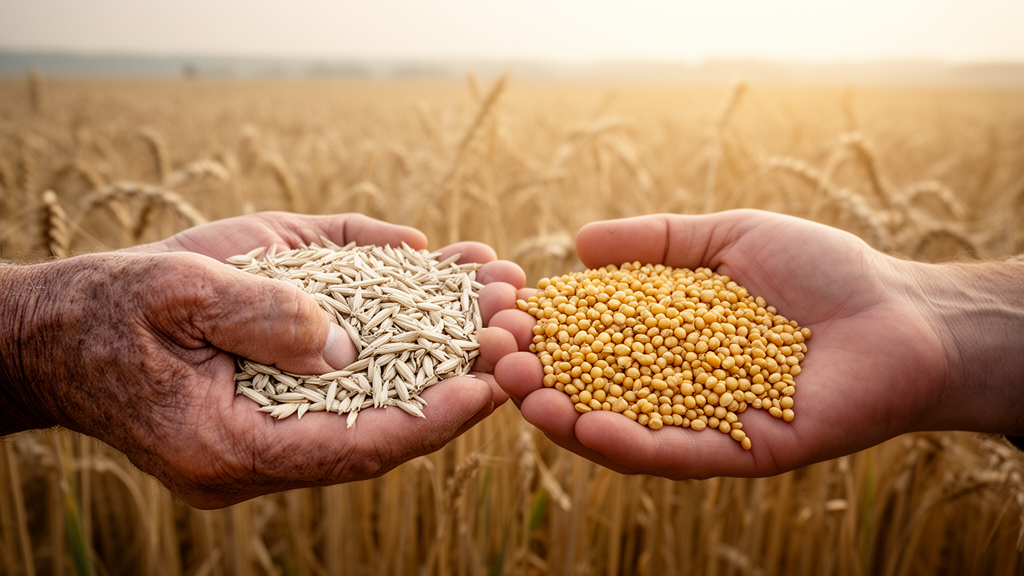
The most unsettling discovery in modern agricultural science may not be that climate change reduces crop yields, but that it can quietly strip the nutritional value out of food even when harvests look abundant. A new synthesis published in Frontiers in Nutrition argues that the global food system has been optimizing for the wrong metric for decades, and that the coming decades demand a fundamental rethinking of what crop resilience actually means. The review, authored by D. M. S. B. Dissanayaka of the University of Peradeniya in Sri Lanka, proposes a four-dimensional framework called nutritional resilience that measures not just how much food a crop produces, but how much nutrition it actually delivers to the people who eat it.
The scale of the problem is staggering. According to the World Health Organization, anaemia affected 30.7 percent of women aged 15 to 49 in 2023 and nearly 40 percent of children aged 6 to 59 months. Vitamin A deficiency affects approximately 190 million preschool-aged children and 19.1 million pregnant women, with the highest prevalence concentrated in Africa and South-East Asia. Zinc deficiency is harder to quantify because reliable population biomarkers are limited, but modelling has estimated inadequate zinc intake in about 17.3 percent of the global population, with the greatest risks concentrated in South Asia and sub-Saharan Africa. These are not marginal public health problems; they represent one of the largest silent burdens on human development worldwide.
What makes climate change particularly insidious in this context is that it threatens to worsen these existing deficiencies through a mechanism that is largely invisible to conventional agricultural metrics. Elevated atmospheric carbon dioxide, which is often discussed in terms of its fertilization effect on plant growth, simultaneously acts as a nutritional diluent. In C3 crops such as wheat, rice, and barley, enhanced carbon assimilation increases biomass and carbohydrate accumulation faster than mineral and protein acquisition, resulting in a dilution effect that reduces the concentration of iron, zinc, protein, and selected B vitamins in edible tissues. The physiological mechanisms are well understood: increased carbon dioxide reduces stomatal conductance and transpiration, which decreases the transpiration-driven mass flow of mobile nutrients such as nitrogen from soil to roots, while simultaneously accelerating carbohydrate production that overwhelms the plant’s capacity to acquire minerals at a proportional rate.
The consequences are not uniform across all crops. C4 crops such as maize, sorghum, millet, and sugarcane possess carbon dioxide-concentrating mechanisms that generally buffer them against the direct growth effects of elevated carbon dioxide, though they remain vulnerable to nutritional disruption under combined heat, drought, and altered soil nutrient availability. Heat stress affects nutritional quality through several interconnected pathways: higher temperatures accelerate respiration, shorten phenological stages, reduce grain-filling duration, and interfere with nutrient transport and assimilation. In wheat, climate warming has been associated with reductions in grain protein and micronutrients including iron and zinc. Drought imposes its own constraints through reduced soil moisture, lower nutrient mobility, impaired root growth, and restricted nutrient uptake, while also reducing biological nitrogen fixation in legumes and thereby affecting protein accumulation. Excessive rainfall and flooding can induce soil hypoxia, alter redox conditions, promote denitrification, and increase nutrient losses from the system entirely.
Perhaps the most counterintuitive finding in the emerging literature is that climate stress does not always degrade nutritional quality uniformly. Moderate environmental stress can stimulate the production of selected phytochemicals, including phenolics, flavonoids, glucosinolates, carotenoids, and antioxidants, whereas severe or prolonged stress may suppress biosynthetic processes entirely. Enhanced ultraviolet radiation can stimulate the synthesis of anthocyanins, flavonoids, and vitamin C in certain crops. Moderate salinity stress can increase the accumulation of selected phenolics and antioxidant-related compounds in some vegetables. These responses are highly dependent on the type, intensity, and duration of stress, as well as crop species, genotype, and developmental stage. The result is a nutritional landscape that is far more complex than a simple linear relationship between climate stress and poorer food quality.
This complexity extends into the realm of bioavailability, which is where the review makes perhaps its most important conceptual contribution. The presence of a nutrient in a food does not necessarily indicate that it will be accessible during digestion or efficiently absorbed and utilized by the human body. Anti-nutritional compounds such as phytate, tannins, oxalates, and protease inhibitors can bind minerals and reduce their bioavailability, and climate stress can alter the concentrations of these compounds in unpredictable directions. Elevated carbon dioxide has decreased phytate in some wheat experiments but increased it in rice. Heat and drought have increased phytate in some wheat, rice, and lentil crops, while genotype-specific responses have also been reported. This means that climate-induced changes in anti-nutritional factors cannot be assumed to move in a single direction, and nutritional quality assessments must evaluate these compounds together with iron, zinc, protein, amino acids, and measures of digestibility rather than relying exclusively on compositional measurements at harvest.
Against this backdrop, the review identifies genetic variation among crop cultivars as a valuable and largely underutilized opportunity. Some wheat cultivars maintain greater root biomass and higher nutrient transporter activity under elevated carbon dioxide, partially buffering the nutrient dilution effect associated with increased carbohydrate accumulation. Naturally resilient crops and their wild relatives, including sorghum, millet, and teff, possess physiological and morphological adaptations to arid environments that could be incorporated into breeding programs. Modern genomic approaches and gene editing technologies provide additional tools to combine stress resilience with enhanced nutritional quality and nutrient-use efficiency. The review argues that future breeding programs should adopt integrated selection strategies in which yield stability, stress tolerance, nutrient-use efficiency, and nutritional quality are considered simultaneously rather than sequentially.
Biofortification emerges as a critical pathway for shifting the performance criterion of crops from how much food is produced to how much nutrition is delivered per unit of food. Three complementary strategies are available: genetic biofortification through conventional and molecular breeding exploits natural variation to develop cultivars with elevated iron, zinc, and provitamin A; agronomic biofortification through soil and foliar applications of zinc, iron, selenium, and iodine provides a faster and more readily deployable complement; and biotechnological approaches using genetic engineering and CRISPR-based genome editing can directly modify pathways governing nutrient uptake, transport, storage, and biosynthesis. The scale of existing deployment is already substantial. HarvestPlus reported that more than 458 varieties of 13 biofortified crops were available to farmers in more than 40 countries, with biofortified food production reaching more than 360 million people. Representative examples include zinc-enriched wheat and rice, iron-enriched beans and pearl millet, and vitamin A-enriched cassava and sweet potato, with some varieties supplying up to 100 percent of the daily adult requirement for targeted nutrients.
The review also points toward dietary diversification as a complementary strategy that operates at the food system level rather than the crop level. Controlled-environment agriculture, including greenhouses, vertical farms, and hydroponic systems, can provide consistent production of nutrient-rich vegetables while reducing exposure to drought and other environmental stresses, although energy requirements, capital costs, and scalability constrain their role in staple-crop production. Underutilized climate-resilient crops such as sorghum, millet, and teff offer additional options, while emerging alternative nutrient sources including microalgae such as Chlorella vulgaris, which contains protein, essential amino acids, vitamins, minerals, omega-3 fatty acids, and bioactive compounds, and edible insects, which provide protein, fatty acids, minerals, and dietary fibre, represent complementary diversification pathways rather than substitutes for crop-based food production.
The central premise emerging from this synthesis is that climate resilience should be evaluated together with nutritional outcomes, not as a separate consideration but as an intrinsic component of what it means for a food system to be resilient. A food system cannot be considered resilient if it sustains harvests while progressively diminishing the nutritional value or functional properties of food. The four-dimensional framework of nutritional resilience, encompassing productivity, nutrient density, bioavailability, and dietary diversity, provides a measurable outcome layer that can be integrated into existing climate-smart agriculture programs, breeding targets, and food-system planning. Moving beyond yield requires connecting plant responses, soil and water management, crop improvement, food processing, nutrition, and dietary diversity into a single integrated framework. The objective is not simply to produce more food under climatic stress, but to preserve meaningful nutrient delivery and health-promoting functionality from field to diet, ensuring that the crops of tomorrow continue to nourish the people who depend on them.
Subject of Research: Climate change impacts on crop nutritional quality and the concept of nutritional resilience
Article Title: From yield to nutrition: re-imagining crop nutritional resilience for global nutrition security under climate change
Article References: From yield to nutrition: re-imagining crop nutritional resilience for global nutrition security under climate change. (n.d.). https://doi.org/10.3389/fnut.2026.1987519
Image Credits: AI Generated
DOI: 10.3389/fnut.2026.1987519
Keywords: climate change, crop nutrition, nutritional resilience, biofortification, micronutrient deficiency, elevated CO2, hidden hunger, food security, bioavailability, crop breeding, dietary diversity, sustainable agriculture
Cite Scienmag News
Daisy Hatcher. (October 16, 2026). Climate Change Is Stripping Nutrients From Crops Faster Than Yields Can Compensate. Scienmag. https://scienmag.com/climate-change-is-stripping-nutrients-from-crops-faster-than-yields-can-compensate/
Daisy Hatcher. "Climate Change Is Stripping Nutrients From Crops Faster Than Yields Can Compensate." Scienmag, 16 October 2026, https://scienmag.com/climate-change-is-stripping-nutrients-from-crops-faster-than-yields-can-compensate/. Accessed 16 October 2026.
Daisy Hatcher. "Climate Change Is Stripping Nutrients From Crops Faster Than Yields Can Compensate." Scienmag. October 16, 2026. https://scienmag.com/climate-change-is-stripping-nutrients-from-crops-faster-than-yields-can-compensate/


