


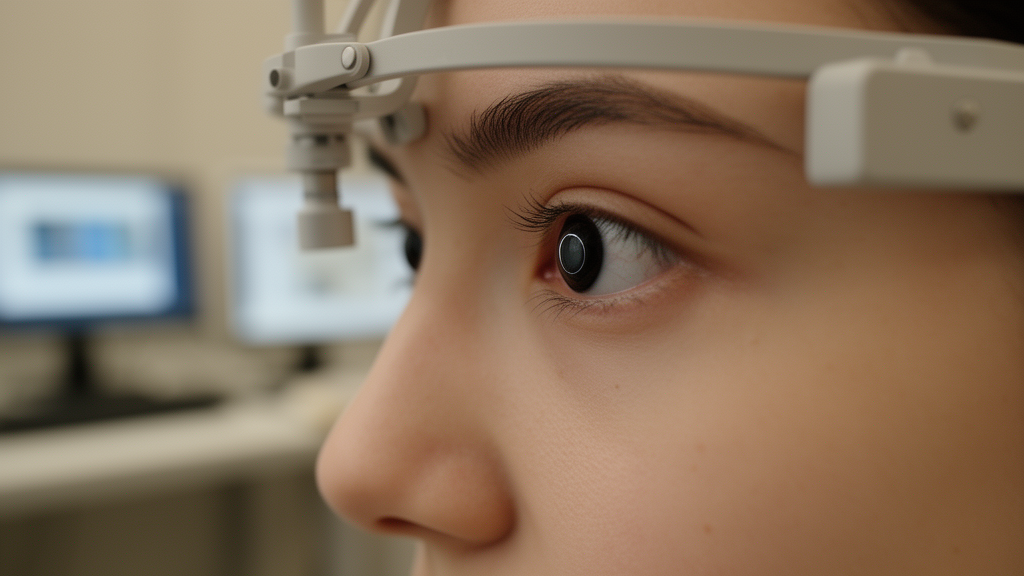
Every time you encounter something new, your pupils quietly broadcast what your brain is doing. They widen in moments of surprise and effort, they contract when expectations are met, and researchers have spent decades trying to decode these milliseconds-long signals. Now a new theoretical framework argues that the humble pupil deserves a far bigger role in memory science, not as a stand-in for a single brainstem nucleus, but as a window onto the coordinated neuromodulatory states that decide which experiences the brain stores and which it discards. Writing in Frontiers in Molecular Neuroscience, Alex Kafkas of the University of Manchester proposes that pupillometry, the precise measurement of pupil size over time, could become the missing translational bridge between molecular neuroscience and human episodic memory research.
The core problem Kafkas identifies is one that has frustrated cognitive neuroscientists for years. Animal studies have delivered exquisitely detailed accounts of how dopamine and norepinephrine shape hippocampal plasticity, influencing long-term potentiation, memory persistence and the prioritisation of behaviourally significant events. Work on reward, novelty and surprise suggests that catecholaminergic modulation is not one unitary arousal response but a family of state-dependent mechanisms through which the brain selects experiences for long-term storage. Yet translating those mechanistic insights into human research remains strikingly difficult, because direct measures of endogenous catecholaminergic activity in a living human brain are nearly impossible to obtain during the fleeting seconds in which memories are actually formed.
Existing tools each capture only a partial slice of the underlying biology. Positron emission tomography offers receptor- and transporter-specific measurements, but its temporal resolution is poor, it is costly and it involves radiation exposure. Neuromelanin-sensitive magnetic resonance imaging reveals the structural integrity of catecholaminergic nuclei, most famously the locus coeruleus, the brain’s principal norepinephrine factory, but says nothing about their moment-to-moment functional dynamics. Pharmacological manipulations can establish causal links between neurotransmitters and cognition, but they lack anatomical specificity and are confounded by systemic effects scattered throughout the body. What the field needs, Kafkas argues, is a biomarker that is non-invasive, inexpensive, temporally sensitive, easy to combine with imaging and modelling, and capable of tracking trial-by-trial fluctuations in neuromodulatory state.
Pupillometry ticks every one of those boxes, and an expanding literature shows that pupil dynamics genuinely matter for memory. Encoding-related pupil responses predict later recognition, memory strength, associative learning and mnemonic discrimination across a wide range of paradigms. They even distinguish qualitative features of remembering, separating recollection from familiarity, novelty from known, and in one striking study true memories from false ones. These are not trivial byproducts of effort or alertness, Kafkas contends, but physiological signatures associated with whether an experience gets encoded at all. Crucially, pupil responses also track the computational variables at the heart of hippocampal learning: novelty, expectation and prediction error all modulate pupil behaviour during encoding, and those modulations predict different subsequent memory outcomes.
The provocative part of the new framework is its refusal to treat the pupil as a narrow proxy for locus coeruleus activity. Pupillary responses emerge through the coordinated action of sympathetic and parasympathetic pathways and are shaped by distributed cortical, subcortical and brainstem circuits. Recent simultaneous pupillometry-fMRI evidence supports that broader view. During incidental encoding, pupil responses covaried with hippocampal and parahippocampal activity and predicted later recognition, and successful encoding was associated with pupil-related functional interactions between the hippocampus, the Edinger-Westphal nucleus, the ventral striatum and the orbitofrontal cortex. Pupil-linked memory effects, in other words, ride on a network spanning hippocampus, cortex and brainstem, not on a single neuromodulatory nucleus. Kafkas is careful about causality: these associations do not establish the direction of influence, and they may reflect direct interactions or common upstream drives, or both.
The framework’s boldest proposal tackles an apparent contradiction in the literature. Many studies report that larger pupil dilations during encoding predict successful memory. Others have found that encoding-related pupil constriction can predict memory too, under specific conditions. Rather than dismissing one set of findings, Kafkas suggests that constriction and dilation may index genuinely different physiological states recruited by different encoding demands. In an expectation-learning experiment, unexpected novel stimuli produced steadily increasing dilation and preferentially boosted later recollection, while expected novel stimuli elicited constriction yet still predicted successful recognition. Both routes led to memory, but through different physiological configurations.
Those two configurations map neatly onto two computational modes of hippocampal learning. When new information broadly fits existing knowledge, successful encoding may depend on integrating it into established representations, a state that plausibly leans more on parasympathetic and autonomic brainstem processes, consistent with the link between expected novelty, constriction and hippocampal connectivity with the Edinger-Westphal nucleus, the parasympathetic hub controlling the pupil’s constrictor muscle. When events violate predictions and demand revision of internal models, encoding may instead rely more heavily on catecholaminergic hippocampal-midbrain interactions. Here dilation during surprise reflects rapid memory updating rather than mere arousal, an idea compatible with the GANE model, in which norepinephrine amplifies high-priority neural representations under salient conditions, but extending it to hippocampal-midbrain network states. Animal work adds a further nuance: rapid pupil fluctuations track noradrenergic activity closely, whereas sustained dilation during locomotion tracks cholinergic activity instead. One pupil response, multiple possible neuromodulatory backdrops.
Turning the framework into hard science will require multimodal and, ultimately, causal tests, and Kafkas lays out a concrete experimental agenda. High-resolution fMRI can relate trial-by-trial pupil fluctuations to hippocampal subfields and network connectivity. Neuromelanin-sensitive MRI can index individual differences in catecholaminergic nuclei, despite ongoing challenges in accurately localising the locus coeruleus. Pharmacological studies can test whether cholinergic, dopaminergic and noradrenergic manipulations differentially alter constriction- and dilation-linked memory states. Magnetic resonance spectroscopy can probe the excitatory-inhibitory balance of the hippocampus, and autonomic measures such as heart-rate variability and skin conductance can help tease apart sympathetic and parasympathetic contributions. Computational modelling supplies the final ingredient: instead of simple remembered-versus-forgotten contrasts, future studies should estimate latent variables like surprise, uncertainty and belief updating on each trial, then relate them simultaneously to pupils, hippocampal activity and later memory quality.
The falsifiable predictions are explicit. Manipulating expectation while holding stimulus novelty constant should shift encoding-related pupil responses between constriction-dominated and dilation-dominated profiles, and those shifts should be accompanied by changes in hippocampal-midbrain connectivity rather than locus coeruleus activation alone. Drug studies should perturb the two profiles differently if they truly reflect distinct neuromodulatory states. The framework would falter, by contrast, if a single arousal process could explain everything, or if the dissociations failed to replicate beyond the small set of paradigms that currently motivate them. Kafkas acknowledges this limitation candidly, calling for independent replication and cross-species work in which circuit-level manipulations could determine whether pupil profiles are causally tied to specific neuromodulatory mechanisms or merely parallel consequences of broader physiological states.
The stakes extend well beyond the laboratory. Altered catecholaminergic signalling and hippocampal dysfunction are central features of healthy ageing, Alzheimer’s disease and several neuropsychiatric conditions, and recent evidence links pupil dynamics to functional network integrity in ageing and to Alzheimer’s disease biomarkers. Because pupillometry is cheap, non-invasive and endlessly repeatable, it could help characterise individual differences in neuromodulatory function during memory formation, not as a standalone diagnostic but as one layer in multimodal profiles combining memory performance, network integrity and disease progression. Whether every specific hypothesis survives testing or not, the reframing itself may prove durable: by treating the pupil as a systems-level marker of integrated neuromodulatory, autonomic and hippocampal processes, the field gains a scalable route for connecting molecular mechanisms of dopamine and norepinephrine to the human memories that depend on them, across health, ageing and disease.
Subject of Research: Pupillometry as a systems-level biomarker of neuromodulatory influences on human hippocampal memory
Article Title: Beyond the locus coeruleus: pupil dynamics as a systems-level marker of neuromodulatory influences on hippocampal memory
Article References: Beyond the locus coeruleus: pupil dynamics as a systems-level marker of neuromodulatory influences on hippocampal memory. (n.d.). https://doi.org/10.3389/fnmol.2026.1976085
Image Credits: AI Generated
DOI: 10.3389/fnmol.2026.1976085
Keywords: pupillometry, hippocampus, dopamine, norepinephrine, locus coeruleus, episodic memory, neuromodulation, novelty, prediction error, memory encoding, autonomic nervous system, fMRI
Cite Scienmag News
Cassandra Pierce. (October 16, 2026). Your Pupils May Reveal How the Brain Decides What to Remember, New Framework Suggests. Scienmag. https://scienmag.com/your-pupils-may-reveal-how-the-brain-decides-what-to-remember-new-framework-suggests/
Cassandra Pierce. "Your Pupils May Reveal How the Brain Decides What to Remember, New Framework Suggests." Scienmag, 16 October 2026, https://scienmag.com/your-pupils-may-reveal-how-the-brain-decides-what-to-remember-new-framework-suggests/. Accessed 16 October 2026.
Cassandra Pierce. "Your Pupils May Reveal How the Brain Decides What to Remember, New Framework Suggests." Scienmag. October 16, 2026. https://scienmag.com/your-pupils-may-reveal-how-the-brain-decides-what-to-remember-new-framework-suggests/


