


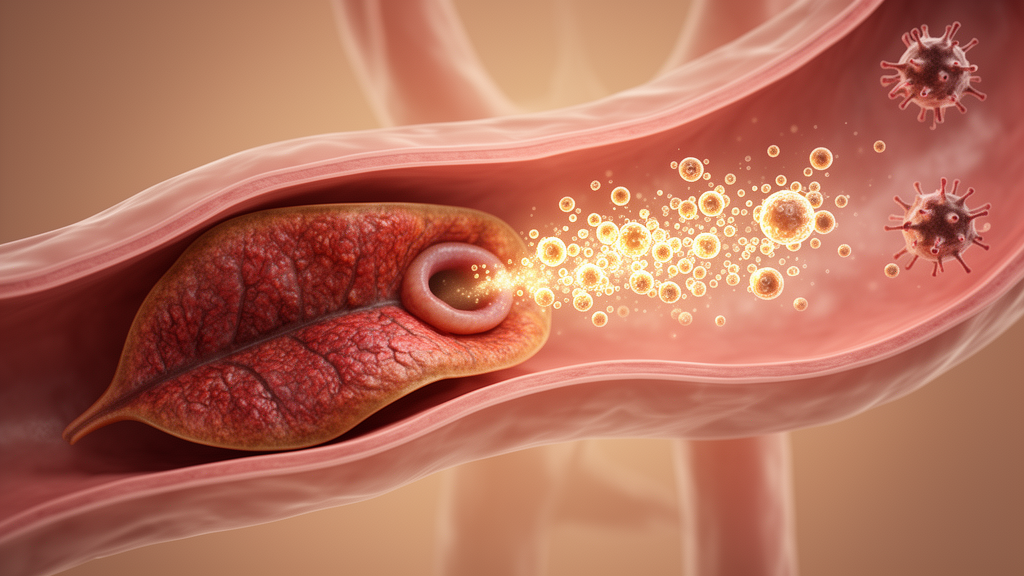
Beneath the surfaces of livers in cattle, sheep, and goats across the world, a silent molecular arms race unfolds every day. The liver flukes Fasciola hepatica and Fasciola gigantica, the trematode worms responsible for fasciolosis, must survive a barrage of immune attacks long enough to burrow through tissue, mature, and reproduce. A new comprehensive review published in Parasites & Vectors argues that one of the parasites’ most powerful weapons in this contest is far smaller than the worm itself: a fleet of nanoscale sacs called extracellular vesicles, which the flukes release into their host and use as molecular messengers to reprogram the immune response in their own favor.
Fasciolosis is a zoonotic disease classified among the neglected tropical diseases, and its economic footprint is enormous. Infections in sheep, goats, and cattle translate into significant losses in meat and milk production, with consequences that ripple through agricultural economies on every continent. Humans can also be infected, typically through the consumption of contaminated water plants such as watercress, making the parasite a genuine One Health concern that links veterinary medicine, human health, and food security. For decades, control has rested heavily on anthelmintic drugs, but the increasing global prevalence of anthelmintic resistance now poses a major challenge, forcing researchers to look for entirely new angles of attack.
That is precisely where extracellular vesicles, or EVs, enter the picture. These are lipid-bounded particles, generally on the scale of tens to hundreds of nanometers, that cells release naturally as part of intercellular communication. Far from being cellular debris, EVs are packed with functional cargo: proteins, lipids, and regulatory RNA molecules that can be delivered to recipient cells and alter their behavior. In the case of Fasciola species, EVs form part of the excretory and secretory products of the fluke, and the review, led by Diana María Barrero-Torres and colleagues at the University of Córdoba in Spain, brings together the pivotal research on these vesicles from their initial discovery to the present day.
The authors frame Fasciola EVs as messenger capsules that strategically intercept host cells during the molecular dialogue between parasite and host. Rather than simply floating passively in the circulation, these vesicles function as targeted delivery systems, docking with immune cells and other host targets and unloading molecular instructions. The consequences for the parasite are profound: the vesicles are implicated in crucial stages of infection, including the parasite’s development, its migration through host tissues, and the final establishment of a chronic infection that can persist for years inside the bile ducts.
The technical appeal of the EV hypothesis lies in its economy. A single fluke cannot be everywhere in the host’s body at once, but its vesicles can travel far beyond the site of infection, spreading immunomodulatory signals systemically. By manipulating the immune response, the parasites effectively buy time and space, suppressing or redirecting the defenses that would otherwise destroy them. This kind of active immunomodulation is a hallmark of successful parasites, and the review emphasizes that understanding it at the molecular interface may reveal which components of the parasite’s arsenal are truly indispensable to its survival.
To build that understanding, researchers have increasingly turned to omics technologies, large-scale analyses of the proteomes, transcriptomes, and other molecular inventories of both parasite and host. Applied to Fasciola EVs, these approaches allow scientists to catalog precisely which proteins and nucleic acids are packaged into the vesicles, to trace how that cargo changes across the parasite’s life cycle, and to map what happens in host cells once the cargo is delivered. The review synthesizes these studies with attention to the specific aims of each one, producing an integrated picture of a research field that has grown from curiosity about secreted fluke products into a sophisticated molecular discipline.
One of the most consequential implications of this work concerns vaccinology. Because current drugs are losing ground to resistance, there is growing interest in the development of vaccines that can offer long-term protection against fasciolosis. Effective vaccines against parasitic worms have historically proven difficult to develop, partly because the parasites are such skilled manipulators of immunity. The review suggests that a detailed molecular understanding of how Fasciola EVs suppress or skew the immune response could illuminate the very mechanisms a successful vaccine must overcome, and could identify pharmacologically active ingredients derived from the vesicles themselves or directed against them. In other words, the parasite’s communication system may contain the blueprint for its own defeat.
The timing of the review is significant. Fasciolosis sits at the intersection of animal welfare, agricultural productivity, and human health, yet it remains chronically underfunded relative to its impact. Climate change and changing agricultural practices are altering the distribution of the intermediate snail hosts that the flukes require, raising concerns about expansion into new regions. As control programs confront drug resistance, strategies grounded in the molecular interface between parasite and host, rather than in broad-spectrum chemical killing, represent a rational next step. Targeting EV-mediated communication could mean designing molecules that block vesicle uptake, neutralize key immunomodulatory cargo, or prime the immune system to recognize and destroy the vesicles before they do their work.
The University of Córdoba team, working with colleagues in Chile and supported by funding from the Spanish government through projects CNS2022-135144 and PID2023-152150OB-C22, positions their synthesis as a guide for future research initiatives aimed at effective fasciolosis control. By consolidating what is known, and by clearly framing the aims of past studies, the review reduces the risk of duplicated effort and highlights the open questions that matter most: how vesicle cargo varies between F. hepatica and F. gigantica, which host cell types are the primary targets of the vesicles during different phases of infection, and how the delivered molecules achieve their immunomodulatory effects at the cellular level.
What emerges from the synthesis is a picture of a parasite that is anything but a passive invader. Fasciola flukes appear to wage an active campaign against their host’s molecular defenses, and extracellular vesicles are the clandestine couriers of that campaign. Decoding the messages those couriers carry is now a central task for parasitologists, immunologists, and vaccine developers alike. If the field can translate its growing knowledge of Fasciola EV biology into concrete interventions, whether vaccines, immune-targeted therapies, or biomarkers for early diagnosis, it may finally turn the tide against a disease that has burdened livestock and people for centuries, and demonstrate a broader principle: that understanding how parasites talk to their hosts may be the most powerful way to silence them.
Subject of Research: The role of extracellular vesicles in Fasciola liver fluke immunomodulation of host defenses
Article Title: Fasciola spp. extracellular vesicles: an ace up liver flukes' sleeve to win the game against their host's molecular defense
Article References: Fasciola spp. extracellular vesicles: an ace up liver flukes' sleeve to win the game against their host's molecular defense. (n.d.). https://doi.org/10.1186/s13071-026-07690-w
Image Credits: AI Generated
DOI: 10.1186/s13071-026-07690-w
Keywords: Fasciola hepatica, Fasciola gigantica, extracellular vesicles, fasciolosis, immunomodulation, host-parasite interaction, vaccines, zoonosis, neglected tropical diseases, anthelmintic resistance, Parasites & Vectors, One Health
Cite Scienmag News
Kristina Jarvis. (October 15, 2026). Liver Flukes Deploy Tiny Molecular Messengers to Disarm the Host Immune System. Scienmag. https://scienmag.com/liver-flukes-deploy-tiny-molecular-messengers-to-disarm-the-host-immune-system/
Kristina Jarvis. "Liver Flukes Deploy Tiny Molecular Messengers to Disarm the Host Immune System." Scienmag, 15 October 2026, https://scienmag.com/liver-flukes-deploy-tiny-molecular-messengers-to-disarm-the-host-immune-system/. Accessed 15 October 2026.
Kristina Jarvis. "Liver Flukes Deploy Tiny Molecular Messengers to Disarm the Host Immune System." Scienmag. October 15, 2026. https://scienmag.com/liver-flukes-deploy-tiny-molecular-messengers-to-disarm-the-host-immune-system/


