


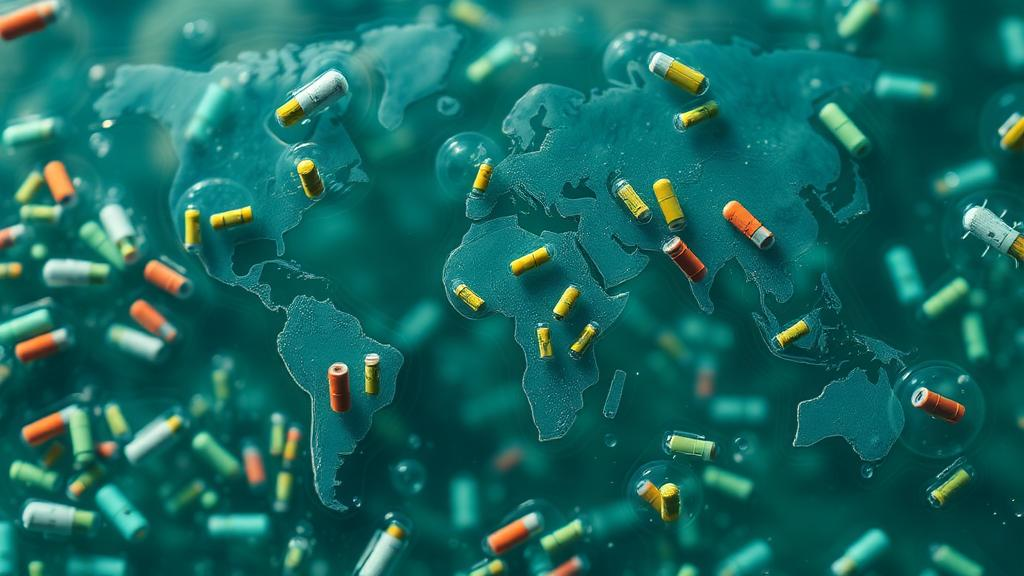
Antimicrobial resistance has long been framed as a problem of hospitals and overprescription, but a sweeping new synthesis of evidence argues that some of the most dangerous evolutionary laboratories for drug-defying bacteria are not operating rooms at all. They are the rivers, lakes and wastewater streams that receive inadequately treated effluent from pharmaceutical factories and healthcare facilities. A systematic review published in Frontiers in Systems Biology draws together 167 peer-reviewed studies spanning 2000 to 2026 and concludes that pharmaceutical and clinical effluents are creating potent environmental hotspots where multidrug resistance emerges, spreads and crosses back into the human sphere.
The review, conducted with predefined inclusion and exclusion criteria across major scientific databases, focuses on how antibiotic resistance genes, or ARGs, and multidrug-resistant bacteria travel through aquatic ecosystems. The picture that emerges is consistent: waters receiving poorly treated pharmaceutical and healthcare waste become saturated with antibiotic residues, mobile genetic elements and microbial communities already carrying resistance determinants. These hotspots act as concentration points, allowing resistance traits to persist, recombine and disseminate far beyond the original point of discharge.
One of the review’s central technical insights concerns sub-inhibitory antibiotic concentrations. Even when antibiotic levels in water are too low to kill bacteria outright, they can still exert selective pressure that favors resistant strains. At the same time, these low concentrations can actually increase the rate at which bacteria exchange genes. The review highlights how biofilms, the dense microbial communities that coat riverbeds, pipes and sediments, provide ideal conditions for horizontal gene transfer, the process by which bacteria pass DNA to their neighbors. Quorum sensing, the chemical communication that coordinates gene expression within bacterial populations, further accelerates this exchange, meaning resistance genes can spread faster than direct selective killing alone would ever predict.
Perhaps most sobering is the finding that antibiotics are not the only drivers. Heavy metals, including copper, zinc, mercury, cadmium and arsenic, reinforce resistance through co-selection. When bacteria evolve tolerance to a metal, they often acquire or retain genes that also confer antibiotic resistance, because these traits can be physically linked on the same mobile genetic elements. This means clinically important resistance genes such as blaNDM-1, blaKPC and mcr-1, which respectively encode defenses against some of medicine’s last-line antibiotics and the drug colistin, can be maintained in environments where antibiotic exposure is limited. A contaminated river downstream of a metal-rich industrial discharge can effectively keep deadly resistance genes alive even if antibiotics never enter the water.
The review also elevates the role of non-pathogenic environmental bacteria, which are frequently overlooked in clinical discussions of resistance. These harmless soil and water microbes serve as genetic reservoirs, storing resistance traits that can later be mobilized into pathogenic species. Through conjugation, transformation and other gene transfer mechanisms, DNA encoding resistance can hop from an innocuous environmental organism into a human pathogen, turning the environmental microbiome into a standing archive of future clinical threats.
Metagenomic evidence, which sequences the collective DNA of entire microbial communities, confirms that this exchange is not a one-way street. Resistance determinants move bidirectionally between environmental and clinical bacterial populations, meaning the environment is not merely a passive sink for resistance genes dumped by hospitals and factories. It is an active participant in their evolution and redistribution. This bidirectional flow firmly situates the environmental resistome, the complete collection of resistance genes in the environment, within a One Health framework, the recognition that human, animal and environmental health are inseparable.
The One Health perspective is not an abstract framing here; it has direct policy implications. If resistance genes circulating in a hospital ward can seed a river, and genes evolving in a river can re-enter human populations through drinking water, irrigation, seafood or recreation, then controlling resistance inside clinics alone is strategically insufficient. The review’s authors argue that antibiotic resistance genes should be monitored as part of routine environmental management programs, in the same way that chemical pollutants are tracked. That would require surveillance infrastructure that most countries currently lack, particularly in regions where pharmaceutical manufacturing is concentrated and wastewater treatment is minimal.
On the mitigation side, the review underscores the need for advanced wastewater treatment technologies capable of degrading antibiotic residues and removing resistance genes and mobile genetic elements, rather than merely reducing bacterial counts. Conventional treatment plants can actually concentrate ARGs in sludge and release them in effluent. Harmonized discharge regulations are also called for, since the reviewed literature shows that effluent standards for pharmaceutical manufacturers and healthcare facilities vary dramatically across jurisdictions, leaving gaps through which hotspots persist. Coordinated One Health policies, spanning regulators of human health, agriculture, industry and the environment, are described as essential to curb the environmental amplification of resistance.
The review is candid about what remains unknown. Important knowledge gaps persist regarding the precise pathways by which resistance moves from environment to clinic, the long-term ecological consequences of accumulating ARGs in aquatic systems, and how effective current mitigation strategies actually are under diverse real-world conditions. To close these gaps, the authors prioritize longitudinal surveillance that tracks resistance dynamics over years, multi-omics and systems biology approaches that integrate genomics, transcriptomics and proteomics, metagenomic resistome profiling across habitats, and machine-learning-based predictive frameworks capable of forecasting where resistance will emerge next.
The stakes extend well beyond microbiology. The review links its findings to multiple United Nations Sustainable Development Goals, including those addressing poverty, hunger, health, clean water, industry innovation, responsible consumption and global partnership, since sustainable approaches to resistance mitigation reinforce progress across all of them. As drug-resistant infections already claim enormous numbers of lives each year and threaten modern medicine’s reliance on antibiotics for surgery, chemotherapy and intensive care, the message from this synthesis is stark: the waterways of the world are not just receiving our pharmaceutical waste, they are actively reshaping it into the next generation of superbugs, and only coordinated action across human, industrial and environmental systems can interrupt that cycle.
Subject of Research: Environmental dissemination of antimicrobial resistance genes from pharmaceutical and clinical effluents in aquatic ecosystems
Article Title: One health perspectives on pharmaceutical and clinical effluents driving multidrug resistance in aquatic ecosystems: a comprehensive review
Article References: Tyagi, A., Rajput, M., & Mishra, S. (2026). One health perspectives on pharmaceutical and clinical effluents driving multidrug resistance in aquatic ecosystems: a comprehensive review. Frontiers in Systems Biology, 6, Article 1890380. https://doi.org/10.3389/fsysb.2026.1890380
Image Credits: AI Generated
DOI: 10.3389/fsysb.2026.1890380
Keywords: antimicrobial resistance, antibiotic resistance genes, pharmaceutical effluents, wastewater, One Health, aquatic ecosystems, horizontal gene transfer, heavy metals, biofilms, metagenomics, multidrug-resistant bacteria, water pollution
Cite Scienmag News
Juliet Wilcox. (October 15, 2026). Pharmaceutical Waste Is Breeding Superbugs in Rivers and Wastewater Worldwide. Scienmag. https://scienmag.com/pharmaceutical-waste-is-breeding-superbugs-in-rivers-and-wastewater-worldwide/
Juliet Wilcox. "Pharmaceutical Waste Is Breeding Superbugs in Rivers and Wastewater Worldwide." Scienmag, 15 October 2026, https://scienmag.com/pharmaceutical-waste-is-breeding-superbugs-in-rivers-and-wastewater-worldwide/. Accessed 15 October 2026.
Juliet Wilcox. "Pharmaceutical Waste Is Breeding Superbugs in Rivers and Wastewater Worldwide." Scienmag. October 15, 2026. https://scienmag.com/pharmaceutical-waste-is-breeding-superbugs-in-rivers-and-wastewater-worldwide/


