


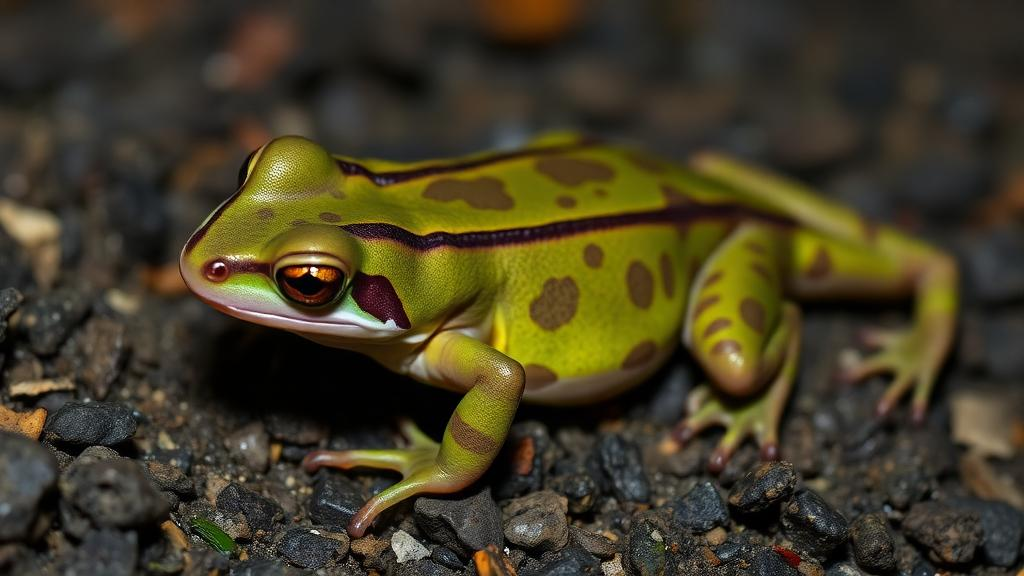
Mexico’s Transmexican Volcanic Belt has long been recognized as one of the most biologically intriguing corridors in North America, a 900-kilometer chain of mountains and volcanoes that stitches together the Nearctic and Neotropical worlds. A new study published in Neotropical Biology and Conservation now offers one of the most detailed accounts yet of how this dramatic landscape molds its amphibian fauna. By combining tens of thousands of museum collection records with sophisticated phylogenetic and climatic analyses, researchers have shown that the belt’s environmental heterogeneity is a powerful engine of taxonomic and phylogenetic diversity, and that the patterns it produces are far more complex than a simple east-west gradient.
The research team set out to evaluate species richness, endemism, and phylobetadiversity patterns across the entire physiographic province, which stretches from Cabo Corrientes in Nayarit to the Sierra de Chiconquiaco in Veracruz, between roughly 19°N and 21°N. The belt was forged over the last 19 million years through four major volcanic episodes, with the western section being the oldest and the eastern section the youngest. That asynchronous geological history has left a striking imprint: the west is dominated by semi-warm, subhumid climates, while the east is cooler and temperate, with vegetation ranging from tropical deciduous forests and xerophytic shrublands to oak and pine forests. The scientists expected these contrasts to shape which amphibian lineages thrive where.
To capture diversity at meaningful scales, the team overlaid the province with square grid cells ranging from a fine 0.125-degree resolution, suited to the small home ranges and limited dispersal of amphibians, up to the coarse 1-degree cells typical of macroecology. Very fine grids produced too many empty cells, while coarse ones washed out the region’s heterogeneity, so the analysis settled on 0.5-degree cells. After stringent quality filtering, 32,038 of 39,711 downloaded collection records were retained, representing 143 studied species in 36 genera. Among these were 92 species of frogs and toads in 27 genera, 50 salamander species in eight genera, and two caecilian species in a single genus, drawn from validated records in GBIF and a supertree of global amphibian relationships from which a maximum clade credibility tree was derived.
The results revealed a pronounced east-west asymmetry. Species richness in the eastern region ranged from 24 to 38 species per cell, whereas the western region held only one to 16 species per cell. Phylogenetic diversity also ranged widely, from 309 to 2,558, with high values in both subregions, although when standardized for species richness, most cells showed lower phylogenetic diversity than expected by chance, with just seven western cells exceeding expectations. The predicted split in lineage composition held firm: frogs and toads dominated the west, making up 86.3 to 100 percent of species there, while salamanders, which depend on cool, moist conditions, reached up to 60 percent of species in the east and were almost absent in the west.
Endemism told a subtler story. Values of both the endemism index and the phylogenetic endemism index were low across most of the belt, particularly in the west, with high concentrations confined to a handful of eastern cells. One eastern cell with exceptional phylogenetic endemism received only marginal coverage by Mexico’s Priority Terrestrial Conservation Areas, a gap the authors flag as a conservation concern. The near absence of overlap between cells of high richness and cells of high endemism matched one of the team’s core predictions and echoes a well-documented pattern across Mexico, where hotspots of different diversity facets rarely coincide.
Perhaps the most provocative finding concerns the forces structuring amphibian communities. Using phylogenetic community metrics including the phylogenetic diversity index, the net relatedness index, and the nearest taxon index, the researchers found that overdispersion, in which coexisting species are less closely related than expected by chance, is the dominant pattern across the belt. That signature points to ecological and biotic interactions, such as competition, as the primary drivers of community assembly, contradicting the expectation that habitat filtering would produce clusters of closely related species. In the west, a few cells did show positive values consistent with habitat filtering, and the net relatedness index was negative in the west and positive in the east, hinting at regionally distinct assembly rules within a single province.
Beta diversity, the turnover of species between sites, emerged as strikingly high. Sixty-nine percent of cells exhibited high taxonomic dissimilarity, especially in the east, and both taxonomic and phylogenetic beta diversity decomposed into a strong turnover component with low nestedness. That combination is consistent with patterns seen in other low-vagility taxa and in mountainous regions, and it supports the idea that species turnover reflects speciation and environmental specialization, whereas nestedness is tied to physiological constraints. In practical terms, nearly every grid cell harbors a distinct assemblage of lineages found nowhere else in quite the same combination, a mosaic that defies any single-site conservation strategy.
To identify the drivers behind these patterns, the team assembled nineteen predictor variables spanning contemporary bioclimatic conditions, historical climatic shifts since the Last Glacial Maximum about 21,000 years ago, and landscape features such as slope, evapotranspiration, aridity, vegetation greenness measured through satellite-derived NDVI, and soil temperature and moisture estimated from ERA5-Land and SMAP data. After removing collinear variables, eight predictors remained, all statistically significant across 1,000 randomizations. Differences in precipitation seasonality between the glacial period and today contributed most to explaining taxonomic beta diversity, while soil temperature was the leading factor behind species turnover on both taxonomic and phylogenetic facets. Geographic distance also correlated with both facets of beta diversity, underscoring dispersal limitation in these philopatric, moisture-dependent animals.
The explanatory power of the models was modest, explaining between 5.9 and 25.4 percent of the variance, a result the authors interpret honestly. Nestedness, in particular, is sensitive to grid-cell size, regional extent, and data resolution, and may reflect selective colonization, habitat nestedness, or disturbance. The team suggests that future work should incorporate landscape connectivity, geomorphology, and finer altitudinal stratification of records, since the rugged topography of the belt creates sharp gradients and barriers that coarse digital elevation models may not fully capture. Pleistocene refugia may also have played a role, allowing lineages with slow climatic niche evolution to persist in stable mountain environments and differentiate in place, a scenario consistent with the overdispersed communities observed.
The conservation implications are sobering. The study found little spatial congruence between the diversity facets it measured and Mexico’s existing Priority Terrestrial Conservation Areas, with many protected polygons encompassing cells with the lowest levels of beta diversity and turnover. This matters because 49 percent of the belt’s anuran species and 70 percent of its caudate species are currently listed in a risk category by the IUCN, many with extremely restricted distributions and specialized microhabitat requirements. When turnover dominates, the authors argue, preserving the region’s evolutionary history requires protecting many heterogeneous sites rather than a few species-rich ones. As climate change accelerates, they conclude, redefining the boundaries of priority areas with phylogenetic and beta diversity in mind may be the only way to safeguard the full breadth of the volcanic belt’s remarkable amphibian heritage.
Subject of Research: Environmental drivers of amphibian species richness, endemism, and phylobetadiversity in the Transmexican Volcanic Belt
Article Title: The role of environmental heterogeneity in the diversity of the amphibian fauna of the Transmexican Volcanic Belt
Article References: Gómora-Cercas, J., Martínez-Méndez, N., Díaz de la Vega-Pérez, A., & Mejía, O. (2026). The role of environmental heterogeneity in the diversity of the amphibian fauna of the Transmexican Volcanic Belt. Neotropical Biology and Conservation, 21(3), 223-243. https://doi.org/10.3897/neotropical.21.e187054
Image Credits: AI Generated
DOI: 10.3897/neotropical.21.e187054
Keywords: amphibians, Transmexican Volcanic Belt, biodiversity, phylogenetic diversity, beta diversity, endemism, biogeography, community ecology, conservation, climate, Mexico, salamanders
Cite Scienmag News
Margaret Porter. (October 15, 2026). Volcanic Belt of Mexico Reveals Hidden Rules Shaping Amphibian Diversity. Scienmag. https://scienmag.com/volcanic-belt-of-mexico-reveals-hidden-rules-shaping-amphibian-diversity/
Margaret Porter. "Volcanic Belt of Mexico Reveals Hidden Rules Shaping Amphibian Diversity." Scienmag, 15 October 2026, https://scienmag.com/volcanic-belt-of-mexico-reveals-hidden-rules-shaping-amphibian-diversity/. Accessed 15 October 2026.
Margaret Porter. "Volcanic Belt of Mexico Reveals Hidden Rules Shaping Amphibian Diversity." Scienmag. October 15, 2026. https://scienmag.com/volcanic-belt-of-mexico-reveals-hidden-rules-shaping-amphibian-diversity/


