


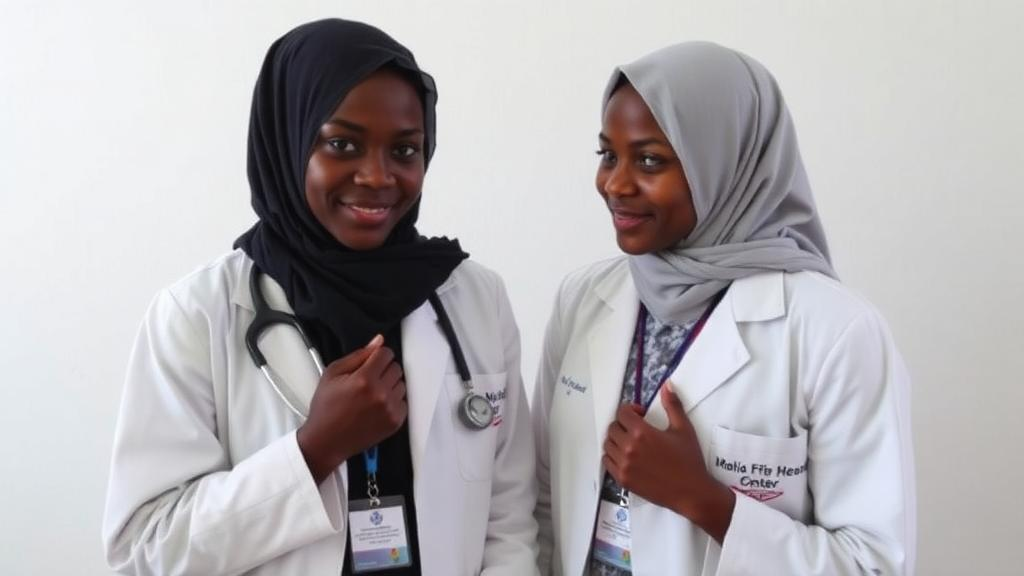
Medical students are supposed to be the most health-literate members of any society, so it is striking that in Borama, Somaliland, more than half of the young women training to become doctors, nurses, and midwives have never performed a breast self-examination. A new cross-sectional study published in Frontiers in Cancer Control and Society surveyed 202 female medical students at Amoud and Adal universities and found a stark disconnect between what these students know and what they actually do. Despite 77.7 percent demonstrating high knowledge of breast cancer and self-examination techniques, and despite 80.2 percent expressing positive attitudes toward the practice, only 46.5 percent had ever performed the procedure at all. Among those who had, only 51.1 percent followed the recommended monthly schedule, exposing what the researchers call a substantial knowledge-practice gap.
Breast cancer has become the most diagnosed malignancy in the world, with 2.3 million new cases and 670,000 deaths recorded in 2022, and projections suggest annual incidence could climb to 3.2 million cases by 2050. In sub-Saharan Africa, the burden is particularly punishing: late-stage presentation is common in Rwanda, Nigeria, Uganda, and Ethiopia, where limited treatment options and reliance on traditional medicine often delay diagnosis until the disease is advanced. Somaliland is no exception. The first cancer burden report from Hargeisa’s Needle Hospital identified breast cancer as the most common malignancy in the region, accounting for 15.9 percent of cases, with the majority of patients presenting at stage III or IV when survival odds are worst.
In settings where mammography machines are scarce and clinical breast examination infrastructure is thin, breast self-examination has long been championed as a cost-effective, non-invasive tool that empowers women to detect early pathological changes themselves. The technique is operationally defined as a three-step process: visual inspection of the breasts, palpation while lying down, and palpation while bathing, performed ideally three to five days after menstruation begins. The research team, led by Nafisa Abdihamid Mohamed of Amoud University, framed their investigation around the Health Belief Model, a psychological framework holding that people adopt preventive behaviors when they perceive a meaningful health threat and believe a specific action will effectively reduce it. Notably, the World Health Organization does not currently endorse self-examination as a population-based screening strategy, citing the absence of demonstrated mortality benefit and the risk of false positives and unnecessary biopsies, but the method remains influential in awareness campaigns across low-resource settings.
To quantify the drivers of practice in Borama, the researchers administered a structured, self-administered questionnaire between April and May 2024, using convenience sampling with proportional quotas to ensure representation from both institutions. The instrument was piloted among health science students, achieved a content validity index of 0.86 and a Cronbach’s alpha of 0.850, indicating solid validity and internal consistency. Of 217 students approached, 202 provided complete data, a response rate of 93.1 percent. The sample skewed young, with 82.7 percent of respondents aged 20 to 24, and predominantly single at 90.6 percent. Institutional quotas reflected enrollment figures, with 66.3 percent from Amoud University and 33.7 percent from Adal University, and participation was heaviest among third- and fourth-year students, who collectively made up more than half the cohort.
The descriptive results painted a picture of an exceptionally well-informed population. Fully 97 percent of respondents had received prior information about breast cancer or self-examination, drawn mainly from university instruction at 54.5 percent and social media at 24.3 percent. Some 63.4 percent correctly identified the recommended starting age of 20 to 25 years, 98.5 percent agreed that early detection improves survival, and 70.8 percent could name all the major risk factors, including family history, aging, unhealthy lifestyle, and hormonal therapy. Attitudinal measures were equally strong: every single respondent agreed that regular self-examination is important for women’s health, 99.5 percent believed the practice gives women control over their health, and 80.7 percent strongly agreed they felt confident encouraging other women to perform it.
Yet behavior lagged far behind belief. Only 94 of the 202 students, or 46.5 percent, had ever performed the examination. The 108 who had not cited the absence of symptoms rather than lack of awareness. Among those who did practice, timing adherence was encouraging, with 87.2 percent correctly examining themselves a few days after menstruation, but frequency was weaker, and intriguingly, 30.8 percent reported weekly examinations, exceeding the recommended monthly cadence, a pattern the authors suggest may reflect either proactive vigilance or misunderstanding of guidelines that warrants further investigation. Motivations for practice also revealed anxiety-driven triggers: 7.9 percent had previous breast problems, and 8.9 percent began the practice out of fear of breast cancer because of a family history.
The inferential analysis, conducted with binary logistic regression in SPSS while controlling for multicollinearity using variance inflation factors with a mean of 1.64, isolated the factors that truly predicted behavior. Age emerged as a powerful determinant: students in older age categories were more than five times as likely to perform self-examination as their 20-to-24-year-old peers, with an odds ratio of 5.012 and a confidence interval of 1.978 to 12.705. The authors attribute this to academic maturity and cumulative clinical exposure, which may heighten perceived severity as students witness late-stage cancer cases during their rotations. Knowledge, measured as a continuous score, contributed incrementally, with each additional point raising the odds of practice by 16.1 percent. Family monthly income, by contrast, showed no statistically significant association whatsoever, an odds ratio of 1.011 that diverges sharply from general population studies where economic status often dictates screening access.
Attitude proved to be the strongest predictor of all. Students with positive attitudes were 3.25 times more likely to perform the examination than those with poor or neutral attitudes, an odds ratio of 3.251 with a confidence interval of 2.214 to 4.774 and a p-value below 0.001. The finding carries a crucial caveat about psychological barriers: 18.3 percent of respondents reported feeling uncomfortable during the examination, and the authors interpret this discomfort, rooted in cultural modesty or fear of finding a lump, as a perceived barrier that can outweigh knowledge of personal susceptibility. In Health Belief Model terms, knowing you are at risk is not enough if the emotional cost of the action feels prohibitive. The authors caution that their framework was exploratory, since they measured only perceived benefits and barriers rather than deploying fully validated psychometric scales covering susceptibility, severity, and cues to action.
The study’s limitations are acknowledged candidly. The cross-sectional design precludes causal inference, self-reported practice was not clinically verified, and social desirability bias may have inflated prevalence figures among students aware of professional expectations. Convenience sampling from two urban universities also limits generalizability to remote and non-academic populations. Still, the pattern mirrors regional data from Ethiopia and Nigeria, and comparisons with a Mogadishu knowledge-attitude-practice study, in which 89 percent of healthcare professionals knew about breast cancer but awareness of preventive tools was strikingly limited, suggest the gap is systemic rather than local. The policy prescription is clear: Somaliland’s medical faculties should institutionalize hands-on simulations using breast models, mandate training for first- and second-year students before clinical pressures mount, and build peer-led advocacy programs that normalize the conversation around breast health, while the Ministry of Health reframes self-examination as an act of empowerment rather than a response to disease.
The deepest lesson of the Borama study may resonate far beyond Somaliland. Knowledge dissemination through lectures, posters, and social media campaigns is merely a precursor to behavior, not behavior itself. When 77.7 percent of a cohort knows and 46.5 percent act, the bottleneck is psychological, not informational. Bridging that divide demands interventions that build self-efficacy, desensitize discomfort through clinical practice, and transform abstract awareness into a sustained monthly habit. For the future physicians of Somaliland, who will be expected to lead their communities in early detection, the difference between knowing and doing could ultimately shape survival outcomes across an entire region where late-stage diagnosis remains the deadliest obstacle.
Subject of Research: Determinants of breast self-examination practice among female medical students in Somaliland
Article Title: Factors associated with breast self-examination practice among female medical students in selected universities in Borama, Somaliland
Article References: Factors associated with breast self-examination practice among female medical students in selected universities in Borama, Somaliland. (n.d.). https://doi.org/10.3389/fcacs.2026.1850142
Image Credits: AI Generated
DOI: 10.3389/fcacs.2026.1850142
Keywords: breast cancer, breast self-examination, Somaliland, medical students, Health Belief Model, early detection, cancer screening, knowledge-practice gap, cross-sectional study, health behavior, Amoud University, low-resource settings
Cite Scienmag News
Nathaniel Bowman. (October 15, 2026). Knowledge Alone Fails: Medical Students in Somaliland Skip Breast Self-Exams Despite Training. Scienmag. https://scienmag.com/knowledge-alone-fails-medical-students-in-somaliland-skip-breast-self-exams-despite-training/
Nathaniel Bowman. "Knowledge Alone Fails: Medical Students in Somaliland Skip Breast Self-Exams Despite Training." Scienmag, 15 October 2026, https://scienmag.com/knowledge-alone-fails-medical-students-in-somaliland-skip-breast-self-exams-despite-training/. Accessed 15 October 2026.
Nathaniel Bowman. "Knowledge Alone Fails: Medical Students in Somaliland Skip Breast Self-Exams Despite Training." Scienmag. October 15, 2026. https://scienmag.com/knowledge-alone-fails-medical-students-in-somaliland-skip-breast-self-exams-despite-training/


