


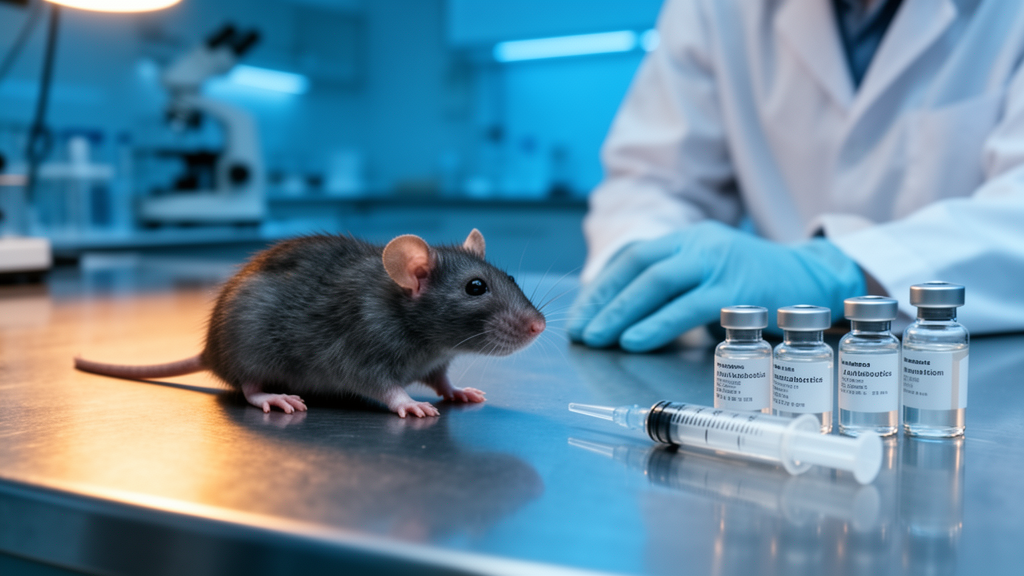
A brief course of oral antibiotics during adolescence can reshape the gut microbiome, alter protein expression in a key reward region of the brain, and change fentanyl-seeking behavior well into adulthood, according to a new study in rats published in Frontiers in Behavioral Neuroscience. The findings add to growing evidence that the gut microbiome is not a passive bystander in addiction vulnerability but an active developmental partner whose disturbance during sensitive windows can leave molecular fingerprints on the brain that persist long after the drugs are gone.
Adolescence has long been recognized as a period of heightened risk for substance use disorders. It is the life stage when most people first experiment with drugs, and early initiation is associated with an increased lifetime risk of developing a substance use disorder. Neurobiologically, this vulnerability is thought to stem in part from the ongoing maturation of the prefrontal cortex, a region that mediates attention, decision-making, and emotional regulation. During adolescence, this region undergoes drastic structural and functional changes, including synaptic pruning and refinement of inhibitory microcircuits, and it forms an integral part of the mesocorticolimbic reward pathway. Dysfunction in the prefrontal cortex is associated with greater relapse risk, and in animal models, disruptions to the medial prefrontal cortex alter extinction learning and drug-seeking after abstinence.
At the same time, the gut microbiome is also undergoing marked developmental changes. Adolescents carry a microbial community that is distinct from both children and adults, and this difference has been proposed to modulate neuropsychiatric outcomes. Prior work from the same laboratory showed that depleting the microbiome with oral antibiotics alters cocaine and opioid reward, reinforcement, and drug-seeking after abstinence in adult animals. Intriguingly, adolescents proved more sensitive to these effects than adults: five days of antibiotic pretreatment reduced morphine conditioned place preference in adolescent mice, an effect that required fourteen days of pretreatment to achieve in adults. But whether adolescent microbiome disruption produces lasting changes in opioid-seeking behavior and brain molecular profiles that persist into early adulthood had not been investigated until now.
To address this question, researchers at the Icahn School of Medicine at Mount Sinai, in collaboration with the Yale/NIDA Neuroproteomics Center, designed an experiment in which adolescent rats self-administered fentanyl while receiving a cocktail of oral antibiotics. Male and female Sprague-Dawley rats arrived in the colony on postnatal day 22 and were implanted with jugular catheters between days 29 and 31. Starting on day 31, half the animals received drinking water containing vancomycin, neomycin, bacitracin, and pimaricin, while the other half received plain water. After five days of pretreatment, all rats began self-administering fentanyl at a dose of 0.8 micrograms per kilogram per infusion on a fixed-ratio 1 schedule, with two 1.5-hour sessions per day across five days. This tight timeline ensured that both drug exposure and antibiotic treatment remained entirely within the adolescent period. The day after the last self-administration session, all rats were returned to plain water.
Following fourteen days of home-cage abstinence, the animals underwent a combined context-plus-cue fentanyl-seeking test in the same operant chambers where they had trained. During the context portion, both levers were extended but presses had no programmed consequence for thirty minutes. Then the light above the previously active lever was illuminated, signaling the start of the cue portion, after which every press on the active lever produced a twenty-second illumination of that light. Twenty-four hours later, the rats were euthanized and tissue from the medial prefrontal cortex and cecal contents was collected for analysis. The final sample comprised twenty water-treated rats and twenty-one antibiotic-treated rats, balanced across sex.
The behavioral results were striking and, in some respects, unexpected. Antibiotic treatment had no effect on fentanyl self-administration itself: rats on both drinks earned similar numbers of infusions and pressed the active lever at similar rates across sessions. But when tested after abstinence, rats that had received antibiotics during adolescence showed significantly reduced active lever pressing during the context portion of the seeking task, while their responding during the cue portion was unchanged. Analysis of cumulative lever presses over time confirmed a significant difference between groups during the context portion, with a shallower slope of responding in antibiotic-treated animals, but no difference during the cue portion. Further analysis of cue responsivity found no effect of prior antibiotic treatment on how rats responded to cue presentation itself, suggesting the behavioral change was specific to context-driven seeking rather than a general alteration in how the animals responded to discrete drug-predictive cues.
This reduction in context-induced seeking is notable because it runs opposite to the direction of change observed in prior work with adult animals, where microbiome depletion increased cocaine and fentanyl-seeking. The authors propose several explanations. One possibility is that the effect is genuinely adolescent-specific, consistent with their earlier finding that antibiotics reduced opioid conditioned place preference in adolescents but not adults. Because conditioned place preference relies on associative learning between contextual cues and drug effects, and the current study found altered context-induced but not cue-induced seeking, a common thread may be that adolescent antibiotic exposure impairs contextual learning. Another possibility involves a mismatch of internal states: rats experienced antibiotics during self-administration but not during seeking, and this state-dependent mismatch could have reduced context-driven responding. The authors caution that the current design cannot distinguish between these interpretations and suggest future studies comparing animals that remain on their drinks throughout abstinence with those that switch.
The microbiome analysis revealed that the effects of brief antibiotic exposure were anything but transient. Cecal contents collected two weeks after antibiotic cessation showed significantly lower microbial richness, measured with the Chao1 index, and significantly lower evenness, measured with the Simpson index, together indicating a substantial reduction in alpha diversity. Beta diversity analysis confirmed that the microbiome of former antibiotic-treated rats remained significantly distinct from that of water-treated controls. At the phylum level, antibiotic-treated animals showed a reduction in Firmicutes and an expansion of Proteobacteria and Verrucomicrobia, mirroring patterns seen in prior studies where animals remained on antibiotics for at least two weeks. The magnitude and duration of these diversity reductions were surprising, given that an earlier adolescent mouse study with a similar ten-day antibiotic regimen observed a much smaller reduction when tissue was collected immediately after treatment. The authors note that the microbiome did not return to baseline in the absence of interventions such as fecal microbiota transfer, underscoring how persistent the effects of brief adolescent antibiotic exposure can be.
The proteomic analysis of the medial prefrontal cortex, performed using data-independent acquisition mass spectrometry against a rat brain spectral library, identified 201 proteins that were significantly differentially expressed in antibiotic-treated rats, with 93 downregulated and 108 upregulated. Pathway analysis of the downregulated proteins yielded only two significant pathways, related to cellular component organization and the integrin alpha-v-beta-8 complex. In contrast, the upregulated proteins generated 255 significant pathways, of which thirteen involved metabolism, including terms related to glycolysis and gluconeogenesis, and sixteen involved neurotransmitter recycling or release, including terms related to vesicles and exocytosis. These results suggest global alterations in pathways regulating cellular metabolism and neurotransmitter release in the medial prefrontal cortex, building on prior work that identified robust changes in gene expression networks after adolescent antibiotic and morphine exposure. The authors point out that proteomic and transcriptomic pathways did not overlap between the two studies, likely reflecting technical differences in the protein libraries used and the fact that protein expression is a more reliable readout of functional change than RNA abundance, which correlates poorly with protein levels.
One limitation acknowledged by the researchers is the absence of saline-only comparison groups, which prevents determination of the effects of antibiotics or fentanyl alone on medial prefrontal cortex protein expression. It also remains unclear whether the microbiome alterations restricted to adolescence truly have enduring effects on behavior and neurobiology, since the microbiome of the two groups still differed so much by the end of testing. Nevertheless, the study demonstrates that brief oral antibiotic exposure during adolescence produces lasting alterations in drug seeking, microbiome composition, and medial prefrontal cortex neurobiology that extend at least two weeks after antibiotic cessation. These findings carry implications for understanding how early-life microbiome perturbations shape vulnerability to substance use disorders and suggest that the developing gut-brain axis may be a promising target for interventions aimed at reducing adolescent addiction risk. As antibiotic use remains common in adolescents for a variety of clinical reasons, the possibility that such treatments could interact with concurrent drug exposure to shape long-term reward circuitry is a question that will demand careful attention in future human and animal studies.
Subject of Research: Brief antibiotics exposure during adolescence produces persistent effects on the microbiome and fentanyl-seeking during adulthood in rats
Article Title: Brief antibiotics exposure during adolescence produces persistent effects on the microbiome and fentanyl-seeking during adulthood in rats
Article References: Hofford, R. S., Shipman, A. L., Wang, W., Lam, T. T., & Kiraly, D. D. (2026). Brief antibiotics exposure during adolescence produces persistent effects on the microbiome and fentanyl-seeking during adulthood in rats. Frontiers in Behavioral Neuroscience, 20, Article 1916554. https://doi.org/10.3389/fnbeh.2026.1916554
Image Credits: AI Generated
DOI: 10.3389/fnbeh.2026.1916554
Keywords: Brief, antibiotics, exposure, during, adolescence, produces, persistent, effects, microbiome, fentanyl-seeking, adulthood, rats
Cite Scienmag News
Cassandra Pierce. (October 15, 2026). Antibiotics in adolescence leave lasting marks on the rat brain and fentanyl-seeking. Scienmag. https://scienmag.com/antibiotics-in-adolescence-leave-lasting-marks-on-the-rat-brain-and-fentanyl-seeking/
Cassandra Pierce. "Antibiotics in adolescence leave lasting marks on the rat brain and fentanyl-seeking." Scienmag, 15 October 2026, https://scienmag.com/antibiotics-in-adolescence-leave-lasting-marks-on-the-rat-brain-and-fentanyl-seeking/. Accessed 15 October 2026.
Cassandra Pierce. "Antibiotics in adolescence leave lasting marks on the rat brain and fentanyl-seeking." Scienmag. October 15, 2026. https://scienmag.com/antibiotics-in-adolescence-leave-lasting-marks-on-the-rat-brain-and-fentanyl-seeking/


