


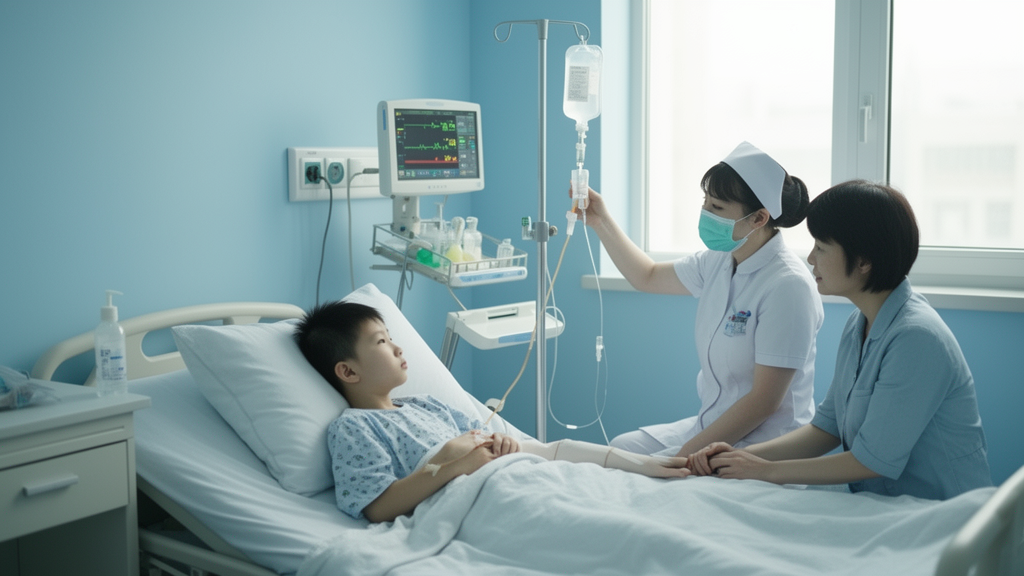
Acute lymphoblastic leukemia, the most common childhood cancer, has become one of modern oncology’s great success stories, with cure rates in well-resourced treatment programs now exceeding ninety percent. Yet the chemotherapy regimens responsible for those remarkable outcomes remain blunt instruments, and the serious adverse events they trigger—overwhelming infections, organ damage, life-threatening metabolic crises—continue to shape which children ultimately survive. A new retrospective multicentre study from China, published in BMC Pediatrics, offers one of the clearest pictures to date of how these serious adverse events, or SAEs, unfold across an entire national treatment protocol and how profoundly they influence the prognosis of the children who experience them.
The research drew on the Chinese Children’s Cancer Group ALL-2015 protocol, known as CCCG-ALL-2015, a standardized treatment scheme implemented across twenty pediatric oncology centers in China. The investigators retrospectively collected data on 7,640 consecutive children with acute lymphoblastic leukemia enrolled between 2015 and 2021, capturing both children who suffered serious adverse events and those who completed therapy without them. Epidemiological, clinical, and outcome information was gathered through a purpose-designed case report form, allowing the team to map when complications occurred, what forms they took, and which patients were most vulnerable. The scale of the dataset is what gives the analysis its power: few studies anywhere in the world have tracked serious adverse events across a cohort of this size within a single, uniform treatment protocol.
The headline finding is sobering but precise. Of the 7,640 children treated, 842—11.0 percent of the cohort—experienced at least one serious adverse event, with a total of 1,013 such events recorded across the study population. The dominant category was infection: 669 of the 1,013 events, or 66.0 percent, were infection-related. This concentration is biologically intuitive. Intensive chemotherapy suppresses bone marrow function, producing prolonged periods of profound neutropenia in which the immune system’s first line of bacterial defense is essentially absent, while mucosal barriers in the gut and mouth are damaged by cytotoxic drugs, creating entry points for microorganisms that would ordinarily be harmless.
Equally revealing is the timing of these events. Nearly half of all serious adverse events—46.2 percent—occurred during the induction phase, the opening weeks of treatment when the most intensive myelosuppressive chemotherapy is delivered and when children are often most ill from their leukemia itself. The remainder clustered later in therapy: 23.6 percent during the first stage of the continuation phase and 17.1 percent during the second stage. The character of the complications shifted across these phases in an instructive way. Severe pneumonia accounted for 30.8 percent of all serious adverse events during induction, rising to 39.0 percent in continuation stage 1 and reaching 62.4 percent in continuation stage 2. In other words, as treatment progressed and the composition of the chemotherapy changed, respiratory infections became the overwhelmingly dominant threat, a pattern that carries direct implications for surveillance and prophylaxis during the later phases of the protocol.
Who was most at risk? The researchers applied multivariable logistic regression, a statistical technique that isolates the independent contribution of each baseline characteristic while controlling for all the others. Four factors emerged as independently associated with an increased risk of developing a serious adverse event. Children diagnosed before their first birthday faced elevated risk, reflecting the fragility of infant immune systems and the difficulty of treating leukemia in this age group. Children with T-cell acute lymphoblastic leukemia, a biologically distinct and historically more aggressive subtype, were also more vulnerable, as were those classified into the intermediate-risk or high-risk treatment groups, whose protocols by design deliver more intensive and therefore more toxic therapy. Finally, a traumatic lumbar puncture with blasts present—a procedure in which blood contaminates the cerebrospinal fluid sample during spinal tap, denoted TLP+ in the study—predicted subsequent serious adverse events, likely serving as a marker for both technically difficult procedures and underlying disease burden.
The most consequential question the study addressed was whether these events merely complicate treatment or actually determine survival. To answer it, the team turned to time-dependent Cox regression analysis, a sophisticated survival-analysis method that treats the occurrence of a serious adverse event as a changing exposure over the course of follow-up rather than a fixed baseline characteristic. This approach is critical, because simply comparing children who did and did not experience complications can be distorted by the fact that complications take time to occur. The analysis delivered a clear verdict: experiencing a serious adverse event was associated with significantly poorer subsequent overall survival. The complications were not incidental detours on the road to cure; they were themselves prognostic turning points.
Drilling further into the subgroup of children who did suffer serious adverse events, the investigators used multivariable Cox analysis to identify which factors worsened outcomes within that group. Two stood out. Active abandonment of treatment—children discontinuing therapy against medical advice, a documented challenge in pediatric oncology across many settings—adversely affected survival, as did infection as the nature of the adverse event itself. These findings sharpen the clinical message: among children already facing a complication, the combination of an infectious cause and interrupted treatment represents a particularly dangerous trajectory, and interventions aimed at keeping children on protocol through the complication period may carry substantial survival benefit.
The authors conclude that serious adverse events occurring during chemotherapy under the CCCG-ALL-2015 protocol genuinely influence the prognosis of children with acute lymphoblastic leukemia, and they argue that focused prevention and treatment of specific complications could raise both the chemotherapy completion rate and overall outcomes in China. The practical implications are concrete. Because nearly half of events cluster in induction, intensified supportive care in those first weeks—aggressive infection monitoring, early empiric antibiotics during febrile neutropenia, and careful metabolic management—offers the highest-yield window for intervention. Because severe pneumonia dominates the continuation phases, respiratory vigilance, appropriate antimicrobial prophylaxis where evidence supports it, and prompt imaging and treatment of pulmonary symptoms in high-risk children could address the single largest threat in later therapy.
The study also carries broader significance for how pediatric leukemia success is measured and pursued. As survival curves flatten at high plateaus in leading centers, the remaining deaths are increasingly attributable not to drug-resistant leukemia but to the collateral damage of treatment itself, and to the social and logistical forces that pull children off therapy. Identifying infants, T-cell cases, intermediate- and high-risk patients, and children with traumatic lumbar punctures as high-risk groups gives clinicians a practical screening framework for allocating scarce intensive-care and infectious-disease resources. And by quantifying abandonment as an independent prognostic factor among complicated cases, the research underscores that the biology of cure in childhood leukemia now extends well beyond the pharmacy, encompassing health-system design, family support, and the quiet work of keeping a child on protocol through the most dangerous weeks of their treatment. For the thousands of children diagnosed each year in China and beyond, the path to higher survival may run as much through the prevention of complications as through the refinement of the chemotherapy itself.
Subject of Research: Serious adverse events and their impact on prognosis in children with acute lymphoblastic leukemia treated with the CCCG-ALL-2015 protocol
Article Title: Common SAEs and their impact on the prognosis of children treated with the CCCG-ALL-2015 protocol: a retrospective multicentre Chinese study
Article References: Shi, H., Shen, S., Gao, J., Hu, S., Jiang, H., Fang, Y., Liang, C., Ju, X., Chen, L., Zhai, X., Tian, X., Wang, N., Hu, Q., Jiang, H., Sun, L., Yang, M., Xue, N., Li, C.-K., Tang, J., … Meng, Y. (2026). Common SAEs and their impact on the prognosis of children treated with the CCCG-ALL-2015 protocol: a retrospective multicentre Chinese study. BMC Pediatrics. https://doi.org/10.1186/s12887-026-07493-z
Image Credits: AI Generated
DOI: 10.1186/s12887-026-07493-z
Keywords: acute lymphoblastic leukemia, serious adverse events, CCCG-ALL-2015, pediatric oncology, chemotherapy, severe pneumonia, infection, overall survival, treatment abandonment, risk factors, multicentre study, China
Cite Scienmag News
Nathaniel Bowman. (October 15, 2026). Severe Complications During Childhood Leukemia Therapy Leave a Lasting Mark on Survival in China. Scienmag. https://scienmag.com/severe-complications-during-childhood-leukemia-therapy-leave-a-lasting-mark-on-survival-in-china/
Nathaniel Bowman. "Severe Complications During Childhood Leukemia Therapy Leave a Lasting Mark on Survival in China." Scienmag, 15 October 2026, https://scienmag.com/severe-complications-during-childhood-leukemia-therapy-leave-a-lasting-mark-on-survival-in-china/. Accessed 15 October 2026.
Nathaniel Bowman. "Severe Complications During Childhood Leukemia Therapy Leave a Lasting Mark on Survival in China." Scienmag. October 15, 2026. https://scienmag.com/severe-complications-during-childhood-leukemia-therapy-leave-a-lasting-mark-on-survival-in-china/


