


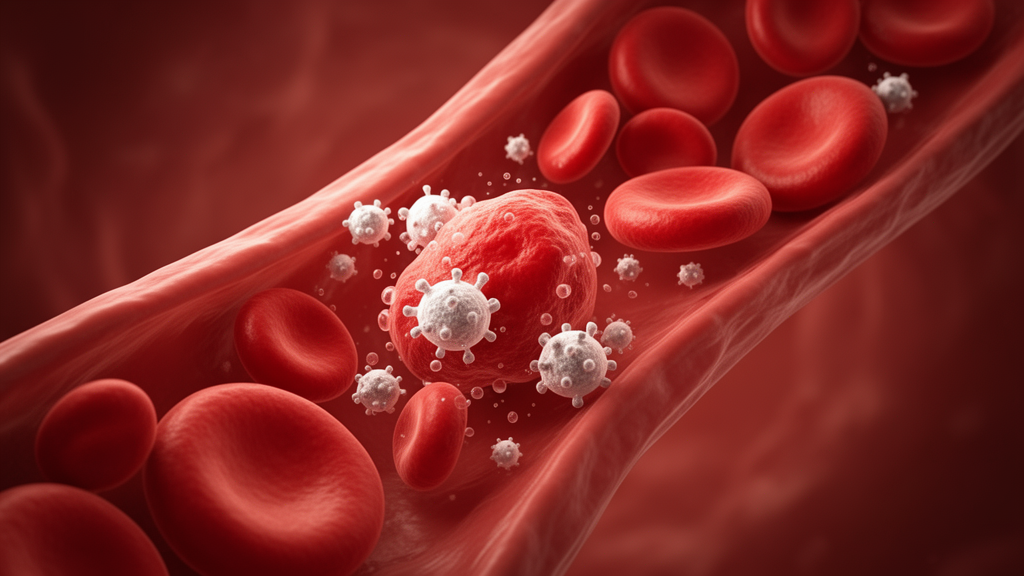
For patients with transfusion-dependent thalassemia, a lifetime of regular blood transfusions is both a lifeline and a immunological tightrope walk. Every unit of donor blood carries red cell proteins that their own immune system may recognize as foreign, and once the body starts producing antibodies against these antigens, finding compatible blood becomes progressively harder. Now, a study from South Khorasan Province in Iran has uncovered a striking genetic clue: patients carrying a particular variant of an immune gene called HLA-DRB1*12 appear far more likely to develop these dangerous alloantibodies, suggesting that the risk of transfusion reactions may be written, at least in part, into a patient’s DNA.
The research, published as an open-access article in Annals of Hematology by a team at Birjand University of Medical Sciences, focused on 74 patients with transfusion-dependent beta-thalassemia. This inherited blood disorder prevents the body from producing healthy hemoglobin, the protein that carries oxygen in red blood cells, and patients depend on regular transfusions to survive. The team divided participants into two groups: seven patients who had developed alloantibodies against donor red cell antigens, and 67 transfused patients who had not, serving as disease controls. The researchers then used a targeted molecular technique called PCR-SSP, or polymerase chain reaction with sequence-specific primers, to detect three specific HLA-DRB1 variants: HLA-DRB107:01, HLA-DRB110, and HLA-DRB1*12.
The results were dramatic, if preliminary. HLA-DRB110 was detected in three of the seven alloimmunized patients but in only one of the 67 non-alloimmunized controls, yielding a Fisher’s exact test p-value of 0.002 and an odds ratio of 49.50 with a 95 percent confidence interval stretching from 4.64 to 528.21. Even more striking, HLA-DRB112 was found in two of the seven alloimmunized patients and in none of the controls, producing a p-value of 0.008. Because no controls carried this variant, the researchers could not calculate a stable odds ratio for the association, a statistical phenomenon known as a zero cell. No significant association emerged for HLA-DRB1*07:01.
To understand why these findings matter, it helps to grasp the immunology at play. HLA molecules are the human version of the major histocompatibility complex, a family of cell-surface proteins that present peptide fragments to T lymphocytes and thereby orchestrate adaptive immune responses. HLA class II molecules, including those encoded by the DRB1 gene, are expressed on professional antigen-presenting cells such as dendritic cells, macrophages, and B cells. When a transfused red cell carries an antigen that the recipient lacks, that antigen is taken up, processed, and presented by the recipient’s HLA class II machinery to helper T cells. If the T cells recognize the presented peptide as foreign, they can drive B cells to mature into antibody-producing plasma cells, generating alloantibodies that circulate for years and can destroy transfused cells carrying the offending antigen.
The specific antibodies found in this cohort tell their own story. Anti-E, directed against the E antigen of the Rh blood group system, and anti-K, directed against the K antigen of the Kell system, were the most frequent specificities detected. Both are clinically significant: anti-E is among the most common immune antibodies encountered in transfusion practice, while anti-K is notorious for causing hemolytic transfusion reactions and hemolytic disease of the fetus and newborn. Most of the alloimmunized patients in the study were what transfusion specialists call hyper-responders, individuals who mounted antibody responses to multiple antigens rather than just one, a pattern that makes compatible blood procurement exponentially more difficult.
The frequency of alloimmunization in this cohort, 9.5 percent, sits within the range reported for thalassemia populations worldwide, though estimates vary widely between studies, from a few percent to more than 30 percent depending on the population, transfusion protocols, and antigen-matching practices. What sets the new study apart is its attempt to link this variability to immunogenetics. The hypothesis that HLA class II polymorphisms shape alloimmunization risk is not new; immune response genes have long been suspected of determining why some patients respond vigorously to foreign red cell antigens while others tolerate them silently. But direct evidence in thalassemia has been sparse, and the Iranian province of South Khorasan, with its distinctive genetic heritage, offered an opportunity to test the idea in a specific population.
The authors themselves are careful to frame their findings as exploratory and hypothesis-generating rather than definitive. With only seven alloimmunized patients, the statistical power is limited, and the confidence interval around the odds ratio for HLA-DRB110 is extraordinarily wide, reflecting the sparse data. Small case-control studies of rare outcomes are prone to both false positives and inflated effect sizes, a well-documented phenomenon in genetic association research. The zero cell problem for HLA-DRB112 compounds this uncertainty, since standard statistical methods cannot produce a stable estimate when one group has no cases of the exposure. The researchers explicitly call for validation in larger, geographically diverse cohorts before any clinical conclusions can be drawn.
Nevertheless, the biological plausibility of the association is compelling. Different HLA-DRB1 alleles present different peptide repertoires with varying efficiency, and it is conceivable that certain variants are particularly adept at presenting red cell-derived peptides to helper T cells, thereby lowering the threshold for alloantibody formation. If confirmed, such a mechanism would explain why hyper-responder phenotypes cluster in some patients and why alloimmunization rates differ across ethnic groups with distinct HLA distributions. It would also open the door to a form of personalized transfusion medicine in which a patient’s HLA genotype, determined once at diagnosis, informs the intensity of extended antigen matching for the blood they receive throughout life.
The practical implications for thalassemia care are significant. Patients who develop alloantibodies face longer waits for compatible units, increased risk of delayed hemolytic transfusion reactions, and higher transfusion-related morbidity overall. In regions where the thalassemia gene is common and blood supplies are strained, the ability to identify genetically susceptible patients before they ever mount an antibody response could transform transfusion support from a reactive process into a preventive one. Extended phenotyping or genotyping of both donors and recipients, guided by immunogenetic risk profiles, could reduce the incidence of alloimmunization and ease the chronic shortage of compatible blood for the most vulnerable patients.
The study, conducted in accordance with the Declaration of Helsinki and approved by the Ethics Committee of Birjand University of Medical Sciences, was supported financially and administratively by the same institution. The research team, led by corresponding author Fatemeh Mezginejad of the Department of Hematology at the School of Allied Medicine, included Mohammad Javad Yousefi and Mobina Nakhaei Shamahmood from the Student Research Committee and Mansoor Soltani from the Department of Critical Care Nursing. As the field awaits larger validation studies, the work stands as a provocative early signal that the immune genes governing transfusion compatibility may be far more personal than the blood on the shelf suggests, and that the future of safe transfusion in thalassemia may lie as much in the genome as in the donor database.
Subject of Research: HLA-DRB1 genetic variants and red cell alloimmunization risk in transfusion-dependent thalassemia
Article Title: Association of HLA-DRB1*12 with red cell alloimmunization in transfusion-dependent thalassemia
Article References: Association of HLA-DRB1*12 with red cell alloimmunization in transfusion-dependent thalassemia. (n.d.). https://doi.org/10.1007/s00277-026-07321-5
Image Credits: AI Generated
DOI: 10.1007/s00277-026-07321-5
Keywords: HLA-DRB1, alloimmunization, thalassemia, blood transfusion, alloantibodies, immunogenetics, transfusion medicine, red blood cells, anti-E, anti-K, PCR-SSP, Iran
Cite Scienmag News
Juliet Wilcox. (October 15, 2026). Hidden Immune Gene Variant May Explain Dangerous Blood Transfusion Reactions in Thalassemia Patients. Scienmag. https://scienmag.com/hidden-immune-gene-variant-may-explain-dangerous-blood-transfusion-reactions-in-thalassemia-patients/
Juliet Wilcox. "Hidden Immune Gene Variant May Explain Dangerous Blood Transfusion Reactions in Thalassemia Patients." Scienmag, 15 October 2026, https://scienmag.com/hidden-immune-gene-variant-may-explain-dangerous-blood-transfusion-reactions-in-thalassemia-patients/. Accessed 15 October 2026.
Juliet Wilcox. "Hidden Immune Gene Variant May Explain Dangerous Blood Transfusion Reactions in Thalassemia Patients." Scienmag. October 15, 2026. https://scienmag.com/hidden-immune-gene-variant-may-explain-dangerous-blood-transfusion-reactions-in-thalassemia-patients/


