


For the roughly ten percent of the population living with insomnia disorder, the condition has long been described as more than a nighttime inconvenience. Researchers have increasingly framed it as a state of chronic hyperarousal, a persistent physiological readiness that spills over into waking life and is thought to be tied to emotional and autonomic dysregulation. A new study published this week in the open-access journal PLOS Mental Health adds a striking piece of evidence to that picture, showing that the way the body learns and remembers that a threat has passed appears measurably different in people with insomnia compared with good sleepers. The work, led by Dr. Rose T. Faghih of New York University Tandon School of Engineering in collaboration with researchers at Harvard Medical School, suggests that disrupted fear regulation may be a core feature of the disorder rather than a secondary consequence of poor sleep.
The study hinges on a deceptively simple physiological signal: skin conductance. Changes in the skin’s electrical properties are driven by the activity of sweat glands, which are controlled by the sympathetic nervous system, the branch of the autonomic nervous system responsible for the body’s fight-or-flight responses. Because sympathetic activation increases sweat secretion almost instantaneously, skin conductance has served for decades as a well-established, noninvasive marker of stress and emotional arousal. What has limited the field, however, is the way this signal has traditionally been analyzed. Previous studies examining skin conductance during fear extinction have focused primarily on sharp, isolated spikes of stress activity, treating the moments of peak response as the most informative features of the recording.
Faghih’s team took a different approach, one rooted in computational modeling. The researchers designed two statistical models to estimate stress and emotional arousal from skin conductance recordings. The first model relied only on isolated stress spikes, the conventional approach. The second model incorporated not only those spikes but also the signal’s continuous background levels, known as the tonic component, which reflects a slower-moving baseline of sympathetic arousal underlying the moment-to-moment fluctuations. The idea draws on the team’s earlier development of what they describe as sympathetic arousal virtual sensors, mathematical estimators that decode arousal from microfluctuations in sweat activity rather than from discrete events alone.
Both models were applied to skin conductance recordings from an initial cohort of 48 adults, evenly divided between 24 people with insomnia disorder and 24 good sleepers. Participants completed a two-day fear conditioning and extinction task, a standard experimental paradigm for studying how humans acquire and then unlearn fear. On the first day, participants were temporarily conditioned to fear a visual stimulus: the stimulus was repeatedly paired with a mild electric shock, so that its appearance came to predict an unpleasant outcome. In the subsequent extinction phase, the same stimulus was presented repeatedly without any shock, allowing participants to learn that it no longer signaled danger. This process is thought to form a new, inhibitory safety memory that can override the established fear memory. Sleep, according to a substantial body of research, is believed to help consolidate exactly this kind of fear extinction learning, which is one reason the connection to insomnia is so compelling.
The results revealed a clear methodological lesson alongside the clinical one. Only the model that included the tonic background signal detected a significant difference between the two groups; the spike-based model did not. From the conditioning phase, when the visual stimulus was still paired with the mild shock, to the extinction phase, when it was no longer paired, the average high-arousal index increased in people with insomnia but slightly decreased in good sleepers. In other words, as the danger was being removed, the bodies of good sleepers gradually calmed, while the bodies of people with insomnia became more physiologically aroused. Other differences between the groups followed a similar pattern but did not reach statistical significance, including lower average arousal during conditioning and higher average arousal on the second day, when both the fear memory and the safety memory were recalled.
The interpretation offered by the researchers is that people with insomnia either failed to fully acquire the safety memory on the first day or failed to retain it until the second. As a result, the new extinction memory was too weak to oppose the original fear memory when participants were re-exposed to the stimulus on day two. This failure of inhibitory regulation is precisely the mechanism that exposure-based therapies for anxiety are designed to strengthen, and it may help explain a long-standing clinical observation. As co-author Dr. Edward Pace-Schott of Harvard Medical School noted, hyperarousal is considered an underlying risk factor for developing insomnia, and the mathematical parsing of skin conductance revealed the same effect his team had previously observed using functional magnetic resonance imaging. He suggested that this hyperarousal could oppose subsequent learning that a stimulus has become safe, which may explain why anxiety treatments like exposure therapy tend to be more successful in people who sleep well.
The study’s lead author, Tianyu Hwang, framed the finding in blunt terms: the research shows that insomnia is not just about poor sleep, but directly relates to the body’s ability to learn and remember that a threat is gone. Co-author Dr. Ryan Bottary offered a translation of the result into everyday experience. In the study, people with insomnia became more aroused once the danger was taken away, compared with their good-sleeping peers. For patients, he noted, this may help explain why the fear that a bad night will ruin tomorrow survives so many tomorrows that turn out just fine. The observation captures the clinical puzzle of insomnia in miniature: a threat expectation that persists even as the evidence against it accumulates night after night.
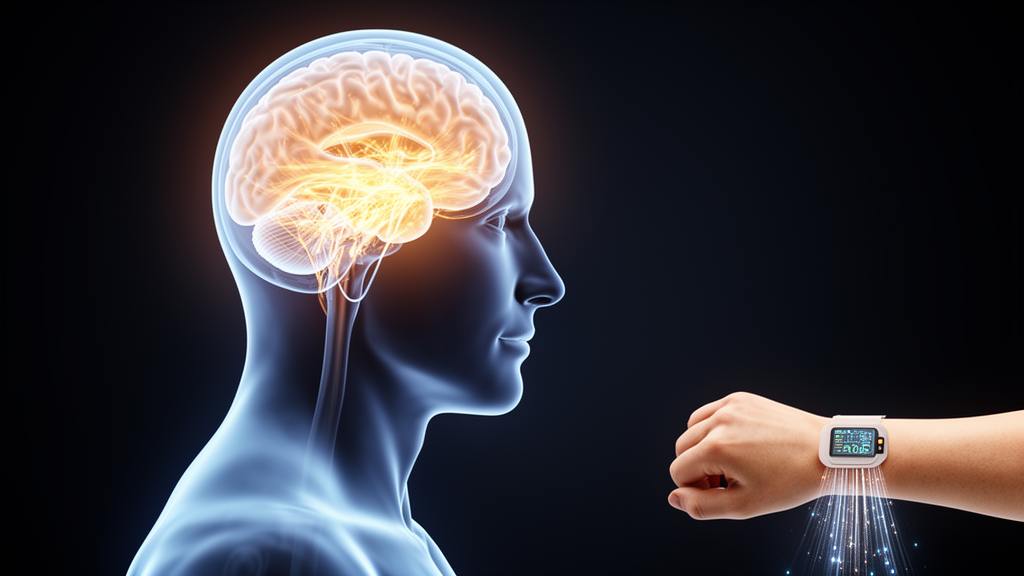
Senior author Dr. Rose Faghih emphasized the technological foundation of the work. Using the sympathetic arousal virtual sensors her group previously developed, which are based on microfluctuations in sweat activity, the team compared insomnia patients and healthy controls during fear extinction and observed that insomnia is associated with a reduced capacity to extinguish physiological threat responses. Co-author Dr. Saman Khazaei added that decoded arousal from certain components of the skin conductance signal reflects a signature of disrupted fear response in people diagnosed with insomnia, a finding he suggested may motivate further research on skin conductance and on the use of wearable devices that measure it to improve sleep in everyday-life settings. That prospect is part of what makes the study notable beyond the laboratory: skin conductance is among the few autonomic signals that can already be tracked continuously and unobtrusively by consumer wearables, meaning the computational machinery demonstrated here could eventually move from the psychophysiology lab into daily life.
The study was published as Hwang, Khazaei, Pace-Schott, Bottary and Faghih, Disrupted fear regulation in insomnia disorder revealed by arousal estimation from skin conductance, in PLOS Mental Health, and the article is freely available online. The research was an experimental study involving human participants and was supported in part by the National Institutes of Health under grant R35GM151353 through the MESH program for Multimodal Estimators for Sensing Health, by a National Science Foundation grant received by Dr. Faghih, and by New York University start-up funds. The funders had no role in study design, data collection and analysis, decision to publish, or preparation of the manuscript, and the authors declared no competing interests. As with any small initial cohort, the findings will need replication in larger and more diverse samples, and the group differences that fell short of significance invite further study. But the convergence of a wearable-friendly signal, a sophisticated decoding model, and a clinically meaningful behavioral difference points toward a future in which the physiology of unlearning fear can be monitored as easily as steps or heart rate, and in which sleep health is understood as inseparable from emotional health.
Subject of Research: Disrupted fear extinction learning and physiological arousal in insomnia disorder measured through skin conductance
Article Title: Skin measurements show link between insomnia and disrupted fear responses
Article References: Skin measurements show link between insomnia and disrupted fear responses. (n.d.). Original publication
Image Credits: AI Generated
DOI: Not provided
Keywords: insomnia, skin conductance, fear extinction, hyperarousal, sympathetic nervous system, computational modeling, sleep, exposure therapy, PLOS Mental Health, wearable sensors, fear conditioning, autonomic dysregulation
Cite Scienmag News
Cassandra Pierce. (October 14, 2026). Sweat Sensor Data Reveals How Insomnia Disrupts the Brain’s Ability to Unlearn Fear. Scienmag. https://scienmag.com/sweat-sensor-data-reveals-how-insomnia-disrupts-the-brains-ability-to-unlearn-fear/
Cassandra Pierce. "Sweat Sensor Data Reveals How Insomnia Disrupts the Brain’s Ability to Unlearn Fear." Scienmag, 14 October 2026, https://scienmag.com/sweat-sensor-data-reveals-how-insomnia-disrupts-the-brains-ability-to-unlearn-fear/. Accessed 14 October 2026.
Cassandra Pierce. "Sweat Sensor Data Reveals How Insomnia Disrupts the Brain’s Ability to Unlearn Fear." Scienmag. October 14, 2026. https://scienmag.com/sweat-sensor-data-reveals-how-insomnia-disrupts-the-brains-ability-to-unlearn-fear/


