When the COVID-19 pandemic emptied playgrounds, classrooms, and pediatric emergency departments in the spring of 2020, one of the most common surgical emergencies of early childhood quietly vanished along with them. Intussusception—the telescoping of one segment of intestine into another—fell by roughly two-thirds at a major pediatric hospital during the first pandemic year, a decline so sharp that it could not be explained by missed diagnoses alone. Now, a decade-spanning follow-up study from Boston Children’s Hospital has confirmed what many infectious disease researchers suspected: as soon as social distancing measures were lifted, the disease came roaring back to its pre-pandemic baseline.
The new study, published in Pediatric Radiology by radiologists Atsuhiko Handa, Lina Lu, Michael Callahan, and Andy Tsai, tracked cases of idiopathic ileocolic intussusception over a full ten-year window, from April 2016 through March 2026. The researchers divided this period into three prespecified intervals: a pre-pandemic baseline running from April 2016 to March 2020, a pandemic year from April 2020 to March 2021, and a post-pandemic period from April 2022 to March 2026. The transitional year between March 2021 and April 2022 was deliberately excluded, because the regional state of emergency in Massachusetts ended partway through that interval, making it impossible to cleanly assign cases to one epidemiological regime or the other.
The numbers tell a striking story. Before the pandemic, the hospital treated a mean of 31.5 cases of idiopathic ileocolic intussusception per year, with a 95 percent confidence interval of 26.2 to 37.5. During the pandemic year, that figure collapsed to a mean of 11 cases per year—a 65 percent decrease that was highly statistically significant. Then, after restrictions eased, the rate rebounded to a mean of 38.5 cases per year, a 250 percent increase relative to the pandemic period and statistically indistinguishable from the pre-pandemic baseline. The authors used an exact conditional Poisson test with Garwood 95 percent confidence intervals, a statistical approach well suited to comparing counts of rare events across time periods.
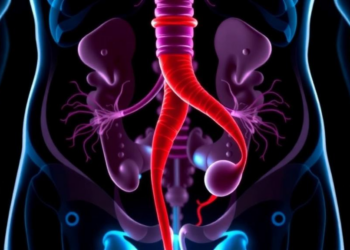
Intussusception is the leading cause of intestinal obstruction in infants and young children, occurring when a proximal segment of bowel, the intussusceptum, slides into the lumen of the adjacent distal segment, the intussuscipiens, like a collapsing telescope. In the idiopathic ileocolic form studied here—the most common type in high-income countries—the process begins near the ileocecal valve, where abundant lymphoid tissue in the terminal ileum can swell during a viral or bacterial infection and serve as the lead point that gets dragged downstream by peristalsis. Affected children typically present with sudden, intermittent, severe abdominal pain, drawing up their legs in distress, often accompanied by vomiting and, in later stages, the classic but infrequent currant jelly stool. Left untreated, the entrapped bowel can become ischemic, necrotic, and perforated, making timely diagnosis a genuine emergency.
Diagnosis and treatment at the study institution relied on air contrast enema, a fluoroscopic procedure in which air is instilled rectally under controlled pressure to push the invaginated bowel segment back into position. This technique, which has largely displaced the older barium enema in many centers, both confirms the diagnosis radiographically and, in the majority of uncomplicated cases, achieves complete nonoperative reduction, sparing children a laparotomy. The decision to count only cases treated by air contrast enema gave the researchers a consistent, imaging-verified case definition across the entire decade, minimizing the kind of ascertainment bias that can plague studies of changing disease incidence.
A crucial strength of the study lies in its use of a negative control condition: hypertrophic pyloric stenosis, or HPS. HPS is a noninfectious condition of young infants in which the muscular wall of the pylorus, the outlet of the stomach, thickens and obstructs gastric emptying, causing projectile vomiting. Because HPS is thought to arise from a combination of genetic, developmental, and environmental factors rather than from circulating infections, its incidence should be largely indifferent to lockdowns and mask mandates. That is precisely what the researchers found. HPS rates were 46.8 cases per year pre-pandemic, 43 cases per year during the pandemic, and 33.5 cases per year post-pandemic, with no significant change from the pre-pandemic to the pandemic period or from the pandemic to the post-pandemic period. A modest decline was observed when the post-pandemic period was compared directly with the pre-pandemic period, but the pattern stood in sharp contrast to the collapse-and-rebound trajectory of intussusception.
This dissociation matters because it addresses the most obvious alternative explanation for the pandemic-era decline: that sick children simply were not being brought to the hospital. If fear of COVID-19 had suppressed care-seeking across the board, HPS rates should have fallen in parallel with intussusception rates, since both conditions require urgent medical attention and radiological or surgical intervention. Instead, HPS remained essentially stable during the pandemic year, while intussusception plummeted. The most parsimonious interpretation is that the decline reflected a genuine reduction in disease incidence, driven by the interruption of transmission of the enteric and respiratory pathogens—adenoviruses and bacterial enteritis have long been implicated in the literature—that trigger the lymphoid hyperplasia initiating the intussusception.
The demographic profile of the cases in the new study is consistent with the classic epidemiology of the disease. Across the ten-year period, the intussusception cohort comprised 126 male and 61 female patients, a male predominance of roughly two to one, with a mean age of 1.94 years and a range spanning from about six weeks to eight years. The HPS cohort, by contrast, comprised 140 male and 31 female patients with a mean age of just 0.11 years, or about five weeks, reflecting the neonatal and early-infant presentation of that condition. The concentration of intussusception cases in the second year of life aligns with the period when children experience their highest burden of novel viral infections, as maternal antibodies wane and exposure to peers and siblings increases.
The findings dovetail with a growing international literature on pandemic-era pediatric infectious disease. Studies from multiple countries documented steep declines in diagnoses of other communicable conditions during social distancing, including seasonal influenza and common childhood infections, and subsequent systematic reviews and ecological analyses—including work from Australia linking lockdown stringency to intussusception incidence—have reached conclusions similar to those of the Boston team. The new study extends this evidence by demonstrating that the effect was reversible: the disease did not merely dip and drift, but tracked the imposition and relaxation of distancing measures with remarkable temporal fidelity, returning to baseline once normal mixing resumed.
Beyond its historical interest, the study carries a practical message for clinicians and a scientific message for pathogenesis researchers. For emergency physicians and radiologists, the rebound means that intussusception has resumed its pre-pandemic frequency, and the classic presentation of colicky pain and vomiting in a toddler should once again prompt prompt ultrasound evaluation without pandemic-era assumptions lowering pretest probability. For scientists, the natural experiment created by the pandemic offers some of the strongest population-level evidence yet that a substantial fraction of idiopathic intussusception is triggered by transmissible infections—a hypothesis first suggested decades ago by associations with adenovirus and bacterial enteritis, and now tested at scale by an unplanned global interruption of transmission. As Handa and colleagues conclude, the decline and subsequent recovery of intussusception coincided temporally with the imposition and relaxation of social distancing measures, a pattern that few other candidate mechanisms could plausibly produce.
Subject of Research: Rebound of pediatric idiopathic ileocolic intussusception rates after COVID-19 social distancing measures
Article Title: Rebound of pediatric idiopathic ileocolic intussusception following the COVID-19 pandemic: a longitudinal follow-up study
Article References: Rebound of pediatric idiopathic ileocolic intussusception following the COVID-19 pandemic: a longitudinal follow-up study. (n.d.). https://doi.org/10.1007/s00247-026-06810-z
Image Credits: AI Generated
DOI: 10.1007/s00247-026-06810-z
Keywords: intussusception, COVID-19, social distancing, pediatrics, hypertrophic pyloric stenosis, air contrast enema, adenovirus, enteric infection, Pediatric Radiology, pandemic, Boston Children's Hospital, disease rebound
Cite Scienmag News
Kristina Jarvis. (October 14, 2026). Childhood Intussusception Rates Collapsed During COVID Lockdowns—Then Bounced Right Back. Scienmag. https://scienmag.com/childhood-intussusception-rates-collapsed-during-covid-lockdowns-then-bounced-right-back/
Kristina Jarvis. "Childhood Intussusception Rates Collapsed During COVID Lockdowns—Then Bounced Right Back." Scienmag, 14 October 2026, https://scienmag.com/childhood-intussusception-rates-collapsed-during-covid-lockdowns-then-bounced-right-back/. Accessed 14 October 2026.
Kristina Jarvis. "Childhood Intussusception Rates Collapsed During COVID Lockdowns—Then Bounced Right Back." Scienmag. October 14, 2026. https://scienmag.com/childhood-intussusception-rates-collapsed-during-covid-lockdowns-then-bounced-right-back/