


Cutaneous leishmaniasis, a parasitic skin disease transmitted by the bite of infected sand flies, has long been recognized as a health problem in Guyana, yet the country’s diagnosed cases have not been systematically described in the peer-reviewed literature for several decades. A new retrospective case series, published in PLOS Neglected Tropical Diseases, now offers the most detailed recent portrait of who is being diagnosed, where they have travelled, and how quickly they seek care. Drawing on clinical records from three diagnostic facilities in Georgetown and the interior between 2017 and 2021, the study paints a picture of a disease concentrated among working-age men whose jobs take them into forested regions where the parasite circulates.
The research team, led by Rajini Kurup and colleagues, reviewed case records of patients diagnosed with cutaneous leishmaniasis at Guyana’s principal diagnostic sites. Of 223 available case records from the five-year period, the investigators abstracted a random subsample of 170 for detailed analysis. This chart-review design allowed them to compile demographic details, occupational information, declared travel histories, and clinical timing data into a single dataset describing the diagnosed case population. Because the study included only confirmed cases and no comparison group of people without the disease, its findings describe patterns within the case series rather than establishing risk factors for acquiring infection in the general population.
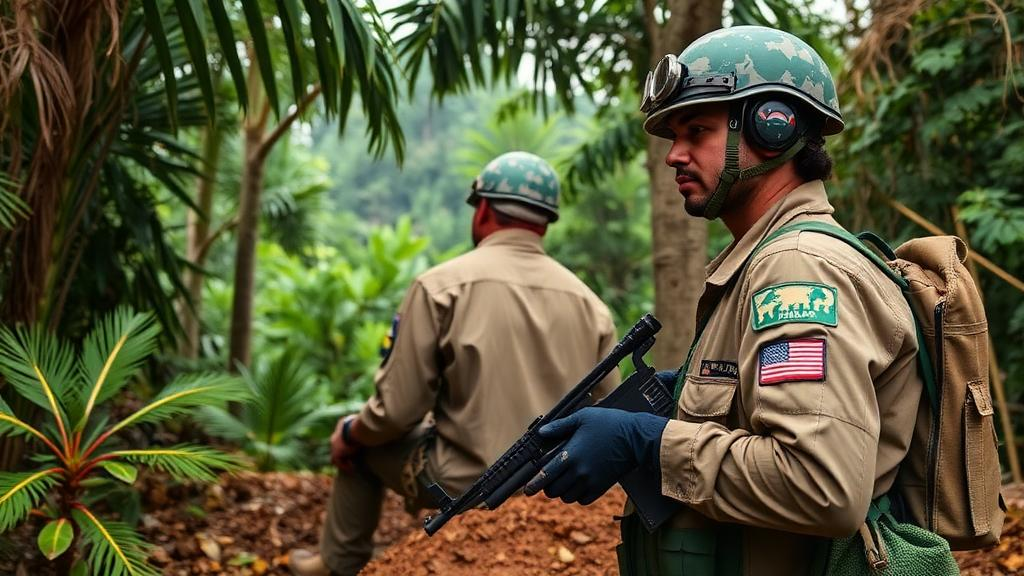
The demographic profile of diagnosed cases was strikingly skewed. Nearly 82 percent of patients were male, and the median age was 33 years, a pattern consistent with the disease’s association with outdoor labor in areas where sand fly vectors are active. Just under half of the patients, 45.3 percent, held field-based occupations, with mining and military service standing out as the dominant categories. Guyana’s small-scale and industrial gold mining operations draw thousands of workers into the interior each year, and the military deploys personnel to remote posts, placing both groups in prolonged contact with vector habitats.
Travel history emerged as the central thread of the analysis. A substantial majority of patients, 61.8 percent, reported having travelled to Guyana’s interior regions before diagnosis. The association between occupation and travel was pronounced: 84.4 percent of patients in field-based occupations reported interior travel, compared with only 43.0 percent of those in other lines of work. In statistical terms, field-based workers had roughly seven times the odds of reporting interior travel relative to non-field workers, with an unadjusted odds ratio of 7.18 and a 95 percent confidence interval spanning 3.42 to 15.04, a result that was highly significant.
The researchers then tested whether this association held up when accounting for age and sex, two variables that could plausibly confound the relationship between occupation and travel. It did. After adjustment, the odds ratio was 7.08, with a confidence interval of 3.07 to 16.30, indicating that the link between field-based employment and interior travel was not an artifact of the sample’s age or sex composition. The adjusted analysis also revealed an independent age effect: younger patients were more likely to report interior travel, with each additional year of age associated with slightly lower odds of travel, reflected in an odds ratio of 0.96 per year. Sex, by contrast, showed no independent association with travel history once occupation and age were taken into account.
One of the most clinically meaningful findings concerned how quickly patients presented for care. Patients who reported interior travel sought diagnosis markedly earlier than those who did not, with a median time to presentation of 61 days among travellers versus 243 days among non-travellers, a difference that was highly statistically significant. This gap of roughly six months suggests that people who know they have been in endemic regions may recognize skin lesions as potentially serious sooner, or that clinicians more readily suspect leishmaniasis and pursue diagnostic testing when a patient discloses recent interior travel. Either way, the finding has practical implications for how health services triage and educate patients with suspicious skin lesions.
Cutaneous leishmaniasis itself warrants brief technical context. The disease is caused by protozoan parasites of the genus Leishmania, which are transmitted to humans through the bites of phlebotomine sand flies. In the Americas, forest-dwelling vectors typically maintain the parasite in sylvatic cycles involving wild mammals, and humans entering these habitats for work or travel become incidental hosts. The hallmark of infection is a chronic, painless ulcer at the site of the infective bite, which can persist for months and leave disfiguring scars. Treatment typically requires courses of pentavalent antimonials or other systemic therapies, which are lengthy, injectable, and carry meaningful toxicity, making early diagnosis and prevention particularly valuable in resource-limited settings.
Guyana’s geography helps explain the epidemiology captured in this series. The country’s population is concentrated along the coastal plain, while the vast interior hinterland, covered in rainforest and savannah, hosts the mining camps and military outposts where many patients reported exposure. Sand fly vectors thrive in these forested environments, and workers sleeping in camps with variable protection against night-biting insects face sustained exposure risk. The study’s finding that field-based occupations and interior travel cluster together in the diagnosed case population aligns with this ecological picture and with regional literature from other Amazonian countries, where mining and military activity are repeatedly linked to leishmaniasis transmission.
The authors are careful about the limits of what their data can show. Because every participant had cutaneous leishmaniasis and there was no disease-free comparison group, the analysis cannot quantify whether miners or soldiers are more likely to become infected than the general population; it can only show that, among diagnosed cases, these occupational and travel patterns are common and strongly associated with one another. The travel variable was also patient-declared and retrospectively recorded as a single item, without validation of destinations, durations, or timing relative to lesion onset. Recall bias and incomplete documentation are inherent risks in chart reviews, and the subsampling of 170 records from 223, while random, constrains precision.
Even with those caveats, the study points toward concrete public health actions. The concentration of cases among travellers to the interior, especially those in mining and military work, suggests that pre-deployment prevention measures, including personal protective measures against sand flies, insecticide-treated materials in camps, and traveller advisories, could be targeted where they are most likely to matter. Occupational screening programs and clinician education about asking for travel history when evaluating chronic skin lesions could shorten diagnostic delays further, building on the observation that travellers already present earlier. The authors argue that their findings justify a follow-up case-control study with validated exposure measurement, which could move the evidence from description within a case series toward rigorous estimation of who is truly at risk of acquiring this neglected tropical disease.
Subject of Research: Epidemiology of cutaneous leishmaniasis and its association with travel history and occupation in Guyana
Article Title: Travel history and occupation among diagnosed Cutaneous Leishmaniasis cases in Guyana: A multi-site retrospective case series, 2017–2021
Article References: Kurup, R., Roberts, T., Naipaul, J., Williams, Z., Michael, A., Sampson, A., Niles-Robin, R., Persaud, R., Nair, A., & Naipaul, T. (2026). Travel history and occupation among diagnosed Cutaneous Leishmaniasis cases in Guyana: A multi-site retrospective case series, 2017–2021. PLOS Neglected Tropical Diseases, 20(10), e0014800. https://doi.org/10.1371/journal.pntd.0014800
Image Credits: AI Generated
DOI: 10.1371/journal.pntd.0014800
Keywords: cutaneous leishmaniasis, Guyana, travel history, occupation, mining, military, retrospective case series, neglected tropical diseases, interior travel, logistic regression, time to presentation, public health
Cite Scienmag News
Ophelia Keating. (October 14, 2026). Mining, Military Work and Jungle Travel Drive Cutaneous Leishmaniasis Diagnoses in Guyana. Scienmag. https://scienmag.com/mining-military-work-and-jungle-travel-drive-cutaneous-leishmaniasis-diagnoses-in-guyana/
Ophelia Keating. "Mining, Military Work and Jungle Travel Drive Cutaneous Leishmaniasis Diagnoses in Guyana." Scienmag, 14 October 2026, https://scienmag.com/mining-military-work-and-jungle-travel-drive-cutaneous-leishmaniasis-diagnoses-in-guyana/. Accessed 14 October 2026.
Ophelia Keating. "Mining, Military Work and Jungle Travel Drive Cutaneous Leishmaniasis Diagnoses in Guyana." Scienmag. October 14, 2026. https://scienmag.com/mining-military-work-and-jungle-travel-drive-cutaneous-leishmaniasis-diagnoses-in-guyana/


