


As marine heat waves intensify across the tropics, the question of which corals will survive has become one of the most urgent in reef science. Many reef-building corals already live close to their upper thermal limits, leaving only a narrow margin before heat stress triggers bleaching, the breakdown of the symbiosis between the coral animal and the photosynthetic algae housed in its tissues. When bleaching persists, corals can starve and die. Yet bleaching is not a uniform phenomenon. Thermal tolerance varies among species, among populations of the same species, and even among individual colonies, shaped by genetics and by the environmental histories of the reefs where corals grow. A new study from Florida Atlantic University’s Harbor Branch Oceanographic Institute, conducted in collaboration with the University of Hawaiʻi, adds a striking piece to this puzzle by showing that two abundant Hawaiian reef corals respond to ocean heat in markedly different ways depending on where they live.
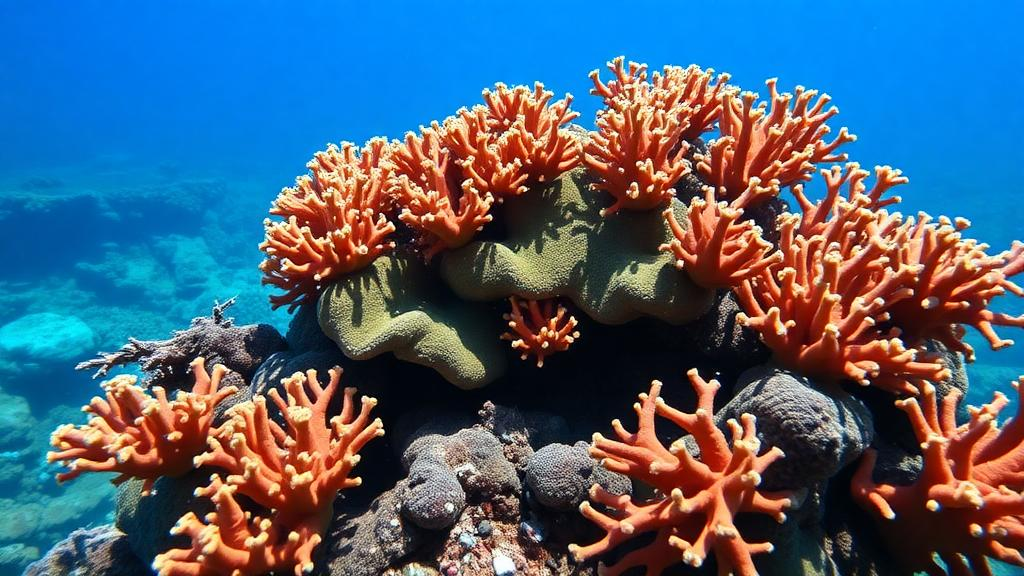
The research, published in Scientific Reports, focused on two dominant reef-building species in the Hawaiian Islands: Montipora capitata, commonly known as rice coral, which can form broad plates or branching colonies with a textured surface, and Porites compressa, or finger coral, which grows in clusters of slender, finger-like branches. Both species are ecologically important architects of Hawaiian reefs, and both are regularly exposed to summer warming events that can push reef ecosystems toward bleaching. The team chose a natural experiment built into the geography of Oʻahu itself. Reefs in Kāneʻohe Bay and Kailua Bay lie close to one another, yet they experience markedly different conditions. Kāneʻohe Bay is warmer and more sheltered, while Kailua Bay is cooler and more exposed to oceanic influence. That contrast allowed the researchers to ask a deceptively simple question: does a coral’s environmental history influence its ability to withstand heat stress, and is the answer the same for every species?
To find out, the scientists collected coral fragments of both species from reefs in Kāneʻohe Bay and Kailua Bay and brought them into the laboratory, where they were subjected to controlled thermal stress under standardized conditions. The key measurement technique was Pulse Amplitude Modulation fluorometry, a non-invasive optical method that tracks the photosynthetic efficiency of the algae living inside coral tissues. Because these symbiotic algae supply most of the energy corals need, a decline in photosynthetic efficiency is one of the earliest and most reliable indicators of physiological stress. By monitoring this response as temperatures rose, the researchers could quantify how much accumulated heat each coral could tolerate before its symbiosis began to fail, and then compare corals from the two environments across both species.
The results delivered both reassurance and surprise. Both species showed substantial thermal tolerance overall, with bleaching thresholds above the 4-degree heating week level that the National Oceanic and Atmospheric Administration uses as an indicator of accumulated heat stress associated with the onset of significant coral bleaching. In other words, the Hawaiian corals tested in this study could absorb more heat stress than the conventional bleaching warning threshold before showing physiological breakdown. That baseline resilience is encouraging for reefs that face recurring summer heat events, and it suggests that these populations carry some capacity to endure warming that already exceeds what many reef managers once considered critical.
But the most striking finding concerned one species in one location. Porites compressa from Ulupaʻu, a site in the cooler, more exposed waters of the region, displayed significantly higher thermal tolerance than finger coral from the warmer, more sheltered Kāneʻohe Bay, and also higher tolerance than Montipora capitata from either location. This was not a case of one bay simply producing universally tougher corals. Within Kāneʻohe Bay, the two species had similar thermal thresholds, while at Ulupaʻu, P. compressa held a clear advantage. The pattern indicates that environmental conditions may shape thermal performance differently across species, rather than imposing a single hardening effect on everything living in a given habitat.
For Montipora capitata, thermal tolerance was remarkably similar between the two bays, suggesting that this species’ heat response was comparatively insensitive to the environmental differences between the sheltered and exposed sites. The researchers also observed that P. compressa bleached more slowly than M. capitata during the experiments, hinting that the two species may rely on distinct physiological strategies to cope with warming. Slow bleaching could reflect differences in symbiont types, tissue architecture, energy reserves, or the regulation of the stress response, although the study did not directly test the underlying mechanisms. What the data make clear is that species identity and environmental origin interact in ways that simple species-level generalizations cannot capture.
“Our findings highlight that coral resilience to ocean warming is not uniform, even among species living in close geographic proximity,” said Joshua D. Voss, senior author of the study and a research professor at FAU Harbor Branch. “As reefs around the world face more frequent and intense marine heat events, understanding which corals can tolerate that stress – and why – will be critical for protecting and restoring reefs. What works for one species or population may not work for another, so conservation strategies need to account for both the biological and the environmental diversity that exists within coral reef ecosystems.”
“By exposing corals from distinct environmental histories to a standardized thermal stress experiment, we were able to directly compare differences in thermal tolerance across species and populations,” said Allison M. Klein, first author of the study and a postdoctoral fellow at FAU Harbor Branch. “This approach allowed us to examine how prior environmental conditions may shape physiological responses to heat stress.” The standardized design matters because field observations alone cannot separate the effects of a coral’s history from the effects of the conditions it currently experiences. By bringing corals from both bays into the same laboratory environment and applying the same thermal challenge, the team could attribute differences in performance to the corals themselves rather than to their immediate surroundings.
The researchers suggest that Ulupaʻu’s cooler, more variable, and wave-exposed environment may provide repeated exposure to changing conditions that helps prepare some corals for heat stress, a form of environmental conditioning that has been observed in other reef systems, though this study did not directly test the mechanisms involved. The findings carry immediate implications for coral restoration, a field that increasingly seeks out naturally heat-tolerant colonies as broodstock for reef rebuilding. P. compressa from Ulupaʻu may represent one source of naturally heat-tolerant corals, but the researchers caution against assuming that the most heat-tolerant corals are always the best candidates for restoration. Maintaining genetic diversity and a range of traits could be essential for giving restored reefs the flexibility to respond to different environmental conditions over time, particularly as future oceans present combinations of stressors that no nursery can fully anticipate.
“This study identified more resilient corals from certain locations in these testing conditions, which provides important hope for the future,” said Voss. “The results demonstrate that both species identity and local environmental history can influence coral thermal performance and success in coral restoration efforts.” The research was conducted in collaboration with the Coral Resilience Lab at the Hawaiʻi Institute of Marine Biology, under the advisement of Crawford Drury, where coral collection and thermal performance assays were carried out. The project was supported by the Defense Advanced Research Projects Agency, the U.S. Geological Survey, and an award from the Robertson Family Foundation to FAU Harbor Branch, with additional support provided through U.S. Geological Survey Cooperative Agreement No. G21AC10662-01. For reef managers watching successive marine heat waves reshape tropical coastlines, the message from Hawaiʻi is clear: resilience is written not only in a coral’s genes but also in the waters it has lived through, and protecting that diversity may be the surest hedge against a warming sea.
Subject of Research: Variation in thermal tolerance of Hawaiian reef corals across species and bay habitats
Article Title: FAU study finds Hawaiian corals respond differently to ocean heat
Article References: FAU study finds Hawaiian corals respond differently to ocean heat. (n.d.). Original publication
Image Credits: AI Generated
DOI: Not provided
Keywords: coral reefs, coral bleaching, ocean warming, thermal tolerance, Hawaiʻi, Kāneʻohe Bay, Montipora capitata, Porites compressa, coral restoration, marine heat waves, Pulse Amplitude Modulation fluorometry, Scientific Reports
Cite Scienmag News
Violet Maxwell. (October 13, 2026). Hawaiian Corals Reveal Surprising Split in Heat Tolerance Between Species and Bays. Scienmag. https://scienmag.com/hawaiian-corals-reveal-surprising-split-in-heat-tolerance-between-species-and-bays/
Violet Maxwell. "Hawaiian Corals Reveal Surprising Split in Heat Tolerance Between Species and Bays." Scienmag, 13 October 2026, https://scienmag.com/hawaiian-corals-reveal-surprising-split-in-heat-tolerance-between-species-and-bays/. Accessed 13 October 2026.
Violet Maxwell. "Hawaiian Corals Reveal Surprising Split in Heat Tolerance Between Species and Bays." Scienmag. October 13, 2026. https://scienmag.com/hawaiian-corals-reveal-surprising-split-in-heat-tolerance-between-species-and-bays/


