


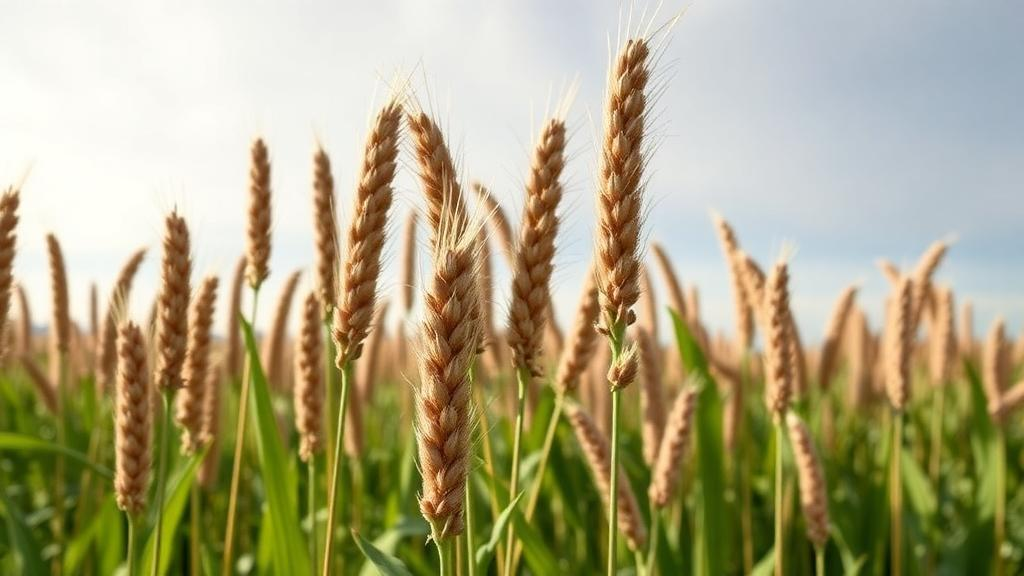
Every harvest season, millions of tonnes of sorghum stalks, husks and straw are left behind in fields around the world, burned or discarded as agricultural waste. A new comprehensive review suggests that this overlooked biomass could become a serious raw material for the construction industry, offering a renewable, low-carbon alternative to conventional building products. The study, published in Discover Sustainability by Mebratu Tufa and Zoltán Pásztory of the University of Sopron’s Faculty of Wood Engineering and Creative Industry in Hungary, combines bibliometric mapping with a rigorous systematic review to chart exactly where sorghum research stands and what stands between laboratory promise and real-world buildings.
The authors cast a wide net. Searching the Scopus and Web of Science databases, they identified 519 records related to sorghum biomass in construction applications. After removing duplicates, 334 unique records remained, and these were then screened according to the PRISMA 2020 reporting guidelines, the international standard for systematic reviews. In the end, 41 studies met the eligibility criteria and formed the evidence base for the detailed analysis. On top of the systematic screening, the team used VOSviewer, a widely adopted scientometric software package, to map the intellectual landscape of the field, tracking which research themes dominate, how they cluster together, and how the focus of the literature has shifted over time.
The scientometric results tell a story of a field in transition. Research activity has been steadily increasing, and the emphasis has moved away from purely academic curiosity toward industrial biomass valorization, the umbrella term for converting plant residues into higher-value products. Three application areas dominate the construction-related literature: polymer composites, in which plant fibers reinforce plastic matrices; wood–plastic composites, a hybrid class of materials that blends lignocellulosic filler with thermoplastics; and lignocellulosic boards, panel-type products made from pressed plant matter. This clustering suggests that sorghum is being evaluated most seriously as a substitute for wood fibers and synthetic fillers, materials whose supply chains face mounting environmental and economic pressure.
One of the review’s clearest findings is that virtually every fraction of the sorghum plant has been tested in building materials. The studies included in the review incorporated sorghum stalk, stem, straw, bagasse, the fibrous residue left after juice extraction, and husk into three broad families of materials: polymeric matrices, wood-based products, and mineral-based construction materials. In polymer systems, sorghum fibers have been compounded with matrices ranging from polypropylene and polyethylene, both high- and low-density, to polylactic acid, a biodegradable bioplastic, as well as polyvinyl chloride and even acrylonitrile styrene acrylate. In board products, the fibers have been bonded with conventional adhesives such as urea-formaldehyde and phenol-formaldehyde resins. In mineral systems, sorghum husk ash has been explored as a supplementary material, connecting the crop to the cement and concrete sector.
Performance, however, is far from automatic. The review found that the mechanical and physical properties of sorghum-based materials depend strongly on five interacting factors: which fraction of the plant is used, how much fiber is loaded into the matrix, how compatible the fiber is with the surrounding material, the conditions under which the composite is processed, and whether the fiber surface has been chemically or biologically treated. Fiber loading in particular presents a classic trade-off: increasing the share of renewable content can improve stiffness and sustainability credentials, but beyond an optimum it undermines dispersion and interfacial bonding, weakening the composite. Processing temperature and time matter too, since lignocellulosic fibers can degrade at the high temperatures used to melt thermoplastics.
Surface treatment emerged as one of the most powerful levers for improving performance. The review reports that alkali treatment with sodium hydroxide, silane coupling agents, enzymatic treatments, and organic acids such as citric acid generally improved the bonding between fiber and matrix, which translated into better mechanical performance and improved resistance to moisture. The chemistry is intuitive: natural fibers are hydrophilic, covered in waxes and hemicellulose that resist adhesion to hydrophobic polymer matrices. Alkali treatment strips away these weak surface layers and roughens the fiber, while silanes act as molecular bridges between the organic fiber and the synthetic matrix. Citric acid, a benign food-grade molecule, can esterify with both cellulose hydroxyl groups and matrix functional groups, offering a greener route to the same end. Analytical tools such as Fourier-transform infrared spectroscopy and scanning electron microscopy were routinely used in the underlying studies to confirm these chemical and morphological changes at the fiber-matrix interface.
Despite these successes, the authors are candid about the barriers. Moisture sensitivity remains the most persistent weakness: sorghum fibers, like most lignocellulosic materials, absorb water, which can cause swelling, dimensional instability, and degradation of mechanical properties over time. Feedstock variability compounds the problem, because the composition of sorghum biomass changes with variety, growing conditions, and harvest practice, making consistent product quality difficult to guarantee. The review also identified a shortage of durability data, meaning most studies report properties of freshly manufactured materials rather than aged, weathered, or long-serving ones. Inconsistent testing methods across studies, drawing on different standards such as European norms and Japanese Industrial Standards, further complicate comparisons and slow the accumulation of reliable design data.
The economic and environmental accounting is similarly incomplete. The authors found that comprehensive life-cycle assessments, which quantify environmental impacts from raw material to end of life, and techno-economic assessments, which evaluate whether a process can be profitable at scale, remain limited in the sorghum construction literature. Without these integrated evaluations, it is difficult to verify that sorghum-based panels or composites genuinely outperform conventional alternatives across their full life cycle, or to identify which conversion routes merit industrial investment. This gap matters for the circular bioeconomy ambitions that motivate much of the field, since a material that is renewable at the source may still carry hidden burdens in processing, transport, or adhesive chemistry.
Looking forward, the review lays out a clear research agenda. The authors call for standardized durability testing protocols so that results from different laboratories can be meaningfully compared, long-term field validation to see how sorghum-based materials perform in actual buildings over years rather than weeks, harmonized testing methods across the international research community, and integrated environmental and economic assessment embedded from the earliest stages of material development. They also highlight opportunities in matrix compatibility engineering and in matching specific sorghum fractions to the applications where they perform best, for example husk ash in mineral systems and long stalk fibers in structural composites.
The broader significance of the study lies in its method as much as its findings. By pairing scientometric mapping with PRISMA-guided systematic review, Tufa and Pásztory provide both a bird’s-eye view of where the field has been and a granular synthesis of what 41 carefully selected studies actually demonstrated. Their overall verdict is cautiously optimistic: sorghum biomass shows promising potential as a renewable feedstock for sustainable, low-carbon construction materials, but realizing that potential will require the field to grow beyond small-scale laboratory specimens. If researchers and industry can close the durability, standardization, and assessment gaps identified in the review, the humble sorghum stalk, today a residue of grain production, could find itself pressed into panels, extruded into composite decking, and blended into concrete in the buildings of a decarbonizing world.
Subject of Research: Utilization of sorghum biomass as a renewable feedstock in sustainable construction materials
Article Title: An integrated Scientometric and systematic review of sorghum biomass utilization in sustainable construction materials
Article References: An integrated Scientometric and systematic review of sorghum biomass utilization in sustainable construction materials. (n.d.). https://doi.org/10.1007/s43621-026-05016-5
Image Credits: AI Generated
DOI: 10.1007/s43621-026-05016-5
Keywords: sorghum biomass, sustainable construction, agricultural residues, bio-based composites, wood-plastic composites, fiber surface treatment, life-cycle assessment, circular bioeconomy, lignocellulosic boards, scientometric analysis, moisture resistance, polymer composites
Cite Scienmag News
Violet Maxwell. (October 13, 2026). Sorghum Stalks Could Build the Low-Carbon Cities of Tomorrow, Review Finds. Scienmag. https://scienmag.com/sorghum-stalks-could-build-the-low-carbon-cities-of-tomorrow-review-finds/
Violet Maxwell. "Sorghum Stalks Could Build the Low-Carbon Cities of Tomorrow, Review Finds." Scienmag, 13 October 2026, https://scienmag.com/sorghum-stalks-could-build-the-low-carbon-cities-of-tomorrow-review-finds/. Accessed 13 October 2026.
Violet Maxwell. "Sorghum Stalks Could Build the Low-Carbon Cities of Tomorrow, Review Finds." Scienmag. October 13, 2026. https://scienmag.com/sorghum-stalks-could-build-the-low-carbon-cities-of-tomorrow-review-finds/


