


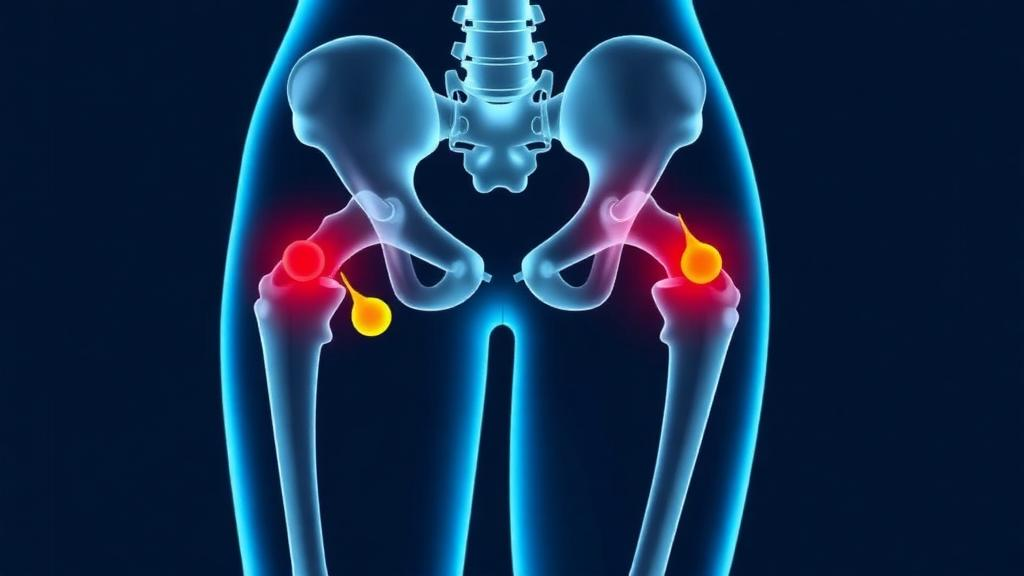
Hip fractures are among the most devastating consequences of ageing bones, and now the largest study of its kind ever conducted has delivered an unprecedented map of how the entire diet—not just calcium and vitamin D—may shape that risk. In an analysis of 541,887 postmenopausal women followed for nearly two decades, researchers at the University of Oxford systematically examined 99 dietary factors and found that 60 of them were statistically associated with the likelihood of breaking a hip. The findings, published in the European Journal of Epidemiology, paint a picture that is both reassuring and cautionary: foods and nutrients widely regarded as healthy, such as chicken, vegetables, protein and zinc, were linked to lower risk, while recognisably unhealthy items, including chips, fizzy drinks, free sugars and saturated fat, were linked to higher risk.
The scale of the undertaking sets this study apart. Drawing on the Million Women Study, a cohort recruited between 1996 and 2001 through NHS breast screening centres across England and Scotland, the research team tracked participants through electronic hospital records until the end of 2023. Over an average of 19.7 years of follow-up, 27,318 women suffered an incident hip fracture, providing the statistical power that earlier studies—often limited to a few hundred cases—could only dream of. Hip fracture is a major public health burden in ageing societies: nearly 72,000 such fractures occurred among people aged 60 and over in England, Wales and Northern Ireland in 2025, more than 80 percent of cases occur in people aged 75 and older, and hospitalisation costs the UK around £2 billion per year. Women bear the brunt, with a female-to-male ratio of roughly 2.5 to 1 among people aged 50 and above.
The methodological approach, known as a diet-wide association study or DWAS, is designed to counter a long-standing weakness of nutritional epidemiology. Historically, researchers have tested one or two dietary factors at a time—calcium, vitamin D, dairy—leaving most of the diet unexplored and inviting cherry-picked findings. By modelling all 99 factors with a consistent, prespecified analytical framework, the Oxford team could compare foods and nutrients on equal footing and correct for multiple testing using the Benjamini-Hochberg false discovery rate method. Dietary intake was captured with a validated 130-item food frequency questionnaire administered around 2001, and then calibrated against a 24-hour web-based dietary recall completed by a subset of participants roughly a decade later, a technique that reduces regression dilution bias—the attenuation of true associations caused by everyday measurement error in self-reported diets.
The statistical machinery was correspondingly rigorous. Cox proportional hazards regression, with attained age as the underlying time scale, estimated hazard ratios for each dietary factor, stratified by birth year, questionnaire year and region of residence. Covariate selection was guided by a directed acyclic graph, and models progressed through three levels of adjustment: from basic demographics and deprivation, through lifestyle factors such as smoking, alcohol, exercise and menopausal hormone therapy, to body mass index. Women with previous hip fractures, implausibly low or high energy intakes, or diet changes due to illness were excluded, and follow-up before age 55 was excluded for women not yet clearly postmenopausal. Sensitivity analyses excluded the first five years of follow-up to guard against reverse causation—the possibility that pre-existing poor health drives both eating habits and fracture risk.
The headline results are striking. Among foods, chicken showed the strongest inverse association, with each additional 20 grams per day linked to a 16 percent lower risk of hip fracture. Vegetables followed, with a 12 percent lower risk per 100 grams per day, and pasta with a 13 percent lower risk per 20 grams per day. At the other end of the spectrum, chips carried a 14 percent higher risk per 25 grams per day, and fizzy drinks an 18 percent higher risk per 50 grams per day. Among nutrients, protein led the protective list at a 21 percent lower risk per 15 grams per day, followed by zinc at 19 percent lower per 2 milligrams, niacin at 18 percent lower per 10 milligrams, fibre at 11 percent lower per 5 grams, and carotene at 9 percent lower per 1,000 micrograms. Only three nutrients were positively associated: retinol, free sugars and saturated fatty acids.
Many of these associations had never been reported before. Of the top five foods and top five nutrients, only six had appeared in previous prospective studies, meaning the DWAS identified 35 novel associations alongside confirming 25 previously reported ones. The chicken finding is particularly novel—no prior prospective cohort study had specifically examined chicken in relation to hip fracture. Similarly, zinc, potassium and selenium had never before been investigated for this outcome. The protein result aligns with a recent meta-analysis of four cohort studies reporting substantially lower fracture risk at higher intakes, and the vegetable finding mirrors a pooled analysis showing an inverse association for highest versus lowest consumption.
Biology offers several plausible mechanisms for these patterns. Protein is a structural component of the collagen matrix that gives bone its flexibility, and both protein and fibre intake are positively associated with insulin-like growth factor-1, a hormone that directly stimulates osteoblasts, the cells that build bone. Magnesium participates in vitamin D activation and bone mineralisation. Vegetables and fruits supply antioxidants that observational and intervention studies link to lower oxidative stress, a process implicated in age-related bone loss. Protein also helps preserve muscle mass and strength, which in turn maintain bone mineral density and reduce the risk of falls—the proximate trigger of most hip fractures in older women.
Yet the researchers are emphatic that these observational associations should not be read as causal prescriptions. A recurring pattern in the data raises the spectre of residual confounding: foods considered healthy tend to be eaten by women with healthier lifestyles and higher socioeconomic status, while some seemingly odd positive associations—such as those for Brussels sprouts, cauliflower and green peas—may simply reflect the contexts in which these vegetables are consumed, for example alongside high-fat meals. Spearman correlation analyses showed that many significant dietary factors are strongly intercorrelated: protein tracks closely with zinc, phosphorus and a dozen other nutrients, while vegetables correlate strongly with carotene and moderately with fibre and vitamin C. This web of correlations makes it statistically difficult to isolate the effect of any single food or nutrient. E-values for the significant findings ranged from 1.22 to 1.98, meaning an unmeasured confounder modestly associated with both diet and fracture risk could potentially explain away the observed associations.
The sensitivity analyses largely reinforced this cautious interpretation. Results were consistent across subgroups defined by smoking, exercise, hormone therapy, deprivation and baseline health, and remained so after excluding early follow-up years. In the least confounded subgroup—31,391 women with normal weight who had never smoked, drank only mildly and had never used hormone therapy—the directions of association held, though only vegetables, fibre and pasta retained conventional statistical significance, a pattern the authors attribute to reduced sample size rather than attenuation. Notably, alcohol told a cautionary tale: although overall intake showed a small inverse association, this reversed among regular drinkers, whose risk rose 10 percent per additional 10 grams per day, echoing Mendelian randomisation studies that find no protective effect of alcohol on fracture risk.
Even the traditional pillars of bone health did not escape scrutiny unscathed. Among dairy-related factors, only calcium and yoghurt were significantly associated with lower risk, at 6 percent per 300 milligrams and per 50 grams respectively, while recent genetic analyses have not supported causal roles for milk or circulating vitamin D. The authors conclude that confirmation is needed through replication in independent cohorts with different confounding structures, complementary causal inference methods and, where feasible, randomised trials. Until then, the study’s most defensible message is also its simplest: the overall pattern of a diet rich in vegetables, protein and whole foods, and light on fried potatoes and sugary drinks, tracks with stronger bones in later life—though whether the foods themselves, or the lives lived around them, deserve the credit remains an open question.
Subject of Research: Diet-wide associations between foods, nutrients and hip fracture risk in postmenopausal women
Article Title: Diet-wide association study (DWAS) of hip fracture risk in UK postmenopausal women: a prospective cohort study of 541,887 women with 27,318 incident cases over ~ 20 years
Article References: Tao, Y., Key, T. J., Reeves, G. K., Floud, S., Papier, K., & Tong, T. Y. N. (2026). Diet-wide association study (DWAS) of hip fracture risk in UK postmenopausal women: a prospective cohort study of 541,887 women with 27,318 incident cases over ~ 20 years. European Journal of Epidemiology. https://doi.org/10.1007/s10654-026-01466-3
Image Credits: AI Generated
DOI: 10.1007/s10654-026-01466-3
Keywords: hip fracture, diet-wide association study, nutritional epidemiology, postmenopausal women, Million Women Study, protein intake, vegetables, fizzy drinks, bone health, osteoporosis, prospective cohort study, confounding
Cite Scienmag News
Daisy Hatcher. (October 13, 2026). Massive 20-Year Study Maps How 99 Foods and Nutrients Shape Hip Fracture Risk in Older Women. Scienmag. https://scienmag.com/massive-20-year-study-maps-how-99-foods-and-nutrients-shape-hip-fracture-risk-in-older-women/
Daisy Hatcher. "Massive 20-Year Study Maps How 99 Foods and Nutrients Shape Hip Fracture Risk in Older Women." Scienmag, 13 October 2026, https://scienmag.com/massive-20-year-study-maps-how-99-foods-and-nutrients-shape-hip-fracture-risk-in-older-women/. Accessed 13 October 2026.
Daisy Hatcher. "Massive 20-Year Study Maps How 99 Foods and Nutrients Shape Hip Fracture Risk in Older Women." Scienmag. October 13, 2026. https://scienmag.com/massive-20-year-study-maps-how-99-foods-and-nutrients-shape-hip-fracture-risk-in-older-women/


