


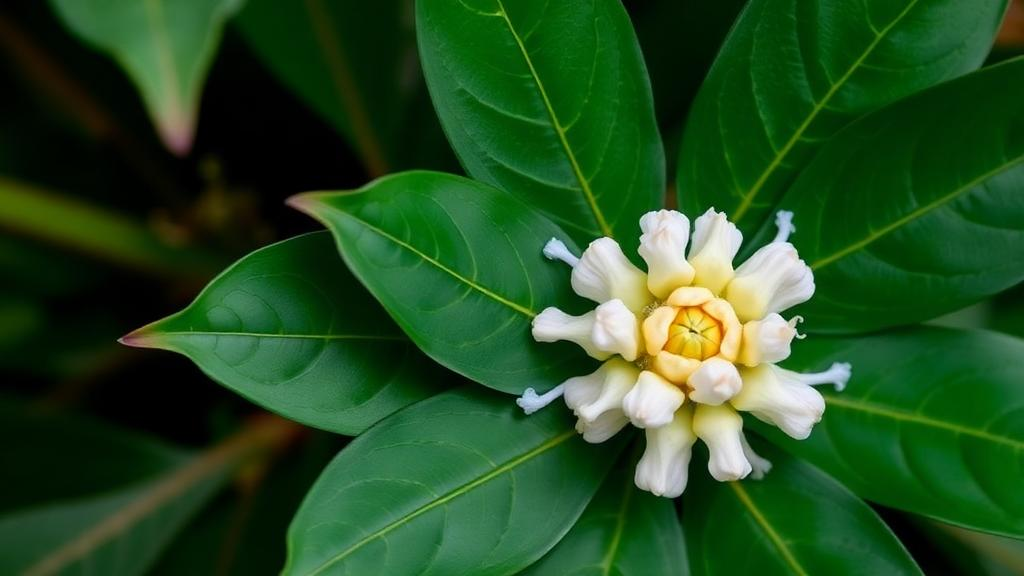
Scientists in Nigeria have found a way to turn the leaves of the soursop tree, a tropical plant long prized in folk medicine, into a green factory for making nanoparticles. In a study published in Discover Chemistry, researchers led by Rukayat O. Opatokun-Saliu of the Federal University of Health Sciences, Ila-Orangun, used an aqueous extract of Annona muricata leaves to synthesize both calcium oxide nanoparticles and zinc nanoparticles, and then pitted the two materials against each other in a battery of antioxidant tests. The results suggest that the humble soursop leaf can do far more than flavor drinks and feature in traditional remedies: its rich cocktail of phytochemicals can reduce, cap, and stabilize metal nanoparticles at the nanometer scale, and the resulting particles outperform the crude extract itself at neutralizing dangerous free radicals.
The appeal of green synthesis lies in what it avoids. Conventional physical and chemical routes to nanoparticles typically demand high temperatures, large energy inputs, organic solvents, and strong reducing or stabilizing agents, all of which raise costs and leave behind undesirable chemical residues. Plant extracts offer an alternative that is inexpensive, widely available, and environmentally benign. The chemistry works because phytochemicals such as phenolics, flavonoids, alkaloids, tannins, and terpenoids carry hydroxyl, carbonyl, carboxyl, and amine functional groups that can donate electrons to metal ions, driving nucleation, and then adsorb onto the growing particle surfaces, capping them and preventing runaway aggregation. In effect, the plant performs the roles of reducing agent, stabilizer, and shape-directing template simultaneously.
Soursop was a deliberate choice. The evergreen tree, a member of the Annonaceae family found across tropical and subtropical regions, has a long ethnopharmacological record, with leaves, bark, roots, fruit, and seeds used in decoctions and poultices against fever, pain, inflammation, hypertension, diabetes, malaria, and infections. The researchers quantified the bioactive content of their leaf powder and found flavonoids dominated the profile at 173.5 milligrams per 100 grams, followed by total phenolics at 52.97 milligrams per 100 grams, with tannins, triterpenes, starch, coumarins, and reducing sugars present at lower levels. That abundance of flavonoids and phenolics, compounds renowned for electron and hydrogen donation, made the extract a promising candidate for mediating nanoparticle formation.
The synthesis itself was straightforward. For the calcium oxide nanoparticles, five grams of dried leaf powder were extracted in 100 milliliters of distilled water at 60 degrees Celsius, and 20 milliliters of that extract were combined with 100 milliliters of a 1 millimolar calcium nitrate solution for one hour. For the zinc nanoparticles, 50 milliliters of a more concentrated extract were added to 200 milliliters of 0.02 molar zinc chloride and allowed to react for two hours. In both cases, formation was tracked by ultraviolet-visible spectroscopy, and the colloids were centrifuged, washed repeatedly, and dried. Yields were modest, at 3.3 percent for the zinc nanoparticles and 2.8 percent for the calcium oxide particles, but the characterization data revealed strikingly small, well-defined materials.
Transmission electron microscopy showed zinc nanoparticles with an irregular shape and an average diameter of just 3.68 nanometers, among the smallest reported for soursop-mediated zinc structures, while the calcium oxide particles were oval with an average size of 4.09 nanometers. Ultraviolet-visible spectra displayed absorption maxima at 304 nanometers for the zinc particles and 294 nanometers for the calcium oxide particles, consistent with successful nanostructure formation. Fourier transform infrared spectroscopy told the mechanistic story: broad bands near 3448 and 3387 inverse centimeters pointed to hydroxyl groups from phenolics and flavonoids, bands near 2928 and 2850 inverse centimeters matched methyl and methylene stretches, and metal-oxygen vibrations appeared at 567 inverse centimeters for zinc-oxygen and around 1438 and 702 inverse centimeters for calcium-oxygen species. Energy-dispersive X-ray analysis confirmed zinc as the dominant metallic component at 44.89 weight percent, while calcium was detected at 5.44 weight percent, with abundant carbon and nitrogen signals reflecting the phytochemical capping layer.
X-ray diffraction added an interesting contrast between the two systems. The zinc nanoparticles showed a broad, poorly resolved diffraction profile between roughly 10 and 30 degrees two-theta, indicating low crystallinity and a substantial amorphous contribution, likely a consequence of the phytochemical capping and mild synthesis conditions. The calcium oxide particles, by contrast, were highly crystalline, with sharp reflections matching a reference calcium oxide phase and an average crystallite size of 23 nanometers, along with preferential orientation along one crystallographic plane. Scanning electron microscopy showed both materials forming larger, densely agglomerated clusters, around 78.5 nanometers for the zinc structures and 54.5 nanometers for the calcium oxide aggregates, a common artifact of drying during sample preparation rather than a true measure of the primary particles.
The heart of the study was the comparative antioxidant evaluation, conducted across four complementary assays: DPPH and ABTS radical scavenging, ferric reducing antioxidant power, and the phosphomolybdate total antioxidant capacity test. All samples showed concentration-dependent activity between 0.2 and 1.0 milligrams per milliliter, but the zinc nanoparticles were the standout performers. In the DPPH assay they achieved 93.90 percent inhibition at the highest concentration, with an IC50 of 0.17 milligrams per milliliter, essentially matching ascorbic acid at 0.18 and trailing only gallic acid. In the ABTS assay their IC50 of 0.233 milligrams per milliliter placed them well ahead of both the calcium oxide particles and the crude extract, and their Trolox equivalent antioxidant capacity followed the same ordering.
The calcium oxide particles did claim one victory. In the ferric reducing antioxidant power assay, which measures the ability to convert ferric to ferrous iron under acidic conditions, the calcium oxide nanoparticles scored 16.99 milligrams of gallic acid equivalent per gram, roughly double the 8.13 achieved by the zinc nanoparticles and the crude extract. The researchers attribute this divergence to the mechanism-specific nature of antioxidant chemistry: each assay probes a different mode of action, and the surface-associated phytochemicals on the calcium particles appear particularly effective at electron transfer to the ferric complex. In the phosphomolybdate assay, however, the zinc nanoparticles again dominated, with a total antioxidant capacity of 59.14 milligrams of ascorbic acid equivalent per gram versus 26.13 for the calcium oxide particles, indicating a broader reducing power that extends beyond simple radical scavenging.
Perhaps the most consequential finding is that both nanoparticle formulations outperformed the crude soursop leaf extract from which they were made. The authors suggest that converting the phytochemicals into a nanoparticle-bound form enhances the accessibility and effectiveness of the surface-associated bioactive compounds, and that synergistic interactions between the metallic core and its organic shell amplify radical neutralization. Zinc’s own biological credentials, spanning immune regulation, enzyme function, and antioxidant defense, may add to the effect, while calcium’s physiological familiarity makes the oxide particles attractive from a biocompatibility standpoint. Both elements are essential nutrients, offering a potentially safer alternative to noble metal nanomaterials such as silver and gold for antioxidant applications.
The authors are careful to note the limits of the work. All antioxidant data come from in vitro chemical assays, which do not capture how these particles behave in living systems, and the study did not include zeta potential analysis, long-term stability testing, detailed identification of surface-bound phytochemicals, or cytotoxicity assessments. Future work, they argue, should address those gaps with advanced surface characterization, mechanistic studies, and in vivo dose-response investigations before any therapeutic claims can be made. Even so, the study delivers a clear proof of concept: a single, sustainable plant extract can produce two distinct essential-element nanoparticles with markedly different structures and assay-dependent antioxidant strengths, and the zinc version, in particular, rivals conventional antioxidant standards. For a tree whose leaves have been steeped in folk remedies for centuries, that is a remarkably modern endorsement.
Subject of Research: Green synthesis and comparative antioxidant characterization of calcium oxide and zinc nanoparticles mediated by Annona muricata leaf extract
Article Title: Characterization and comparative antioxidant study of calcium oxide and zinc nanoparticles mediated by Annona muricata leaves
Article References: Opatokun-Saliu, R. O., Azeez, L. A., Anifowose, J. A., Awojide, H. S., Busari, H. K., Saheed, A., Oladejo, A. A., & Ajibola, K. O. (2026). Characterization and comparative antioxidant study of calcium oxide and zinc nanoparticles mediated by Annona muricata leaves. Discover Chemistry, 3(1), Article 459. https://doi.org/10.1007/s44371-026-00915-y
Image Credits: AI Generated
DOI: 10.1007/s44371-026-00915-y
Keywords: green synthesis, nanoparticles, Annona muricata, soursop, antioxidant activity, zinc nanoparticles, calcium oxide nanoparticles, DPPH assay, ABTS assay, FRAP, phytochemicals, nanomedicine
Cite Scienmag News
Bethany Barker. (October 12, 2026). Soursop Leaves Turn Calcium and Zinc Into Tiny Antioxidant Powerhouses. Scienmag. https://scienmag.com/soursop-leaves-turn-calcium-and-zinc-into-tiny-antioxidant-powerhouses/
Bethany Barker. "Soursop Leaves Turn Calcium and Zinc Into Tiny Antioxidant Powerhouses." Scienmag, 12 October 2026, https://scienmag.com/soursop-leaves-turn-calcium-and-zinc-into-tiny-antioxidant-powerhouses/. Accessed 12 October 2026.
Bethany Barker. "Soursop Leaves Turn Calcium and Zinc Into Tiny Antioxidant Powerhouses." Scienmag. October 12, 2026. https://scienmag.com/soursop-leaves-turn-calcium-and-zinc-into-tiny-antioxidant-powerhouses/


