


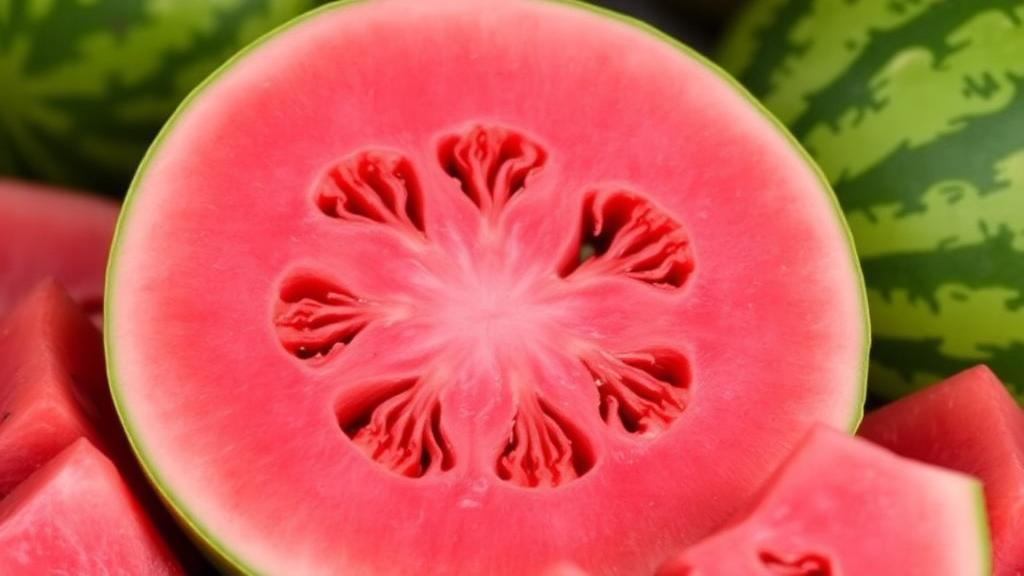
Why does one melon taste like candy while another, from the same breeding program and seemingly the same pedigree, falls flat? For decades, fruit breeders have chased the answer to that question, often assuming that somewhere in the melon genome a single powerful sweetness gene must be hiding. A new study published in BMC Plant Biology by Nanoka Sato of Hirosaki University and colleagues dismantles that assumption. By combining classical quantitative trait locus mapping with transcriptomics and population genomics, the team shows that the intense sweetness of elite Japanese melons is not the product of one master switch. Instead, it emerges from the cumulative, additive action of several loci, each contributing a modest but reproducible nudge toward higher sugar content. The finding explains a long-standing puzzle in melon breeding and points toward a practical strategy, marker-assisted allele pyramiding, for pushing sweetness even further.
The sweetness of a melon is conventionally measured as total soluble solids, or TSS, the concentration of dissolved sugars and other soluble compounds in the fruit juice, usually quantified with a refractometer and expressed in degrees Brix. TSS is a textbook quantitative trait: it varies continuously, is shaped by both genetics and environment, and rarely obeys simple Mendelian inheritance. Earlier work in melon has identified genomic regions linked to sugar accumulation, but the genetic basis of sweetness differences among elite cultivars, lines that have already been intensively selected and share broadly similar backgrounds, remained murky. When no single major determinant segregates within such material, standard genetic analyses can come up empty-handed, leaving breeders without molecular tools to guide their crosses.
To attack the problem, the researchers built recombinant inbred line populations from crosses between two Japanese sweet melon cultivars. Recombinant inbred lines are created by repeated selfing over multiple generations, in this case through the F1 to F5 progenies, so that each line carries a unique mosaic of chromosomal segments inherited from the two parents. Because the lines are genetically fixed, they can be grown and evaluated repeatedly, allowing the team to separate genuine genetic effects from environmental noise. The researchers measured TSS alongside a suite of fruit architecture traits, including fruit diameter, fruit length, fruit shape index, flesh thickness, and the timing of harvest expressed as days from fruit set to harvest and days after pollination, giving them a rich phenotypic dataset to anchor the genetic analysis.
Quantitative trait locus mapping works by testing whether the inheritance of particular chromosomal regions, tracked with molecular markers, statistically predicts variation in the trait of interest across the population. The logarithm of the odds, or LOD score, quantifies the strength of that association. Applying this framework, Sato and colleagues identified four QTLs controlling total soluble solids in the recombinant inbred populations. Crucially, none of these loci behaved like a major gene. Each exerted a modest effect on phenotypic variance, yet the effects were reproducible across the mapping material. When the favorable alleles at multiple loci were combined in the same line, soluble solids climbed in an essentially additive fashion, with the total effect approximating the sum of the individual contributions rather than depending on any single region.
That additive architecture has a direct consequence for how breeders should think about elite germplasm. If sweetness were controlled by one dominant allele, two elite cultivars would tend to share that allele, and their offspring would show little transgressive segregation. Instead, the additive multilocus model predicts that even closely related elite lines can carry different subsets of favorable alleles, so crossing them can shuffle the deck and produce progeny that are either sweeter or less sweet than either parent, depending on how many favorable alleles each offspring happens to inherit. This is precisely the pattern of persistent sweetness variation among elite cultivars that the study set out to explain, and it resolves the paradox without invoking any hidden major gene.
The team then asked what, molecularly speaking, sits inside these QTL intervals, and the answer was surprising. The intervals did not contain known sugar metabolism or transport genes, the obvious candidates one might expect for a sweetness trait, such as invertases, sucrose phosphate synthases, or sugar transporters that have featured prominently in sweetness genetics of melon and other fruit crops. Rather than abandoning the analysis, the researchers turned to transcriptomics. Using RNA sequencing, they profiled gene expression during fruit development and applied weighted gene co-expression network analysis, or WGCNA, a computational method that clusters genes into modules based on correlated expression patterns across samples. Genes located within the QTL intervals turned out to be distributed across co-expression modules associated with carbohydrate metabolism, suggesting that the causal variants act upstream or in parallel with the core sugar biochemistry, perhaps as regulatory factors that tune the activity of the sugar accumulation machinery rather than as the machinery itself.
Population genomics added a third layer of evidence and an evolutionary perspective. If decades of intense selection for sweetness had driven a single favorable allele rapidly to high frequency, the genome around that locus should bear the signature of a hard selective sweep, a region of reduced diversity and elevated differentiation detectable with statistics such as the fixation index, FST, and the cross-population composite likelihood ratio, XP-CLR. The researchers found no such signature. Instead, genomic signals around the sweetness QTLs were modest and localized, with no evidence of strong hard sweeps. This pattern is exactly what an additive polygenic architecture predicts: selection acting simultaneously on many loci of small effect redistributes variation gently across the genome rather than carving out dramatic, sweep-like valleys of diversity. The evolutionary fingerprint thus corroborates the QTL mapping result from an entirely independent angle.
Together, the three strands of evidence, QTL mapping, co-expression analysis, and population genomics, paint a coherent picture. High sweetness in melon is established through the accumulation of favorable alleles at multiple loci, each contributing additively, with the underlying genes connected to carbohydrate metabolism through regulatory co-expression networks rather than through the canonical sugar genes. The study also illustrates a broader lesson for quantitative genetics: when a trait has been under long, sustained selection, the remaining variation among elite material is likely to be polygenic and subtle, and detecting it requires populations, statistical power, and multi-omics integration designed for exactly that kind of architecture. Single-gene thinking, however convenient, would have missed the story entirely.
The practical implications are immediate. Because each QTL contributes a small but consistent effect, breeders can use DNA markers flanking these loci to track the favorable alleles through crossing generations, a strategy known as marker-assisted allele pyramiding. By deliberately combining favorable alleles from different parents at all four loci, breeding programs can rationally construct sweeter melons without waiting for laborious phenotypic evaluation of every fruit in every generation. The approach is especially valuable for traits like TSS that are expensive or slow to measure at scale, since genotyping can be done early in the life of a seedling. The authors note that their results provide a foundation for exactly this kind of marker-assisted improvement, and the open availability of the study, published under a Creative Commons Attribution 4.0 license, means that breeding groups worldwide can build on the mapped loci.
Beyond melon, the work resonates with a growing recognition across crop science that many quality traits of agricultural importance, from grain protein content to oil composition to flavor compounds in tomato and wine grape, rest on similar additive multilocus foundations. As genotyping becomes cheaper and statistical methods for polygenic analysis mature, the era in which breeders could rely on a handful of large-effect genes is giving way to one in which success means counting, tracking, and stacking many small effects. For consumers, that shift may eventually show up where it matters most: in the refractometer reading of the next perfectly sweet melon at the market. For researchers, the message from Sato and colleagues is that sweetness, like many of the traits we prize most, is a team effort written across the genome, one modest allele at a time.
Subject of Research: Genetic architecture of fruit sweetness variation in melon
Article Title: Additive multilocus architecture underlies fruit sweetness variation in melon
Article References: Additive multilocus architecture underlies fruit sweetness variation in melon. (n.d.). https://doi.org/10.1186/s12870-026-09952-2
Image Credits: AI Generated
DOI: 10.1186/s12870-026-09952-2
Keywords: melon, fruit sweetness, total soluble solids, quantitative trait loci, additive effects, multilocus inheritance, allele pyramiding, QTL mapping, co-expression network analysis, selective sweep, recombinant inbred lines, plant genetics
Cite Scienmag News
Juliet Wilcox. (October 12, 2026). Melon Sweetness Is Built From Many Small Genetic Steps, Study Finds. Scienmag. https://scienmag.com/melon-sweetness-is-built-from-many-small-genetic-steps-study-finds/
Juliet Wilcox. "Melon Sweetness Is Built From Many Small Genetic Steps, Study Finds." Scienmag, 12 October 2026, https://scienmag.com/melon-sweetness-is-built-from-many-small-genetic-steps-study-finds/. Accessed 12 October 2026.
Juliet Wilcox. "Melon Sweetness Is Built From Many Small Genetic Steps, Study Finds." Scienmag. October 12, 2026. https://scienmag.com/melon-sweetness-is-built-from-many-small-genetic-steps-study-finds/


