


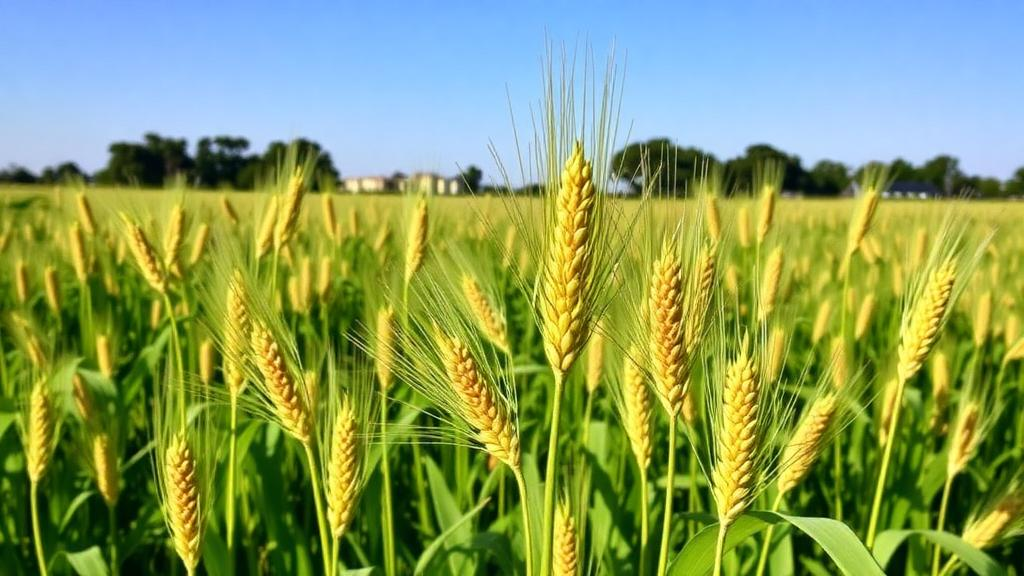
Millets have spent decades in the scientific shadows, dismissed as orphan crops while rice, wheat and maize absorbed nearly all of the investment in cereal genomics. That era is now ending with remarkable speed. A sweeping review published in Current Research in Biotechnology by Stanislaus Antony Ceasar, A.R. Sree Rathna and Gholamreza Abdi assembles the evidence that foxtail millet, pearl millet and finger millet have acquired, in just a few years, essentially the full toolkit of modern crop biotechnology — chromosome-scale genomes, graph-based pan-genomes, validated CRISPR edits, single-cell atlases and even the first epigenomic maps. The timing could hardly be better. Climate projections point to mean warming of 1.5 to 2.0 degrees Celsius by mid-century, intensifying drought, heat and erratic monsoons across the semi-arid tropics, while more than two billion people already suffer from hidden hunger — deficiencies of iron, zinc and other micronutrients that the water-hungry major cereals do little to fix.
The case for millets rests on an unusual double promise. As C4 cereals of the grass family Poaceae, they photosynthesize efficiently, set grain under terminal drought and on nutrient-poor soils where rice, wheat and maize fail, and require little fertilizer or irrigation. Their grain is another story entirely: finger millet accumulates calcium at levels far above any other cereal, pearl millet is among the richest cereal sources of iron and zinc, and the smaller millets contribute balanced amino-acid profiles, resistant starch and phenolic antioxidants. The grain is gluten-free and has a low glycemic index. Pearl millet and sorghum cultivation has even been reported to emit only about 3218 and 3358 kilograms of carbon-dioxide equivalent per hectare, respectively, giving these crops a comparatively small greenhouse-gas footprint. Since the International Year of Millets in 2023, research on these so-called nutri-cereals has expanded rapidly, and the new review captures that surge with unusual rigor: from 2,065 records screened, roughly 170 primary studies were included, each classified by species, omics layers, integration method and whether candidate genes were actually validated.
The most consequential technical shift may be the move from single reference genomes to graph-based pan-genomes. A single reference captures the gene content of one accession only, while a pan-genome catalogs the presence–absence and structural variation — large insertions, deletions, inversions and copy-number changes — that conventional single-nucleotide polymorphism analysis cannot detect. For foxtail millet, a graph pan-genome built from 110 accessions defined the core and dispensable gene content of the species and linked structural variation to environmental adaptation and C4 biology, establishing it as a genuine model for climate-adaptive breeding. In pearl millet, a pan-genome assembled from chromosome-level genomes uncovered more than 420,000 structural variants and implicated an expanded RWP-RK transcription-factor family in heat tolerance. Three near-gap-free chromosome-level assemblies representing the global heterotic pool now support hybrid breeding, and a chromosome-scale genome identified the strigolactone-biosynthesis gene CLAMT1b as a determinant of susceptibility to Striga hermonthica, the parasitic weed that devastates African yields. Finger millet, an allotetraploid whose complex genome long resisted analysis, now has chromosome-scale assemblies revealing features linked to drought resistance and the crop’s unusually long grain-storage life.
The small millets are beginning to catch up. Proso millet has a graph pan-genome built from 32 long-read assemblies plus resequencing of 516 accessions, identifying 139 loci associated with domestication and agronomic traits. Little millet has a chromosome-scale assembly of its tetraploid genome with resequencing of 300 accessions, which enabled genome-wide association studies for grain micronutrients, including loci tied to high grain iron. Barnyard millet genomes exist for three wild Echinochloa species, with resequencing of 737 accessions. Kodo millet, notably, still lacks a chromosome-scale reference assembly. These sequences are increasingly backed by integrated databases — Milletdb for multiple species, the MDSi platform for foxtail millet anchored on the rapid-cycling xiaomi model, and the Energy Grass Database, which provides the first epigenomic atlas of pearl millet — that let breeders query structural variants, expression patterns and marker–trait associations at a single locus in one place.
On the stress-biology side, the transcriptomic literature converges on a striking conclusion: millet stress tolerance is built largely on a conserved cereal response program. Across drought, salinity, heat, cold and low-potassium stress, differential-expression studies repeatedly recover the abscisic acid signaling core — PYR/PYL/RCAR receptors inhibiting PP2C phosphatases to release SnRK2 kinases — along with reactive oxygen species scavenging by superoxide dismutase, catalase and the ascorbate–glutathione cycle, and accumulation of osmolytes such as proline, glycine betaine and trehalose. Heat engages heat shock factor–heat shock protein networks, salinity adds the SOS pathway and vacuolar sodium–hydrogen exchangers, and low potassium is decoded by CBL–CIPK modules. Because these modules are shared with rice and maize, mechanistic insights transfer readily, and the greater tolerance of millets may arise mainly from differences in the timing, amplitude and tissue specificity of the same pathways. The evidence does not exclude species-specific regulators, but testing that will require time-resolved transcriptomics across species under identical stress regimes.
Crucially, the field has moved from correlation to demonstrated function. The receptor-like kinase DPY1 activates SnRK2 kinases and mediates drought tolerance in Setaria, placing a foxtail millet gene at the head of a validated signaling cascade. The m6A RNA-modification reader SiYTH1 improves drought tolerance by stabilizing transcripts involved in stomatal closure and ROS scavenging. In pearl millet, the plasma-membrane protein PgPM19 aids germination under salinity by dampening ABA biosynthesis, while the transcription factor PgWRKY44, acting as a WRKY–calmodulin module, enhances salt and drought tolerance and, when overexpressed in pearl millet and rice, increases resistance to the blast fungus Magnaporthe grisea. Genome-wide family analyses of bZIP, NAC, AP2/ERF, MYB, NF-Y and heat shock factors have produced a rich catalog of candidates, though the review is careful to note that many have been tested only in Arabidopsis and should be regarded as candidate evidence rather than proof of function in millets themselves.
The sharpest paradox the review identifies lies in nutrition. The traits that most distinguish millets — the exceptional grain calcium of finger millet and the high iron and zinc of pearl millet — are precisely the traits whose molecular machinery is least understood. Biofortification depends on a chain of control points: ZIP and NRAMP transporters take minerals into root cells, nicotianamine and phytosiderophores chelate iron and zinc for long-distance transport, YSL transporters move the complexes through the vasculature, and ferritin, CAX and calcium-ATPase transporters govern storage in the grain. In millets, only the first step has been examined in any depth — fourteen ZIP genes are known in foxtail millet, and mugineic acid pathway genes respond to iron and zinc deficiency in pearl millet. For chelation and grain storage, no functional study in any millet species was found. Rice shows what becomes possible once this machinery is understood: iron and zinc biofortification has been achieved there by expressing nicotianamine synthase together with ferritins — including a pearl millet ferritin — proving the strategy works with millet genes, just not yet in millet plants. No transgenic or genome-edited millet line with higher grain iron, zinc or calcium has been reported.
Genome editing itself, however, has decisively arrived. Foxtail millet now supports a portfolio of validated CRISPR/Cas9 edits: knockout of SiEPF2 altered stomatal density and panicle traits, mutagenesis of SiZAT12 improved drought tolerance without a yield penalty, editing of SiYABBY1 enhanced cleistogamy and increased seed number and size, base editing of SiGS1 conferred glufosinate herbicide resistance, and knockout of alpha-prolamin genes raised the content of functional amino acids — a directly edited gain in grain nutritional quality. The obstacle was never the editing chemistry but the delivery of reagents into millet cells and regeneration of whole plants, and that bottleneck is easing: high-throughput transformation and editing have been reported in pearl millet, a simple seed-piercing protocol works in both pearl and finger millet, and speed-breeding protocols now shorten generation cycles. Prime editing and CRISPR-based gene activation or repression remain unreported in any millet species and are treated as emerging options.
The new frontiers are arriving almost simultaneously. A single-cell atlas of heat-stressed pearl millet leaves has, for the first time, resolved the cell-type-specific heat response of a C4 crop — critical because the mesophyll–bundle-sheath division of photosynthetic labor, which bulk measurements average away, underpins the water- and nitrogen-use efficiency that makes these crops resilient. Combining spatial metal imaging with spatial transcriptomics could finally answer which grain tissues load iron, zinc and calcium. Epigenomics has revealed a prominent role for CHH methylation in pearl millet tissue-specific gene expression, histone deacetylase modules repressing dehydration responses in foxtail millet, and ozone-induced methylation changes inherited across generations — hinting at heritable, non-transgenic routes to resilience. Artificial intelligence is at proof-of-concept stage: interpretable deep-learning frameworks for genomic prediction, structural-variant-informed selection in pearl millet, and smartphone-based biomass estimation all exist, but no breeding program has yet demonstrated a genetic-gain contribution. The review’s roadmap is correspondingly pragmatic: redirect the integrated ionomics and editing approaches already proven for cadmium and selenium toward iron, zinc and calcium; generalize the foxtail millet editing pipeline across species; build closed-loop precision breeding on integration-native data; and bring kodo and barnyard millet to reference-genome parity. The historical case for treating millets as intractable orphans, the authors conclude, no longer holds — the foundations are in place, and the task now is to apply them where they matter most.
Subject of Research: Multi-omics and genome editing for climate resilience and micronutrient biofortification in millet crops
Article Title: Integrative multi-omics and biotechnology for climate resilience and micronutrient biofortification in millets: from trait discovery to precision crop improvement
Article References: Ceasar, S. A., Rathna, A. S., & Abdi, G. (2026). Integrative multi-omics and biotechnology for climate resilience and micronutrient biofortification in millets: from trait discovery to precision crop improvement. Current Research in Biotechnology, Article 100426. https://doi.org/10.1016/j.crbiot.2026.100426
Image Credits: AI Generated
DOI: Not provided
Keywords: millets, multi-omics, genome editing, CRISPR, biofortification, climate resilience, pan-genome, pearl millet, foxtail millet, finger millet, hidden hunger, genomic selection
Cite Scienmag News
Juliet Wilcox. (October 11, 2026). Millets Get a Genomic Makeover: From Orphan Crops to Climate-Smart Supergrains. Scienmag. https://scienmag.com/millets-get-a-genomic-makeover-from-orphan-crops-to-climate-smart-supergrains/
Juliet Wilcox. "Millets Get a Genomic Makeover: From Orphan Crops to Climate-Smart Supergrains." Scienmag, 11 October 2026, https://scienmag.com/millets-get-a-genomic-makeover-from-orphan-crops-to-climate-smart-supergrains/. Accessed 11 October 2026.
Juliet Wilcox. "Millets Get a Genomic Makeover: From Orphan Crops to Climate-Smart Supergrains." Scienmag. October 11, 2026. https://scienmag.com/millets-get-a-genomic-makeover-from-orphan-crops-to-climate-smart-supergrains/


