


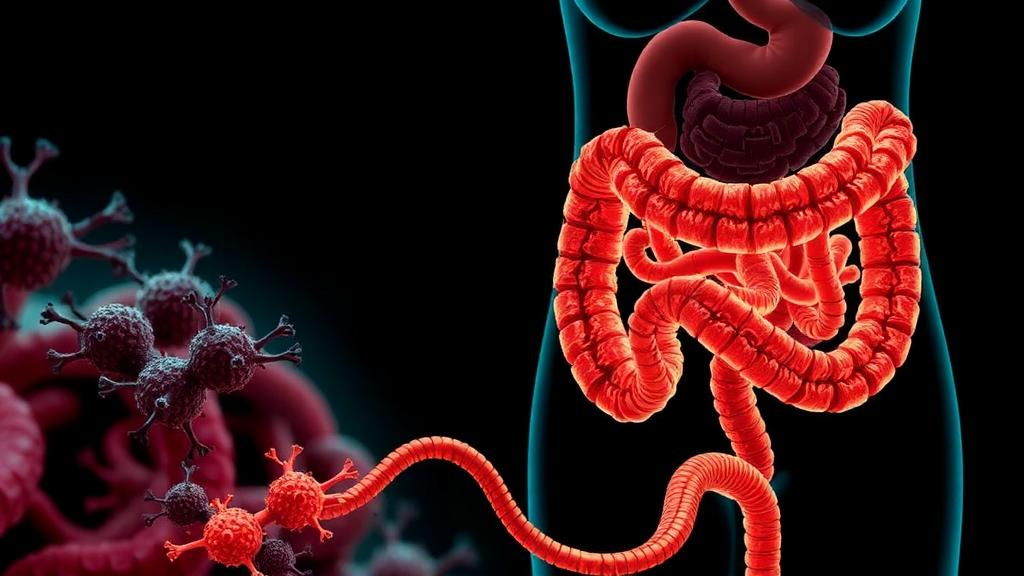
Obesity has long been framed as a simple problem of energy balance: calories consumed versus calories expended. But a growing body of research points to a far more intricate picture, one in which the trillions of microbes living in the gut act as puppet masters of systemic metabolism. A new study published in the journal Microbiome now offers one of the most detailed mechanistic accounts yet of how a single bacterial species and its metabolic product can rewire the immune system to protect against weight gain. The research, led by Wangchang Li, Wenxin Chen, Lu Wang, Qingsong Zhu and Yitong Zhang, with Huansheng Yang and Yulong Yin as corresponding authors, identifies a molecular signaling axis that connects microbial imbalance, circulating bacterial toxins and inflammatory immune cells in a self-reinforcing loop that fuels obesity across multiple mammalian species.
The team began with a striking natural experiment built into Chinese pig genetics. Ningxiang pigs are an indigenous breed that is notably prone to accumulating fat, while commercial Duroc-Landrace-Yorkshire pigs remain comparatively lean under the same conditions. By comparing the gut microbiomes of these two breeds, the researchers found that the adiposity-prone Ningxiang animals carried an expanded population of Gram-negative bacteria, elevated levels of lipopolysaccharide, or LPS, in their circulation, and markedly reduced abundance of Clostridium butyricum, a beneficial gut bacterium, along with reduced levels of its signature metabolite, butyrate. LPS is a structural component of the outer membrane of Gram-negative bacteria, and when it leaks from a dysbiotic gut into the bloodstream it is recognized by the immune system as a danger signal, triggering chronic low-grade inflammation that is a hallmark of obesity.
To test whether these microbial differences were a cause rather than a consequence of fatness, the researchers performed fecal microbiota transplantation, transferring gut microbes from obese-prone Ningxiang donors into lean Duroc-Landrace-Yorkshire recipients. The lean pigs gained adiposity after receiving the microbiota of their fat-prone counterparts, and the transfer was accompanied by a significant drop in colonization by C. butyricum. This result suggested that the microbial community itself, depleted of butyrate-producing organisms and enriched in LPS-carrying Gram-negative species, could actively transmit a tendency toward weight gain.
The next step was intervention. In mice fed a high-fat diet, supplementation with C. butyricum and with butyrate itself effectively restored gut microbial homeostasis and ameliorated obesity. These findings established the bacterium and its metabolite as candidate therapeutic agents, but they left open the central question of mechanism: through what molecular circuitry does a gut microbe influence whole-body fat accumulation? To answer it, the team turned to large-scale transcriptomics, sequencing the RNA of multiple organs in both pigs and long-tailed macaques, a nonhuman primate, to search for gene regulatory programs conserved across species.
The search converged on a single transcription factor: early growth response 1, or EGR1. Across organs and across species, EGR1 emerged as a central regulator of obesity-associated inflammation, with consistent enrichment of the PI3K-Akt signaling pathway, a well-known intracellular cascade that controls cell growth, survival and metabolism. Single-cell RNA sequencing then sharpened the picture at the level of individual immune cells. Macrophages, the tissue-resident immune cells that infiltrate expanding fat tissue in obesity, showed a clear dichotomy: those with high EGR1 expression adopted a pro-inflammatory M1 phenotype, pumping out inflammatory cytokines, while those with low EGR1 expression displayed an anti-inflammatory M2 profile associated with tissue repair and metabolic calm. In obese adipose tissue, the balance tips toward the EGR1-high, M1-polarized state, and that shift is thought to be a major driver of insulin resistance and metabolic dysfunction.
To establish that EGR1 was not merely a bystander, the researchers used two complementary strategies. First, they performed an in silico knockout, computationally removing EGR1 from gene regulatory networks built from macrophage-specific expression data, and found that PI3K-Akt signaling depended functionally on EGR1 downstream. Second, they applied a pharmacological inhibitor of EGR1, designated EGR1i and known as IT25, and observed the same disruption of the pathway. Together, the computational and chemical perturbations supported a model in which EGR1 sits upstream of PI3K-Akt signaling within macrophages, orchestrating the inflammatory program that links gut-derived LPS to metabolic inflammation.
Integrating metagenomic data on microbial communities with single-cell data on immune cells, the team proposed what they call a conserved LPS-EGR1 axis governing macrophage polarization in obesity. According to this model, gut dysbiosis increases the translocation of LPS into the circulation, LPS activates EGR1 expression in macrophages, and EGR1 drives those macrophages toward the M1 state through PI3K-Akt-associated signaling, thereby sustaining the chronic inflammation that characterizes obesity. The loop is self-reinforcing: inflammation worsens gut barrier integrity, which permits more LPS to enter, which further activates the axis.
To validate the model experimentally rather than merely infer it from correlations, the researchers built two purpose-made systems. The first was a mouse model of obesity in which a high-fat diet was potentiated with LPS, mimicking the endotoxemia seen in dysbiotic guts. The second was a cell culture model in which LPS was used to drive M1 polarization of RAW264.7 macrophages, a widely used mouse macrophage cell line. Into these systems they introduced four candidate disruptors of the axis: live C. butyricum, butyrate, the amino acid arginine, and the EGR1 inhibitor IT25. All four treatments significantly attenuated weight gain in the animal model, downregulated EGR1 expression, and suppressed M1 macrophage polarization, restoring a healthier M1/M2 balance. The beneficial effects were accompanied by significant alterations in genes related to the PI3K-Akt pathway, suggesting that this pathway acts in concert with EGR1 within the regulatory network rather than as an independent route.
The inclusion of arginine among the effective interventions adds an intriguing nutritional dimension to the work. Arginine is a semi-essential amino acid with known immunomodulatory and nitric-oxide-related functions, and its ability to blunt the LPS-EGR1 axis alongside a probiotic bacterium, a short-chain fatty acid and a targeted inhibitor suggests that the axis is a convergent point where diet, microbes and pharmacology all meet. For a field in which probiotic studies often report benefits without clear mechanisms, the strength of this study lies in its chain of evidence: a natural cross-breed comparison, a transplantation experiment, a dietary intervention, cross-species transcriptomics, single-cell resolution, computational and chemical perturbation, and finally purpose-built validation models. Each link in the causal chain from dysbiosis to inflammation to fat accumulation was tested separately.
The cross-species consistency is equally significant. Because the EGR1-centered program was observed in pigs, mice and macaques, the LPS-EGR1 axis appears to be a fundamental feature of mammalian metabolic inflammation rather than a quirk of any one model organism. That conservation raises the stakes for translation. If the same axis operates in humans, and the components are plausible given the well-documented role of endotoxemia and M1 macrophage infiltration in human obesity, then C. butyricum, butyrate, arginine supplementation or EGR1-targeted drugs could eventually complement existing strategies for metabolic disease. The authors note that the work was supported by the National Natural Science Foundation of China and several Hunan provincial programs, and the study was approved by the Biomedical Research Ethics Committee of Hunan Normal University. Much remains to be done, including direct demonstration of the axis in human tissues and safety testing of EGR1 inhibition, which is a transcription factor with roles in many cell types. But the study delivers something the obesity field has lacked: a single, targetable molecular hub, EGR1, that connects the gut microbiota to the immune cells that set the inflammatory tone of fat tissue. In doing so, it transforms a diffuse association between microbes and obesity into a defined circuit with identifiable points of intervention, and it suggests that reshaping the gut ecosystem with the right bacterium, or simply feeding it the right substrate, may be enough to quiet the inflammation that makes fat so metabolically dangerous.
Subject of Research: How Clostridium butyricum and butyrate modulate macrophage polarization via the LPS-EGR1 axis to alleviate obesity
Article Title: Clostridium butyricum and butyrate reprogram macrophages to alleviate obesity by disrupting the LPS-EGR1 axis and its associated PI3K-Akt signaling
Article References: Li, W., Chen, W., Wang, L., Zhu, Q., Zhang, Y., Zeng, X., Liu, J., Wang, Q., Ma, H., Yin, J., Li, J., Yin, Y., & Yang, H. (2026). Clostridium butyricum and butyrate reprogram macrophages to alleviate obesity by disrupting the LPS-EGR1 axis and its associated PI3K-Akt signaling. Microbiome. https://doi.org/10.1186/s40168-026-02554-y
Image Credits: AI Generated
DOI: 10.1186/s40168-026-02554-y
Keywords: Clostridium butyricum, butyrate, gut microbiota, obesity, LPS, EGR1, macrophage polarization, PI3K-Akt signaling, inflammation, fecal microbiota transplantation, metabolic disease, single-cell RNA sequencing
Cite Scienmag News
Daisy Hatcher. (October 11, 2026). Gut Microbe and Its Fatty Acid Break the Inflammatory Loop That Drives Obesity. Scienmag. https://scienmag.com/gut-microbe-and-its-fatty-acid-break-the-inflammatory-loop-that-drives-obesity/
Daisy Hatcher. "Gut Microbe and Its Fatty Acid Break the Inflammatory Loop That Drives Obesity." Scienmag, 11 October 2026, https://scienmag.com/gut-microbe-and-its-fatty-acid-break-the-inflammatory-loop-that-drives-obesity/. Accessed 11 October 2026.
Daisy Hatcher. "Gut Microbe and Its Fatty Acid Break the Inflammatory Loop That Drives Obesity." Scienmag. October 11, 2026. https://scienmag.com/gut-microbe-and-its-fatty-acid-break-the-inflammatory-loop-that-drives-obesity/


