


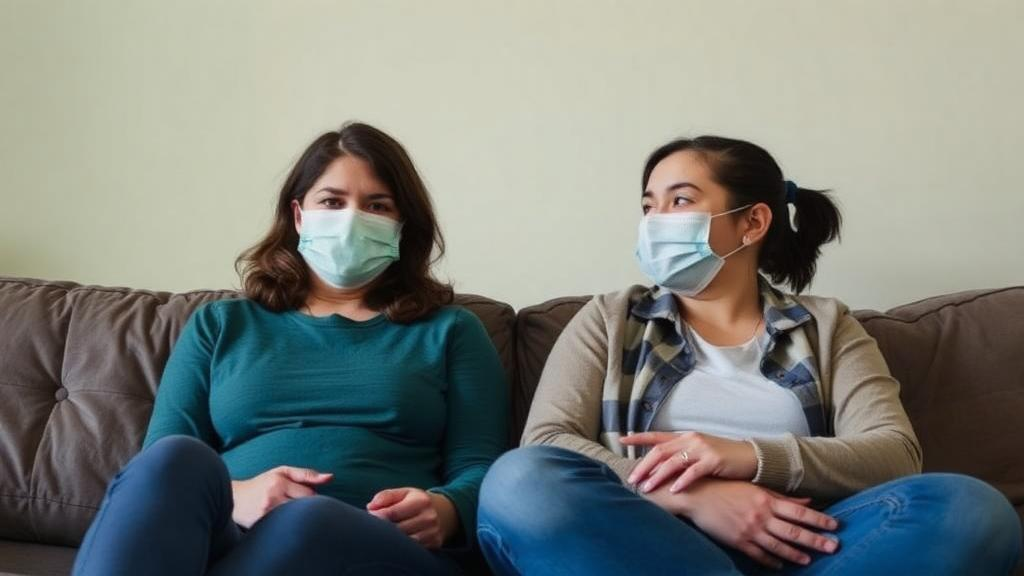
When the COVID-19 pandemic locked down families across the globe, it did more than isolate households and shutter schools. It strained marriages to the breaking point. In South Africa, 16,097 divorces were granted in 2020, and the number climbed to 18,203 in 2021, a 13.1 percent increase in a single year. For adolescents whose parents divorced during this period, two major adversities collided at once: the legal dissolution of their family and the social isolation, fear, and disruption of a global pandemic. Yet not every teenager crumbled under this compounded pressure. A new qualitative study published in the Journal of Child and Family Studies by Amber Samanther Pinho and Daphney Mawila-Chauke of the University of Johannesburg set out to answer a deceptively simple question: what actually helped adolescent girls stay resilient when their parents divorced during the pandemic?
The researchers grounded their work in Michael Ungar’s social-ecological theory of resilience, which holds that resilience is not merely a personality trait but the product of interactions between individuals and the resources available in their families, communities, and cultures. In this framework, a person’s capacity to navigate toward health-sustaining resources matters just as much as the willingness of families, schools, and communities to provide those resources in culturally meaningful ways. This perspective matters for South Africa in particular, where divorce carries complex social weight. The Divorce Act 70 of 1979 formally legalised divorce in the country, and statistics show that Black African couples accounted for 46.4 percent of the 25,284 divorce forms filed at the end of 2018, followed by White, Coloured, and Indian/Asian population groups. Traditional African family values of marriage, togetherness, and interdependence can make divorce a particularly fraught experience, disrupting not only a household but a wider web of kinship expectations.
To capture the lived experience of resilience, the researchers used a phenomenological design, recruiting five female adolescents aged 14 to 16 from Johannesburg schools through purposive sampling. Participants had to meet predefined resilience criteria: effective coping with stress, satisfactory academic functioning, and emotional adjustment despite parental divorce occurring in 2020 or 2021. Data were collected through semi-structured interviews, three face-to-face and two online, each lasting 30 minutes, followed by a 60-minute online focus group. The researchers analysed the transcripts using Interpretative Phenomenological Analysis, a seven-step method that moves from deep immersion in each participant’s account to the identification of shared themes across accounts, with software support from Atlas.ti to verify thematic accuracy. Thematic saturation, the point at which no new themes emerged, guided the adequacy of the small sample. A psychologist was available during and after data collection, and participants signed non-disclosure agreements to protect confidentiality.
The analysis revealed three overarching clusters of resilience factors: individual attributes, relational factors, and contextual factors, a structure that maps neatly onto Ungar’s social-ecological model. The individual attributes included coping mechanisms, viewing divorce as a good resolution, perseverance, optimism, and spirituality. Participants described turning to music, drawing, painting, journaling, and gym workouts as emotional outlets. One participant explained that listening to music at full volume helped her get frustration out in a healthy way, while another said the pandemic gave her the opportunity to discover a passion for singing that made her feel more comfortable. Physical activity emerged as a particularly vivid strategy, with one girl describing daily gym sessions with her brother as a distraction that shifted her attention away from the gloom of the divorce.
Perhaps the most striking individual finding was that several participants reframed their parents’ divorce as a positive resolution rather than a catastrophe. They reasoned that letting go was better than living amid constant conflict, and some connected this directly to experiences of domestic abuse or a parent whose temperament deteriorated under pandemic stress. This aligns with a growing body of research suggesting that divorce can function as a turning point, sometimes called a good divorce, when it reduces hostility and both adults and children emerge at least as emotionally well as before. The participants also displayed perseverance, refusing to let the divorce define or derail them, and optimism, repeatedly reminding themselves that better times were coming and making peace with things beyond their control. Spirituality rounded out the individual cluster: prayer, daily affirmations, and faith in God served as pillars of hope, echoing earlier South African studies in which religious belief systems and family spirituality were identified as resilience enablers.
Relational factors formed the second major theme, and here mothers stood out as the central pillars of the adolescents’ resilience. Participants described their mothers as best friends and rocks, always available in times of need, offering advice, emotional support, and even financial help for visits to distant family members. One participant noted that lockdown, paradoxically, brought her closer to her mother because constant WhatsApp calls and messages replaced physical proximity after a move. Extended family, especially maternal grandmothers, aunts, and uncles, provided an additional buffer, calling regularly, offering advice, taking the girls on holidays, and in some cases supplying food and financial support during a parent’s emotional breakdown. Friends and romantic partners completed the relational picture, offering positive distraction, a non-judgmental ear, and, in the case of one participant’s boyfriend, someone to process feelings with despite lockdown separation across provinces.
Contextual factors, the third theme, highlighted the role of institutions beyond the family. Access to mental health support proved critical: participants reported benefiting from therapy, including online sessions conducted under pandemic restrictions, psychiatric care, and medication for anxiety. They described personal therapy as painting a picture of growth, self-awareness, and self-actualisation. Teacher support emerged as an unexpected but powerful resource. Participants said approachable, non-judgmental teachers made time to listen, and one girl remarked that teachers kind of filled in the love of a mother in some way, stepping into a partial parental role at a moment when parents were consumed by their divorce. This finding echoes research from China showing that teacher-student relationships can protect student mental health during the pandemic, and earlier work showing that educators are essential in supporting children experiencing parental separation.
The study’s authors are careful to frame these findings within their limitations. Five participants from Johannesburg schools cannot represent the broader population of adolescents who experienced parental divorce during the pandemic, and the sample included no boys, partly because discussing difficulties may be more socially acceptable for girls. The data were retrospective, collected in 2023, three years after the divorces occurred, and reflect participants’ subjective interpretations rather than objective indicators of adjustment. The authors also acknowledge that some interview questions may have presupposed that divorce was negative, and they recommend that future research frame questions more neutrally, since divorce is a subjective experience that varies across contexts. Cultural variation poses another challenge: some families separate informally without legal divorce, meaning some adolescents’ experiences were excluded from the sampling frame.
Nevertheless, the implications are significant. This is among the first studies to qualitatively explore what enabled adolescents to remain resilient when their parents divorced during the COVID-19 pandemic, and it adds a South African perspective to a literature that has long underrepresented adolescent voices, particularly in African contexts. The central message for practitioners is that resilience is holistic: interventions aimed at helping adolescents weather parental divorce during crises should anchor themselves in a combination of individual strengths, supportive relationships, and accessible contextual resources rather than focusing on any single factor. Researchers, educators, psychologists, parents, and community members all share responsibility for providing these resources. The participants’ own words capture the essence of the finding. Reminding herself that this too shall pass, one girl summarised what the data show in aggregate: with the right mix of inner strength, human connection, and institutional support, even a double adversity like divorce during a pandemic need not be a downfall.
Subject of Research: Resilience factors among adolescent girls experiencing parental divorce during the COVID-19 pandemic in South Africa
Article Title: “This Too Shall Pass”—Resilience Factors of Parental Divorce During COVID-19 Pandemic for Adolescents
Article References: Pinho, A. S., & Mawila-Chauke, D. (2026). “This Too Shall Pass”—Resilience Factors of Parental Divorce During COVID-19 Pandemic for Adolescents. Journal of Child and Family Studies. https://doi.org/10.1007/s10826-026-03364-4
Image Credits: AI Generated
DOI: 10.1007/s10826-026-03364-4
Keywords: resilience, parental divorce, COVID-19, adolescents, South Africa, social-ecological theory, mental health, qualitative research, coping mechanisms, family support, teacher support, spirituality
Cite Scienmag News
Courtney Benton. (October 10, 2026). When Divorce Struck During Lockdown: How Teenage Girls Found Ways to Bounce Back. Scienmag. https://scienmag.com/when-divorce-struck-during-lockdown-how-teenage-girls-found-ways-to-bounce-back/
Courtney Benton. "When Divorce Struck During Lockdown: How Teenage Girls Found Ways to Bounce Back." Scienmag, 10 October 2026, https://scienmag.com/when-divorce-struck-during-lockdown-how-teenage-girls-found-ways-to-bounce-back/. Accessed 11 October 2026.
Courtney Benton. "When Divorce Struck During Lockdown: How Teenage Girls Found Ways to Bounce Back." Scienmag. October 10, 2026. https://scienmag.com/when-divorce-struck-during-lockdown-how-teenage-girls-found-ways-to-bounce-back/


