


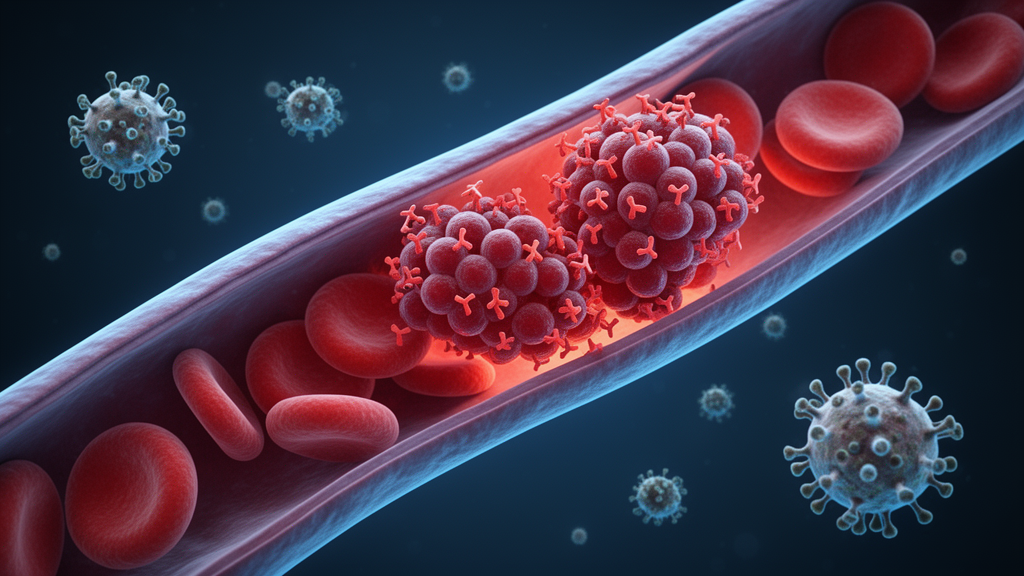
A rare and potentially devastating form of autoimmune anemia has been documented in a 69-year-old man who developed the condition shortly after suffering an episode of shingles and a diagnosis of COVID-19, according to a case report published in the Annals of Hematology by Adam G. Mermelstein of Sidney Kimmel Medical College at Thomas Jefferson University and colleagues Sean P. Reilly and Ruben Rhoades of the Division of Hematology at Thomas Jefferson University. The condition, known as paroxysmal cold hemoglobinuria, or PCH, is one of the least common types of autoimmune hemolytic anemia, a family of disorders in which the immune system turns against the body’s own red blood cells. What makes this case remarkable is the timing: while PCH has occasionally been described after primary varicella-zoster virus infection, the virus that causes chickenpox and shingles, the authors believe this is the first reported instance in which the disease appeared in temporal association with reactivation of the virus rather than a first-time infection.
Paroxysmal cold hemoglobinuria occupies a distinctive niche in hematology because of the peculiar behavior of the antibody responsible for it. The disorder is mediated by so-called biphasic Donath-Landsteiner antibodies, which have the unusual property of attaching themselves to red blood cells only at cold temperatures, such as those found in the capillaries of the extremities, and then triggering the destruction of those cells once they return to the warmer core of the body. This two-temperature mechanism gives the antibodies their biphasic character and explains the classic clinical hallmark of the disease: the passage of dark, hemoglobin-laden urine, often after exposure to cold. The antibody typically targets the P antigen, a carbohydrate structure found on the surface of red blood cells, and once bound it recruits complement, a cascade of blood proteins that punches lethal holes in the cell membrane, causing rapid and sometimes massive destruction of circulating red cells.
In children, PCH most often presents as a transient, self-limited illness that follows a viral infection and resolves on its own or with supportive care. In adults, the disease is considerably rarer, and when it does appear it raises two distinct possibilities: a post-infectious trigger, similar to the pediatric pattern, or an underlying hematologic malignancy that has dysregulated the immune system. The distinction matters enormously for management, because the adult form can be severe, relapsing, and tied to a serious underlying condition. The new report adds an important data point to the small literature on adult PCH by documenting a severe, life-threatening episode in an older adult and by carefully dissecting the diagnostic workup that confirmed the disease.
The patient at the center of the report was a 69-year-old man who first developed shingles, the painful blistering rash caused by reactivation of latent varicella-zoster virus that has remained dormant in nerve ganglia since a childhood chickenpox infection. Shortly afterward, he was diagnosed with COVID-19, and then he developed evidence of severe hemolysis, the rapid breakdown of red blood cells. The clinical timeline placed the onset of hemolysis after both infections, raising the possibility that either one, or both acting together, could have served as the immunologic trigger that set his immune system against his own red cells. The authors are careful to note that although the timeline is compatible with varicella-zoster reactivation triggering the disease, the specific infectious trigger cannot be definitively established, and the recent COVID-19 diagnosis represents a potential alternative trigger or co-trigger.
The diagnostic workup followed the standard logic of hemolytic anemia evaluation but arrived at an answer that required specialized testing. Initial hemolysis testing demonstrated a direct antiglobulin test, also known as a Coombs test, that was positive for complement component 3 but negative for immunoglobulin G. This pattern is a crucial clue: many autoimmune hemolytic anemias, particularly the warm-antibody type, show immunoglobulin G coating the red cells, whereas the complement-only pattern points toward a cold-reactive antibody such as the Donath-Landsteiner antibody. Confirmation came from Donath-Landsteiner testing, the definitive assay for the disease, which exploits the biphasic nature of the antibody by incubating the patient’s serum with red cells at cold temperature and then warming the mixture to demonstrate complement-mediated lysis.
Two additional findings on the patient’s blood smear aided the diagnosis and illustrate the value of careful microscopic examination. The smear showed erythrophagocytosis, the phenomenon in which white blood cells engulf red blood cells or their debris, and rosetting, in which red blood cells cluster around neutrophils in a flower-like arrangement. Both findings are commonly seen in PCH and reflect the intense inflammatory and phagocytic activity that complement-coated red cells provoke. In a disorder as rare as PCH, such morphological clues can be decisive, because clinicians may not initially suspect the diagnosis and the confirmatory Donath-Landsteiner test is not available in every laboratory.
The severity of the patient’s illness underscores that adult PCH is not a benign curiosity. His hospital course lasted 38 days and was described as complicated, requiring mechanical ventilation to support his breathing, renal replacement therapy in the form of dialysis to substitute for failing kidneys, and extensive transfusions to replace the red cells his immune system was destroying. Each of these interventions reflects a downstream consequence of massive hemolysis: the release of free hemoglobin into the circulation can injure the kidneys, severe anemia can starve tissues of oxygen, and the systemic inflammatory response can precipitate multi-organ failure. The report thus serves as a reminder that a condition often taught as a mild pediatric post-viral illness can, in adults, become a critical care emergency.
The immunologic story behind the case is also of interest to researchers studying how infections trigger autoimmunity. Varicella-zoster virus is a herpesvirus that establishes lifelong latency in sensory ganglia and can reactivate when immune surveillance wanes, as commonly happens with aging or immunosuppression. Molecular mimicry, in which antibodies generated against viral proteins cross-react with similar structures on host tissues, is one proposed mechanism linking viral infections to autoimmune blood disorders, and the P antigen on red cells has been discussed in this context. The concurrent COVID-19 diagnosis adds a further layer of complexity, since SARS-CoV-2 infection has itself been associated with a range of autoimmune hematologic complications, including autoimmune hemolytic anemia. Disentangling which infection, if either, drove the patient’s antibody production is not possible from a single case, and the authors explicitly decline to assign a definitive cause.
From a clinical practice standpoint, the case carries several lessons. First, PCH belongs on the differential diagnosis for any patient with acute hemolytic anemia and a complement-only positive direct antiglobulin test, particularly when there is a recent history of infection, and recognizing the characteristic smear findings of erythrophagocytosis and red cell rosetting can accelerate the diagnosis. Second, in adults with PCH, clinicians must search both for infectious triggers and for underlying hematologic malignancy, since the management and prognosis differ substantially between these scenarios. Third, the biphasic Donath-Landsteiner test remains the cornerstone of confirmation, and clinicians should advocate for it when the initial serologic pattern is suggestive, because misclassification as warm autoimmune hemolytic anemia could lead to ineffective treatment strategies such as corticosteroids or rituximab, which are mainstays for warm-antibody disease but have a less established role in PCH, where avoidance of cold exposure and supportive transfusion are central.
The report, published as an open-access case report and citable under DOI 10.1007/s00277-026-07310-8, was reviewed by the Thomas Jefferson University Privacy Office in accordance with institutional policy, and informed consent for publication was obtained from the patient. The authors declare no competing interests and received no funding for the manuscript. For the hematology community, the case expands the recognized spectrum of varicella-zoster-associated PCH from primary infection to viral reactivation, a distinction that matters for the growing population of older adults in whom shingles is common. For the broader medical readership, it is a vivid illustration of how a dormant virus and an unrelated pandemic-era infection can converge on a single patient’s immune system with dramatic consequences, and of how classical serologic techniques developed more than a century ago, when Donath and Landsteiner first described the antibody that bears their names, remain indispensable tools in modern diagnostic medicine.
Subject of Research: Paroxysmal cold hemoglobinuria following varicella-zoster virus reactivation and COVID-19
Article Title: An unusual trigger for a rare hemolytic anemia: paroxysmal cold hemoglobinuria after shingles and COVID-19
Article References: Mermelstein, A. G., Reilly, S. P., & Rhoades, R. (2026). An unusual trigger for a rare hemolytic anemia: paroxysmal cold hemoglobinuria after shingles and COVID-19. Annals of Hematology. https://doi.org/10.1007/s00277-026-07310-8
Image Credits: AI Generated
DOI: 10.1007/s00277-026-07310-8
Keywords: paroxysmal cold hemoglobinuria, Donath-Landsteiner antibody, varicella-zoster virus, shingles, COVID-19, autoimmune hemolytic anemia, complement-mediated hemolysis, erythrophagocytosis, direct antiglobulin test, hematology, case report, Annals of Hematology
Cite Scienmag News
Kristina Jarvis. (October 9, 2026). Rare Cold-Triggered Anemia Strikes After Shingles and COVID-19 in First Reported Case. Scienmag. https://scienmag.com/rare-cold-triggered-anemia-strikes-after-shingles-and-covid-19-in-first-reported-case/
Kristina Jarvis. "Rare Cold-Triggered Anemia Strikes After Shingles and COVID-19 in First Reported Case." Scienmag, 9 October 2026, https://scienmag.com/rare-cold-triggered-anemia-strikes-after-shingles-and-covid-19-in-first-reported-case/. Accessed 9 October 2026.
Kristina Jarvis. "Rare Cold-Triggered Anemia Strikes After Shingles and COVID-19 in First Reported Case." Scienmag. October 9, 2026. https://scienmag.com/rare-cold-triggered-anemia-strikes-after-shingles-and-covid-19-in-first-reported-case/


