


Nitrogen is the quiet foundation of life on Earth. Every protein, every strand of DNA, and countless other molecules inside living cells depend on it, yet the vast majority of organisms cannot touch the almost inexhaustible supply floating above their heads. Although nitrogen gas makes up nearly 80 percent of the atmosphere, the triple bond that holds those two nitrogen atoms together is so strong that plants, animals and most microbes simply cannot break it. A select group of microorganisms, however, possess a remarkable enzymatic machine capable of doing exactly that, converting inert nitrogen gas into biologically usable ammonia through a process known as nitrogen fixation. Now, a team of American researchers has revealed a previously unknown mechanism by which these microbes control that process, a discovery with sweeping implications for agriculture, biotechnology and the global nitrogen cycle.
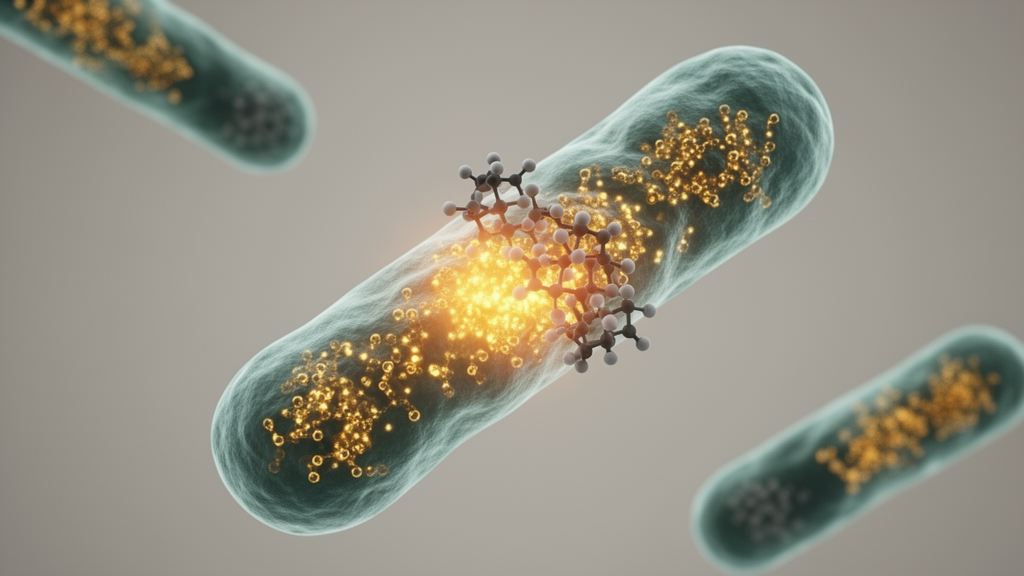
The new study, led by a research group at the University of Arkansas and published in the journal Nature, focused on nitrogenase, the enzyme that performs biological nitrogen fixation. Working with a methane-producing microbe known as a methanogen, the collaborative team used high-resolution cryo-electron microscopy to peer into the molecular architecture of the enzyme in unprecedented detail. What they found was unexpected: methanogen nitrogenase can bind with regulatory proteins to form an enormous inactive assembly, which the authors describe as a protein supercomplex. This structure, captured in striking detail by the imaging technique, represents an entirely new way that cells can shut down one of the most energy-demanding reactions in biology.
The supercomplex functions, in essence, as a molecular off switch. When energy or nutrients run low, the nitrogenase enzyme is locked into this inactive state, preventing the microbe from wasting precious resources on a process it cannot afford. Conversely, signals that reflect the cell’s energy and nutrient levels can break the supercomplex apart, freeing the enzyme and allowing nitrogen fixation to resume. This elegant push-pull mechanism gives methanogens a sophisticated level of control over a reaction that consumes large amounts of cellular energy, ensuring that the costly business of splitting atmospheric nitrogen is undertaken only when conditions genuinely permit it.
Dan Lessner, professor of biological sciences at the University of Arkansas and corresponding author of the study, described the significance of the finding in emphatic terms. According to Lessner, the discovery reveals an entirely new strategy for regulating one of the most important biochemical reactions on Earth. That characterization is hardly an exaggeration. Biological nitrogen fixation underpins agriculture, food production and ecosystems across the planet, and the enzyme responsible has fascinated scientists for decades precisely because it accomplishes, at ambient temperature and pressure, what human industry achieves only through enormous inputs of energy.
The agricultural stakes could hardly be higher. As Lessner explained, the biggest limitation on plant growth is often access to sufficient nitrogen, even when sunlight, water and carbon dioxide are abundant. Without adequate nitrogen, plants simply do not grow to their full potential, particularly when it comes to producing the plant material that feeds humans and livestock. Modern agriculture addresses this shortfall through industrial fertilizer production, in which atmospheric nitrogen is chemically converted into ammonia inside high-pressure reactors powered by fossil fuels. The resulting nitrogen-based fertilizer is then spread across fields in the hope that crops will absorb it before it disappears.
That hope is frequently disappointed. A significant portion of applied fertilizer runs off the land into streams and waterways, triggering a cascade of environmental damage. Excess nutrients fuel algal blooms through a process called eutrophication, degrading aquatic habitats and driving losses of biodiversity in affected ecosystems. The environmental cost of synthetic nitrogen is therefore twofold: the fossil-fuel energy consumed in producing ammonia, and the ecological harm caused when that ammonia escapes into the wider environment. Any technology that could reduce either burden would carry enormous economic, social and environmental weight.
This is where nitrogenase enters the picture. As Lessner noted, the enzyme can perform the conversion of nitrogen gas into ammonia biologically, under standard temperature and pressure, without the punishing conditions demanded by industrial reactors. There is intense interest in understanding exactly how the enzyme works and how it catalyzes this reaction, because that knowledge could pave the way toward using nitrogenase as a catalyst for ammonia production in a far more energy-efficient and environmentally friendly manner. The new structural insights into how the enzyme is switched on and off add a critical dimension to that effort, since any engineered application would need to control when and where the reaction takes place.
The genetic dimension of the research opens even more tantalizing possibilities. Because the studies are genetically based, Lessner explained, the genetic information gleaned from these microbes could potentially be transferred into crop plants such as corn. Plants equipped with the machinery to fix their own nitrogen from the atmosphere would, in principle, no longer depend on external fertilizer, alleviating both the financial burden on farmers and the environmental toll of fertilizer runoff. Such a development, Lessner observed, would carry huge economic, social and environmental impacts, transforming one of the most resource-intensive pillars of modern agriculture.
The research itself is a showcase of modern structural biology. Cryo-electron microscopy, the technique at the heart of the study, allows scientists to flash-freeze protein complexes and image them at near-atomic resolution, revealing structures that would be impossible to capture through older methods. It was this approach that exposed the nitrogenase regulatory supercomplex in the methanogen, demonstrating that the enzyme does not operate in isolation but is subject to a physical locking mechanism assembled from multiple proteins. The work was computational and structural in character, and the authors report no competing interests. Lessner’s co-authors included Rajnandani Kashyap, Thomas M. Deere, Ahmed Dhamad, Melissa Chanderban, Monika Tokmina-Lukaszewska, Brian Bothner and Edwin Antony, with Deere, Dhamad and Chanderban affiliated with the University of Arkansas during the course of the work.
Beyond its immediate applications, the discovery resonates with some of the deepest questions in biology. Nitrogen fixation is an ancient capability, and methanogens are among the most evolutionarily ancient microbes known, so understanding how their nitrogenase is regulated sheds light on the physiology of these organisms, the workings of the global nitrogen cycle, and the very evolution of nitrogen fixation itself. Every new detail about how nitrogenase is built, controlled and deployed brings scientists closer to a complete picture of how life learned to unlock the atmosphere. In an era when sustainable food production and climate-conscious industry are urgent global priorities, a molecular off switch hidden inside a methane-producing microbe may prove to be one of the most consequential biological discoveries of the decade, pointing the way toward crops that feed themselves and ammonia factories that borrow their chemistry from the microbial world.
Subject of Research: Regulation of microbial nitrogen fixation through a nitrogenase regulatory protein supercomplex in methanogens
Article Title: Study finds mechanism regulating nitrogen fixation in microbes
Article References: Study finds mechanism regulating nitrogen fixation in microbes. (n.d.). Original publication
Image Credits: AI Generated
DOI: Not provided
Keywords: nitrogen fixation, nitrogenase, methanogens, cryo-electron microscopy, protein supercomplex, ammonia, fertilizer, agriculture, nitrogen cycle, biotechnology, sustainable farming, University of Arkansas
Cite Scienmag News
Drew Townsend. (October 9, 2026). Scientists Uncover Molecular Off Switch That Controls Nitrogen Fixation in Microbes. Scienmag. https://scienmag.com/scientists-uncover-molecular-off-switch-that-controls-nitrogen-fixation-in-microbes/
Drew Townsend. "Scientists Uncover Molecular Off Switch That Controls Nitrogen Fixation in Microbes." Scienmag, 9 October 2026, https://scienmag.com/scientists-uncover-molecular-off-switch-that-controls-nitrogen-fixation-in-microbes/. Accessed 9 October 2026.
Drew Townsend. "Scientists Uncover Molecular Off Switch That Controls Nitrogen Fixation in Microbes." Scienmag. October 9, 2026. https://scienmag.com/scientists-uncover-molecular-off-switch-that-controls-nitrogen-fixation-in-microbes/


