


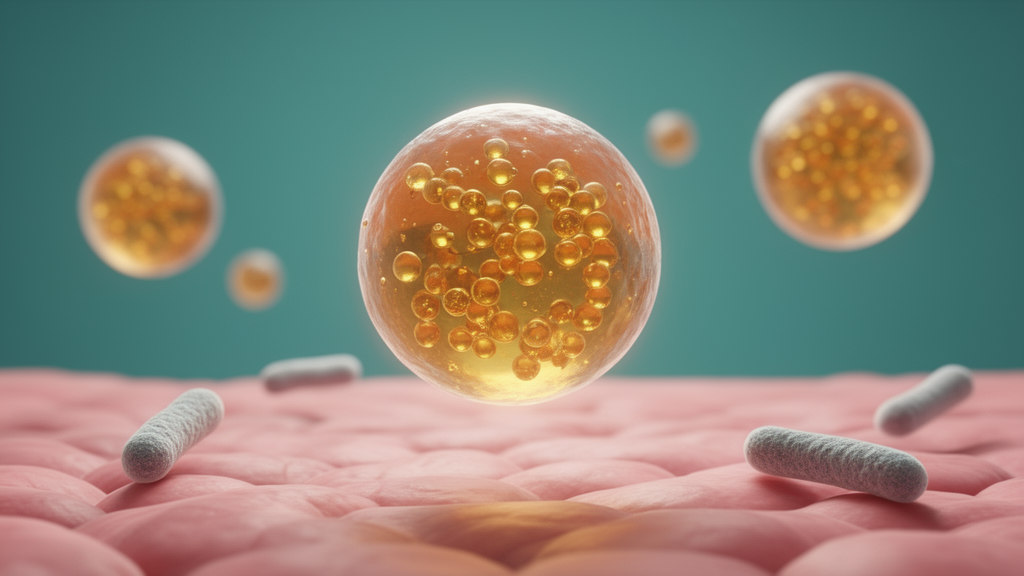
Periodontal disease, the chronic bacterial infection that destroys the soft and hard tissues supporting the teeth, remains one of the most widespread inflammatory conditions in the world, and a team of researchers at the University of Otago in New Zealand now believes that one of the country’s most famous natural exports could help fight it. In a study published in Applied Microbiology and Biotechnology, Chen Chen, Dawn Coates and their colleagues describe how they encapsulated mānuka oil and its key antimicrobial constituents, the β-triketones, inside biocompatible chitosan nanoparticles produced with a microfluidic manufacturing platform. The resulting formulations, sized at roughly 253 nanometres for the oil-loaded particles and 196.5 nanometres for the β-triketone-loaded particles, released their cargo slowly over a full day and killed several of the most important oral pathogens in laboratory tests, while leaving human mesenchymal stem cells unharmed.
The clinical problem the researchers set out to address is well known to dentists. The standard treatment for periodontitis is scaling and root planing, a mechanical procedure that removes plaque and calcified deposits from the tooth roots below the gumline. While SRP, as it is abbreviated, is effective at reducing bacterial load, it does not always eliminate the pathogens that hide within periodontal pockets, in dentinal tubules and on irregular root surfaces. For that reason, clinicians often turn to adjunctive antibacterial agents, ranging from antiseptic rinses to locally applied antibiotics. Yet the rise of antimicrobial resistance has made the routine use of antibiotics increasingly unattractive, prompting a search for natural, antibiotic-free alternatives that can still deliver a decisive blow to the polymicrobial communities driving gum destruction.
Mānuka oil, distilled from the leaves and branches of Leptospermum scoparium, a shrub native to New Zealand and Australia, has long attracted scientific interest for its broad-spectrum antibacterial activity. Unlike the better-known mānuka honey, the oil’s potency is attributed mainly to its β-triketone compounds, notably leptospermone and related molecules that disrupt bacterial metabolism. Laboratory studies have repeatedly shown that these compounds can inhibit a wide range of Gram-positive and Gram-negative bacteria. The obstacle to clinical use, however, has been chemical rather than biological: mānuka oil is poorly soluble in water and highly volatile, meaning that a bolus applied to the gum tissue would evaporate, diffuse away or degrade before it could sustain the concentrations needed to suppress regrowth of the biofilm.
The Otago team’s solution was to wrap the oil inside chitosan, a natural polysaccharide derived from crustacean shells that is already widely used in biomedical applications. Chitosan brings three properties that make it an ideal carrier for periodontal therapy. It is biocompatible, so it does not provoke toxic reactions in oral tissues; it is itself mildly antimicrobial, thanks to positively charged amino groups that destabilise bacterial membranes; and it is mucoadhesive, meaning it clings to the moist mucosal surfaces of the mouth and can hold a therapeutic payload in place against the flushing action of saliva. By encapsulating mānuka oil and purified β-triketones within chitosan nanoparticles, the researchers aimed to solve the volatility and solubility problems at once, converting a fleeting essential oil into a depot that releases its antimicrobial cargo gradually.
Manufacturing consistency is one of the perennial challenges of nanoparticle formulation, and here the team turned to microfluidics, a technology that manipulates fluids through channels measured in micrometres. Conventional batch methods for making chitosan nanoparticles, such as bulk ionic gelation, often produce particles with wide size distributions because mixing is slow and uneven. In a microfluidic device, the chitosan solution and the crosslinker meet in precisely controlled streams, allowing rapid, reproducible mixing and tight control over particle formation. The resulting mānuka oil-loaded particles averaged 253.0 nanometres in diameter with a polydispersity index of 0.421, while the β-triketone-loaded particles were smaller at 196.5 nanometres with a polydispersity index of 0.446. Those dimensions matter: particles in the low hundreds of nanometres can penetrate the irregular architecture of periodontal pockets and adhere to tissue surfaces, whereas larger aggregates would be swept away.
The encapsulation strategy paid off in the release experiments. Free essential oils applied to a surface tend to disappear within hours, but the chitosan nanoparticles sustained the release of mānuka oil and β-triketones over 24 hours in vitro. This prolonged release profile is exactly what an adjunct to scaling and root planing would require, because the treated root surfaces need protection long enough for the host immune system and the shifted oral ecology to consolidate the gains made by mechanical debridement. A carrier that maintains inhibitory concentrations of antimicrobial compounds throughout that window could, in principle, prevent the rapid recolonisation of periodontal pockets by pathogenic bacteria that often undermines mechanical therapy alone.
Antimicrobial testing demonstrated that the nanoparticles retained the potency of their cargo. The formulations were effective against four bacterial species of particular relevance to oral disease: Staphylococcus aureus, a hardy Gram-positive opportunist; Streptococcus mutans, the principal driver of dental caries; Aggregatibacter actinomycetemcomitans, a Gram-negative species strongly associated with aggressive forms of periodontitis; and Fusobacterium nucleatum, a bridging organism that links early and late colonisers in dental plaque and connects oral infection to systemic conditions. Covering both Gram-positive and Gram-negative targets is significant, because the outer membrane of Gram-negative bacteria usually makes them far harder to kill with hydrophobic plant compounds, and the pathogens of greatest concern in periodontitis are overwhelmingly Gram-negative anaerobes.
Equally important for any material destined for oral use is the question of safety, and the researchers addressed this with biocompatibility assays using human mesenchymal stem cells. These cells, which can differentiate into the bone-forming osteoblasts and cementoblasts needed to repair damaged periodontal tissues, are a clinically meaningful model for the cells that would encounter the nanoparticles at the wound site. The formulations showed good in vitro biocompatibility with these cells, suggesting that the antimicrobial concentrations achievable with the nanoparticles do not come at the cost of harming the very tissues the therapy is meant to help. That combination of bacterial killing and host-cell tolerance is the balance that many antimicrobial materials fail to strike.
The study, which was supported by the New Zealand Ministry of Business, Innovation and Employment and performed with technical support from the University of Otago’s Electron Microscopy Unit, positions the nanoparticles as a phytotherapeutic, antibiotic-free adjunct to periodontal treatment rather than a replacement for mechanical therapy. The authors note that the antimicrobial formulations could also find broader applications against bacterial infections beyond the mouth, given the general potency of β-triketones and the versatility of chitosan as a delivery vehicle. Several members of the team are inventors on a patent covering novel antimicrobial compositions related to the nanoparticles, indicating that commercial development is part of the roadmap, although the work reported here remains at the in vitro stage and has not yet been tested in patients or animal models.
If subsequent preclinical and clinical studies bear out the laboratory findings, the implications could extend well beyond periodontology. Chronic wound infections, implant-associated biofilms and oral mucosal infections all share the same fundamental problems that this platform is designed to solve: hydrophobic drugs that will not dissolve, volatile actives that will not stay put, and biofilms that shrug off brief exposures. A mucoadhesive, biocompatible nanoparticle that turns a volatile plant oil into a 24-hour antimicrobial depot offers a template for tackling all of them. For the millions of people whose gums are slowly destroyed by bacteria that mechanical cleaning alone cannot fully eradicate, the idea that relief might one day come from the humble mānuka tree, delivered by particles too small to see, is a striking illustration of how nanotechnology and traditional natural products are converging on modern medicine’s stubbornest microbial enemies.
Subject of Research: Development of mānuka oil and β-triketone-loaded chitosan nanoparticles for antimicrobial periodontal therapy
Article Title: Development and optimization of antimicrobial β-triketone-loaded chitosan nanoparticles for periodontal therapy
Article References: Chen, C., Abdelmoneim, D., Hughes, N., Duncan, W., Alhamdani, G., Hazelton, N., & Coates, D. (2026). Development and optimization of antimicrobial β-triketone-loaded chitosan nanoparticles for periodontal therapy. Applied Microbiology and Biotechnology. https://doi.org/10.1007/s00253-026-14022-6
Image Credits: AI Generated
DOI: 10.1007/s00253-026-14022-6
Keywords: mānuka oil, β-triketones, chitosan nanoparticles, periodontal disease, microfluidics, antimicrobial, drug delivery, Leptospermum scoparium, oral microbiology, nanomedicine, Streptococcus mutans, biocompatibility
Cite Scienmag News
Drew Townsend. (October 9, 2026). Mānuka Oil Packed Into Tiny Chitosan Carriers Could Transform Gum Disease Treatment. Scienmag. https://scienmag.com/manuka-oil-packed-into-tiny-chitosan-carriers-could-transform-gum-disease-treatment/
Drew Townsend. "Mānuka Oil Packed Into Tiny Chitosan Carriers Could Transform Gum Disease Treatment." Scienmag, 9 October 2026, https://scienmag.com/manuka-oil-packed-into-tiny-chitosan-carriers-could-transform-gum-disease-treatment/. Accessed 9 October 2026.
Drew Townsend. "Mānuka Oil Packed Into Tiny Chitosan Carriers Could Transform Gum Disease Treatment." Scienmag. October 9, 2026. https://scienmag.com/manuka-oil-packed-into-tiny-chitosan-carriers-could-transform-gum-disease-treatment/


