


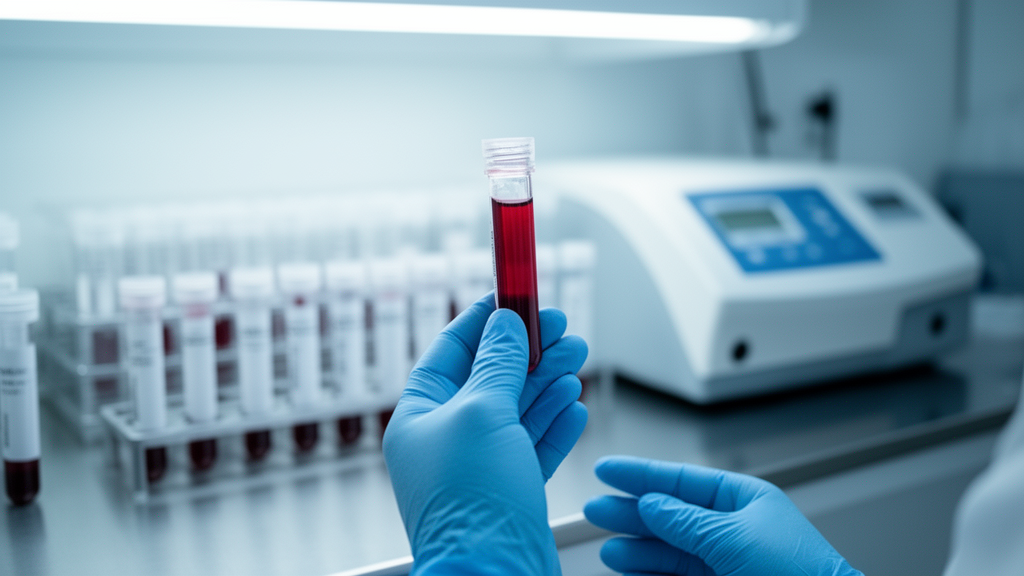
One of the largest analyses of routine blood tests ever conducted in infectious disease medicine suggests that the humble complete blood count, a test performed billions of times each year in clinics worldwide, carries far more anatomical information than clinicians have traditionally assumed. In a retrospective study published in BMC Infectious Diseases, a team of Chinese researchers examined blood-based signatures in 455,530 patients with infections and 55,010 healthy controls, classifying the infections into 29 distinct site-associated types spanning five anatomical systems. Their goal was ambitious: to determine whether the pattern of changes in twelve standard hematological parameters, when combined with a patient’s age and sex, could not only distinguish infected individuals from healthy ones but also hint at where in the body the infection resides. The findings, the authors argue, represent the first comprehensive attempt to systematically characterize site-associated blood signatures across multiple anatomical systems, and they point toward a future in which precision infection medicine begins with data already sitting in the electronic medical record.
The scale of the analysis is what sets it apart. Studies of inflammatory biomarkers in infection have typically focused on a single organ system or a handful of infection types, comparing perhaps a few thousand patients against controls. By aggregating data across respiratory, digestive, urogenital, dermatological, and head-neck-orofacial infections, the researchers were able to look for patterns that recur across anatomical boundaries and, just as importantly, patterns that diverge. Respiratory infections emerged as the most prevalent category in the cohort, followed by urogenital infections, a distribution that mirrors the global burden of infectious disease. But prevalence was only the starting point. The heart of the study lay in whether the twelve hematological parameters, which include white cell differentials, red cell indices, and platelet measures, behaved differently depending on the site of infection.
They did, and the differences were biologically coherent. Patients with digestive infections showed elevated neutrophil counts, consistent with the robust innate immune recruitment that characterizes bacterial infections of the gastrointestinal tract and its associated organs. Respiratory infections exhibited increased hematocrit levels, a finding that may reflect hemoconcentration, hypoxic stress, or inflammatory effects on plasma volume in patients with pneumonia and other lower respiratory tract disease. Perhaps most distinctive were the signatures associated with fallopian tube infections, which demonstrated a decreased platelet-to-lymphocyte ratio alongside elevated basophil counts, a combination not seen in the other infection categories. These site-associated patterns, the authors emphasize, reflect non-specific systemic inflammatory responses rather than pathogen-specific mechanisms, but their consistency across hundreds of thousands of patients suggests that the peripheral blood does encode information about the anatomical theater of an infection.
To ensure that these patterns were not artifacts of confounding, the researchers applied rigorous statistical machinery. Propensity score matching was used to balance infection patients and healthy controls on baseline characteristics, with standardized mean differences below 0.1 after matching, indicating successful covariate balance across the major infection groups and dozens of subgroups. Missing laboratory data, an inevitable feature of any large retrospective cohort, was handled through multiple imputation, and the completeness of missingness was documented variable by variable for each source dataset. Differential expression analyses were corrected for multiple testing using false discovery rate control. This methodological discipline matters because observational comparisons of inflamed versus healthy populations are notoriously vulnerable to demographic skew, and the authors’ decision to match patients one-to-one on covariates before comparing blood parameters strengthens the causal interpretability of the observed signatures, even if the retrospective design still precludes definitive causal claims.
Beyond conventional differential analysis, the team built predictive models to test whether the hematological signatures could be harnessed for classification. Using the twelve blood parameters plus age and sex as inputs, they constructed multivariable logistic regression models and random forest models, the latter an ensemble machine learning method that aggregates hundreds of decision trees to capture non-linear interactions among variables. The models were evaluated with five-fold cross-validation and held-out test sets, with performance quantified using the area under the receiver-operating-characteristic curve, the area under the precision-recall curve, F1 score, sensitivity, specificity, and precision, each reported with 95 percent bootstrap confidence intervals. The random forest consistently outperformed both single biomarkers and logistic regression, a result that underscores how combinations of ordinary blood values can carry diagnostic signal that no individual parameter provides alone.
The system-level performance figures were striking. Random forest achieved an area under the curve of 0.965 for distinguishing respiratory infections from controls, 0.953 for digestive infections, 0.928 for dermatological infections, 0.901 for urogenital infections, and 0.894 for head-neck-orofacial infections. Values in this range indicate excellent discrimination between infected and healthy individuals at the system level, comfortably exceeding the performance of any single traditional biomarker such as the neutrophil-to-lymphocyte ratio or mean platelet volume. Principal component analysis, an unsupervised technique that projects high-dimensional data onto its axes of greatest variance, revealed clear separation between infection patients and healthy controls, providing visual confirmation that the multivariate hematological space occupied by infected individuals differs systematically from that of the uninfected.
Localizing infection to a specific site proved considerably harder. In an exploratory two-site classification task, distinguishing respiratory from digestive infections using blood parameters alone, the random forest model achieved an area under the curve of 0.795, which the authors characterize as moderate discriminative ability. This drop in performance is unsurprising given the biology: systemic inflammation produces overlapping hematological consequences regardless of where the inciting infection sits, and the twelve routine parameters capture only a coarse snapshot of the immune response. The authors are careful to frame the two-site result as exploratory, and they note that the supplementary analyses comparing each of the 29 organ-specific infection groups against matched controls are intended to distinguish infection from health rather than to directly localize infection sites. The distinction between detecting infection and pinpointing its location is central to interpreting the study’s contribution honestly.
That honesty extends to the study’s stated conclusion, which is notably measured. The authors write that the combined models, particularly random forest, improved discrimination but remain exploratory, and that the findings support the potential of routine blood tests as probabilistic adjuncts rather than standalone diagnostics in precision infection medicine. This framing matters clinically. A complete blood count costs pennies, returns results in minutes, and is already ordered in virtually every febrile patient, so even modest probabilistic information about infection presence and likely site could meaningfully accelerate triage, guide the choice of imaging or microbiological testing, and support antimicrobial stewardship decisions in settings where advanced diagnostics are unavailable. But no clinician should read a random forest output as a diagnosis, and the authors’ refusal to overstate the models’ localization ability is a welcome contrast to the hype that often accompanies machine learning studies in medicine.
The study also carries implications for how biomarker research is conducted. By demonstrating that site-associated patterns exist and can be quantified at unprecedented scale, the work establishes a reference framework against which future studies of more specific markers, such as C-reactive protein, procalcitonin, or transcriptomic signatures, can be benchmarked. The open-access publication, with extensive supplementary tables documenting propensity score matching, post-matching balance, missingness proportions, and model performance across all 29 infection groups, provides a level of methodological transparency that facilitates independent scrutiny and reuse. The research protocol was approved by the Institutional Review Board of the First Affiliated Hospital of Guangzhou Medical University, and the requirement for informed consent was waived given the retrospective design and the use of fully de-identified archival data, an approach consistent with the Declaration of Helsinki.
Limitations remain, and readers should hold them in view. The cohort is retrospective and drawn from Chinese hospital populations, raising questions about generalizability to other demographics and healthcare settings. Hematological parameters are influenced by age, sex, comorbidities, medications, and circadian variation, and while propensity matching addressed measured confounders, unmeasured ones may persist. The models distinguish infected from healthy individuals, a task far easier than the clinically harder problem of distinguishing bacterial from viral infection or grading severity among infected patients. Still, the central message stands: the routine blood count, interpreted through the lens of large-scale pattern analysis and machine learning, contains a reproducible, site-associated signature of infection. As the authors conclude, these signatures offer auxiliary information for infection site classification and support the potential of routine blood tests as probabilistic adjuncts in the emerging discipline of precision infection medicine, a vision in which one of medicine’s oldest and cheapest tests acquires a new, computationally informed role.
Subject of Research: Site-associated blood-based hematological signatures for infection detection and classification across 29 infection types
Article Title: Systematic identification of site-associated blood-based signature patterns across 29 infection types: a large-scale analysis of 455,530 patients toward precision infection medicine
Article References: Qian, F., Chen, B., Cheng, J., Mo, J., Liang, Y., Sun, B., Zeng, G., & Chang, Z. (2026). Systematic identification of site-associated blood-based signature patterns across 29 infection types: a large-scale analysis of 455,530 patients toward precision infection medicine. BMC Infectious Diseases. https://doi.org/10.1186/s12879-026-14457-2
Image Credits: AI Generated
DOI: 10.1186/s12879-026-14457-2
Keywords: infection biomarkers, complete blood count, machine learning, random forest, propensity score matching, hematology, diagnostic markers, respiratory infections, digestive infections, precision medicine, BMC Infectious Diseases, retrospective study
Cite Scienmag News
Kristina Jarvis. (October 9, 2026). Routine Blood Tests Reveal Distinct Fingerprints Across 29 Infection Types in Study of 455,530 Patients. Scienmag. https://scienmag.com/routine-blood-tests-reveal-distinct-fingerprints-across-29-infection-types-in-study-of-455530-patients/
Kristina Jarvis. "Routine Blood Tests Reveal Distinct Fingerprints Across 29 Infection Types in Study of 455,530 Patients." Scienmag, 9 October 2026, https://scienmag.com/routine-blood-tests-reveal-distinct-fingerprints-across-29-infection-types-in-study-of-455530-patients/. Accessed 9 October 2026.
Kristina Jarvis. "Routine Blood Tests Reveal Distinct Fingerprints Across 29 Infection Types in Study of 455,530 Patients." Scienmag. October 9, 2026. https://scienmag.com/routine-blood-tests-reveal-distinct-fingerprints-across-29-infection-types-in-study-of-455530-patients/


