


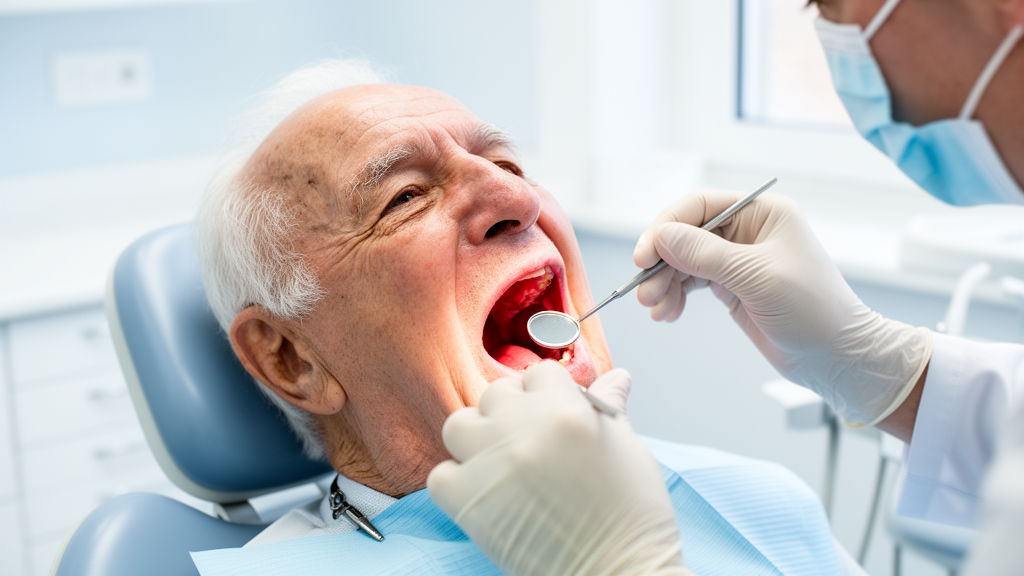
A simple five-item checklist about chewing, swallowing, and denture use may reveal hidden kidney damage in older adults with type 2 diabetes, according to a new cross-sectional study from researchers at The First Affiliated Hospital of Harbin Medical University in China. The study, published in BMC Endocrine Disorders, found that elderly patients with diabetes who screened positive for oral frailty were dramatically more likely to show two early warning signs of kidney disease: a reduced estimated glomerular filtration rate and elevated albumin in their first-morning urine. With nearly half of the participants affected, the findings suggest that the mouth may offer clinicians an unexpected window into the health of the kidneys, and that a quick dental-style assessment could sharpen the detection of renal decline long before more invasive or costly tests would flag it.
Oral frailty is a concept that has gained momentum in geriatric medicine over the past decade. It describes an age-related, potentially reversible decline in oral function, encompassing diminished chewing ability, difficulty swallowing, reduced tongue and lip strength, a dry mouth, and a tendency to avoid harder foods. Unlike tooth loss alone, oral frailty is a functional syndrome, capturing how well the entire oral apparatus performs rather than simply counting missing teeth. Researchers have already linked it to malnutrition, sarcopenia, cognitive decline, and cardiovascular risk. What has remained far less clear is whether oral frailty tracks with kidney abnormalities, particularly in older adults with type 2 diabetes, a population in which both oral deterioration and diabetic kidney disease are common and often progress silently for years.
To probe that question, the research team led by Xiaoling Deng and Wenbo Xia, with Lili Shi as corresponding author, recruited 201 hospitalized patients aged 60 and older who had been diagnosed with type 2 diabetes. The study was approved by the hospital’s ethics committee and conducted in accordance with the Helsinki declaration, with written informed consent from all participants. Each patient underwent a structured oral assessment using two validated instruments: the Oral Frailty Five-Item Checklist, known as OF-5, and the eight-item Oral Frailty Index, or OFI-8. The OF-5 is a rapid screening tool that asks about practical difficulties such as chewing tough foods, swallowing, and social dining, while the OFI-8 provides a more granular functional profile. Alongside these oral measures, the researchers collected standard clinical data, including age, sex, diabetes duration, glycated hemoglobin, and hypertension status, as well as laboratory values covering renal function, blood counts, and inflammatory indices.
The results were striking. According to the OF-5 checklist, 46.3 percent of the participants screened positive for oral frailty, meaning nearly one in two older diabetic inpatients showed measurable decline in oral function. The OFI-8 classified 35.3 percent as high risk. When the researchers cross-referenced these oral findings with kidney measures, a consistent pattern emerged. Patients positive on the OF-5 had roughly 4.7 times higher odds of having an estimated glomerular filtration rate below 90 milliliters per minute per 1.73 square meters, the conventional threshold indicating reduced kidney filtration capacity. Even more pronounced was the association with albuminuria: OF-5 positivity was linked to about 7.1 times higher odds of a first-morning urinary albumin concentration at or above 30 milligrams per liter, a level that signals glomerular damage and is a cornerstone marker for early diabetic kidney disease.
These associations held up after statistical adjustment. The team used multivariable logistic regression models that controlled for age, sex, diabetes duration, HbA1c, and hypertension, the major clinical covariates that typically confound relationships between diabetes complications. The fact that oral frailty remained independently associated with both renal outcomes after these adjustments suggests the link is not merely a byproduct of older age, longer disease duration, poorer glycemic control, or coexisting high blood pressure, each of which independently damages kidneys. The magnitude of the adjusted odds ratios, particularly for urinary albumin, is notable for a screening tool that costs nothing to administer and takes only moments to complete.
Perhaps the most technically interesting part of the study is how the authors quantified whether oral frailty adds genuine predictive value beyond routine clinical information. They built a clinical base model using the standard covariates and then compared it with extended models that additionally incorporated the OF-5 or OFI-8 scores. Model performance was measured with the area under the receiver operating characteristic curve, or AUC, and was internally validated using 1,000 bootstrap resamples with optimism correction, a rigorous approach that guards against the inflated performance estimates that plague many small clinical prediction studies. For the eGFR outcome, adding the OF-5 raised the optimism-corrected AUC from 0.713 to 0.771. For elevated urinary albumin, the base model’s AUC of 0.675 improved to 0.783 with the OF-5 and to 0.779 with the OFI-8. Optimism-corrected calibration slopes for the extended models ranged from 0.852 to 0.887, indicating reasonably faithful agreement between predicted and observed risks.
The biological plausibility of a mouth-kidney connection rests on several converging mechanisms. Chronic low-grade inflammation is a central suspect: periodontal disease and oral dysfunction can elevate systemic inflammatory burden, and the inflammatory indices measured in the study, including the systemic immune-inflammation index and the systemic inflammation response index, reflect this axis. Sustained inflammation promotes endothelial injury in glomerular capillaries, accelerating albumin leakage. Another pathway involves nutrition. Oral frailty pushes patients toward soft, often processed foods and away from protein-rich and fibrous options, potentially driving the protein-energy malnutrition and sarcopenia that are themselves established risk factors for faster kidney decline. Shared vascular pathology offers a third explanation: the microvascular damage that impairs glomerular filtration in diabetes also compromises blood flow to the periodontal tissues and salivary glands, so oral decline and renal decline may simply be parallel manifestations of the same underlying vascular injury.
The authors are careful to spell out the limits of what their data can show. This was a single-center, cross-sectional study of hospitalized patients, a design that captures a snapshot in time and cannot establish whether oral frailty precedes kidney dysfunction or results from it. Reverse causation is plausible, since patients with advanced chronic kidney disease often suffer uremic taste changes, xerostomia, and reduced appetite that could worsen oral function. The inpatient setting also means the sample may overrepresent patients with more severe disease, limiting generalizability to community-dwelling older adults. The authors explicitly state that the findings do not establish causality, prospective predictive utility, or external validity, and the modest improvement in discrimination, while statistically meaningful, reflects a limited covariate set rather than a fully specified clinical model.
Even with those caveats, the clinical implications are compelling. Diabetic kidney disease affects an estimated 40 percent of people with diabetes and is the leading cause of end-stage renal disease worldwide, yet it is frequently diagnosed late because early stages produce no symptoms. Current screening relies on annual urine albumin testing and serum creatinine measurements, which many patients, particularly in resource-limited settings, do not receive on schedule. A validated oral frailty checklist could serve as an essentially free triage tool: a positive screen in an older diabetic patient might prompt earlier laboratory testing, closer nephrology follow-up, or intensified metabolic management. It could also motivate dental and medical teams to collaborate more systematically, since treating oral frailty through chewing exercises, denture optimization, and nutritional counseling is low-risk and potentially reversible.
Future research will need to determine whether the association holds prospectively, whether oral frailty scores measured in community settings predict incident kidney disease over years, and whether interventions that restore oral function actually slow renal decline. If those questions are answered affirmatively, the humble act of asking an older diabetic patient whether they can chew hard food or swallow comfortably could become a routine part of kidney risk assessment, joining blood pressure cuffs and glucose meters as a first-line instrument in the fight against one of diabetes’ most feared complications. For now, the Harbin study adds a provocative new entry to the growing list of systemic diseases that leave their fingerprints in the mouth, and it challenges clinicians to stop viewing oral health as separate from the rest of metabolic medicine.
Subject of Research: Association between oral frailty and early renal dysfunction in elderly patients with type 2 diabetes
Article Title: Correlation between oral frailty and renal function and urinary microalbumin in elderly patients with type 2 diabetes mellitus
Article References: Correlation between oral frailty and renal function and urinary microalbumin in elderly patients with type 2 diabetes mellitus. (n.d.). https://doi.org/10.1186/s12902-026-02543-0
Image Credits: AI Generated
DOI: 10.1186/s12902-026-02543-0
Keywords: oral frailty, type 2 diabetes, chronic kidney disease, estimated glomerular filtration rate, urinary albumin, diabetic nephropathy, geriatric medicine, albuminuria, screening, inflammation, BMC Endocrine Disorders, cross-sectional study
Cite Scienmag News
Beatrice Stafford. (October 8, 2026). Failing Gums, Failing Kidneys? Oral Frailty Flags Early Renal Damage in Older Diabetics. Scienmag. https://scienmag.com/failing-gums-failing-kidneys-oral-frailty-flags-early-renal-damage-in-older-diabetics/
Beatrice Stafford. "Failing Gums, Failing Kidneys? Oral Frailty Flags Early Renal Damage in Older Diabetics." Scienmag, 8 October 2026, https://scienmag.com/failing-gums-failing-kidneys-oral-frailty-flags-early-renal-damage-in-older-diabetics/. Accessed 8 October 2026.
Beatrice Stafford. "Failing Gums, Failing Kidneys? Oral Frailty Flags Early Renal Damage in Older Diabetics." Scienmag. October 8, 2026. https://scienmag.com/failing-gums-failing-kidneys-oral-frailty-flags-early-renal-damage-in-older-diabetics/


