


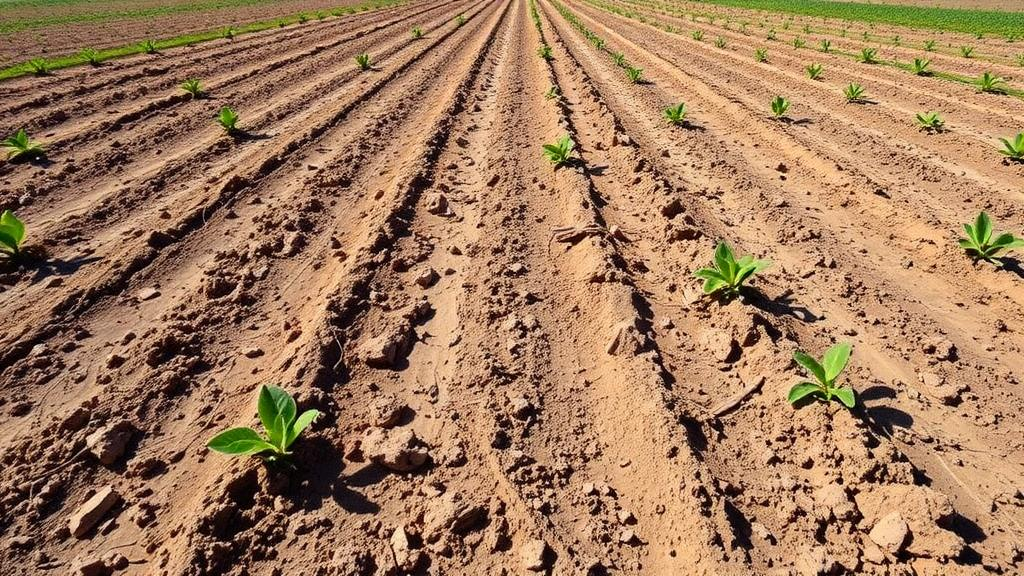
In the irrigated oases of southeastern Uzbekistan, the future of agriculture is being decided by a delicate interplay of sun, salt, and water. A new study published in the journal iScience presents an integrated assessment framework that, for the first time in the Jizzakh Region, combines agroclimatic indicators, soil salinity data, groundwater measurements, and water-salt balance calculations into a single, transparent scoring system. The research, led by B. Amanov with colleagues including Paolo Tarolli of the University of Padova, offers a practical diagnostic tool for one of Central Asia’s most water-stressed agricultural landscapes, and its methodology could be adapted to irrigated drylands far beyond Uzbekistan’s borders.
The urgency of the problem is considerable. According to the UN Convention to Combat Desertification, roughly 28.6 percent of Uzbekistan’s territory is affected by land degradation, driven by erosion, salinization, and inefficient water use. In the Jizzakh Region, where irrigated cropland covers about 515,000 hectares and supports cotton, winter wheat, and horticultural production, agricultural viability depends on irrigation in a climate that is becoming steadily more arid. Previous studies have typically examined pieces of this puzzle in isolation, mapping salt-affected soils or modeling water balances, but few have integrated climatic, soil, and hydrogeological information into one landscape-scale assessment that decision-makers can actually use.
The new framework draws on data routinely collected by existing monitoring programs, which is central to its practicality. Meteorological records came from two long-running stations, Jizzakh and Dustlik, representing the piedmont-influenced central zone and the lowland irrigated plains respectively, with reference periods stretching back 88 and 52 years. District-level data on groundwater depth and mineralization, soil salinity, irrigation volumes, and drainage performance were supplied by Uzbek hydrometeorological and water-resource agencies. The researchers calculated a suite of established agroclimatic indices, including net radiation, vapor pressure deficit, the Budyko radiation aridity index, the natural moisture coefficient, the moisture index, Selyaninov’s hydrothermal coefficient, biological-climatic productivity, and the agroclimatic potential index, alongside soil and groundwater indicators derived from monitoring wells.
The climatic picture that emerges is stark. During the growing season, long-term average vapor pressure deficit reached 1.60 kilopascals at the Jizzakh station and 1.48 kilopascals at Dustlik, values that reflect severe atmospheric water stress for crops. The natural moisture coefficient, which expresses the balance between precipitation and potential evaporation, averaged just 0.12 during the vegetation period at Jizzakh and 0.10 at Dustlik, far below the threshold of 1.0 that would indicate adequate moisture. Annual values between 2021 and 2024 remained consistently below their long-term averages, pointing to a clear trend toward aridification. The hydrothermal coefficient, which fluctuated between roughly 0.4 and 1.1 over the study period, confirmed the region’s semi-arid character, with the wet year of 2022 providing only temporary relief.
Radiation balance measurements added a spatial dimension to this analysis. Net radiation on irrigated lands in districts represented by the Dustlik station ranged from 306 to 311 kilojoules per square centimeter per month, while districts associated with the Jizzakh station showed values between 271 and 359, following the region’s plain-to-mountain gradient. Districts such as Arnasay, Dustlik, and Paxtakor recorded the highest radiation fluxes and therefore the greatest evaporative demand and irrigation requirements, whereas the higher-elevation districts of Zomin, Zarbdor, and Sh. Rashidov showed lower energy inputs. Notably, 2024 saw a marked increase in radiation balance in several districts, reaching up to 359 kilojoules per square centimeter per month, a signal of elevated evaporative potential that the authors link to regional warming trends.
On the soil and groundwater side, the findings were more mixed. Groundwater mineralization during the vegetation period predominantly fell within the moderately mineralized 1 to 3 grams per liter range, accounting for nearly 90 percent of the monitored area in Dustlik and Sh. Rashidov districts. Encouragingly, the share of low-mineralized groundwater expanded from 2.2 percent in 2023 to 9.9 percent in 2024, while strongly mineralized waters above 5 grams per liter remained limited to less than 1 percent of the region. However, areas with moderately mineralized groundwater of 3 to 5 grams per liter increased in several districts, including Arnasay, Dustlik, Zafarabad, and Paxtakor, signaling localized deterioration of hydro-reclamation conditions that demands stricter control of groundwater depths.
Soil salinity showed a gradual but genuine improvement over the past decade. In 2011, 79 percent of irrigated lands were affected by salinity; by 2023 that figure had fallen to 73 percent, and to 71.4 percent in 2024. Strongly and very strongly saline areas remain small and concentrated in a handful of districts, with an overall decreasing trend from 2021 to 2024. The authors attribute much of this progress to the transition from traditional furrow irrigation to water-saving technologies, now implemented on more than half of the region’s irrigated land. Water-salt balance calculations revealed, however, that most districts still run a negative total water balance, with deficits reaching 2,807 cubic meters per hectare in Arnasay in 2021 and 2,692 cubic meters per hectare in Zomin in 2022, while positive salt balances in districts such as Zafarabad, Paxtakor, and Sh. Rashidov indicate ongoing salinization risk during the growing season.
The heart of the study is its integrated scoring system. Each indicator was normalized and assigned a score of 0, 1, or 2, corresponding to unfavorable, intermediate, or favorable conditions, with stress-indicating variables such as salinity and vapor pressure deficit scored inversely. The partial scores were summed into a composite index with a maximum of 28 points, classifying each district as good, satisfactory, or unsatisfactory. Across 2021 to 2024, district-level scores ranged from 11 to 16 points. Most districts were classified as unsatisfactory in 2021, but the majority attained satisfactory status during 2022 through 2024, though scores generally remained in the lower portion of the satisfactory range, indicating that favorable conditions were never consistently achieved across all indicators.
The framework’s practical value lies in its simplicity. Because it functions as a three-level traffic-light system, it translates complex agroclimatic, soil, and groundwater information into a format that farmers, water-management organizations, and regional authorities can interpret at a glance. Districts with the lowest integrated scores, particularly Zafarabad and, in some years, Sh. Rashidov, emerge as priorities for enhanced groundwater monitoring, improved drainage maintenance, and targeted reclamation. Districts facing elevated aridity and high atmospheric demand call for irrigation scheduling improvements, water-saving technologies, and drought-tolerant cropping systems, while areas with rising groundwater mineralization would benefit from controlled leaching operations and stricter management of water table depths.
The authors are candid about the limitations. The framework relies on seasonal and annual indicators that may miss short-term extremes such as heat waves or episodic droughts, and two meteorological stations cannot capture every microclimatic variation, particularly in mountainous terrain. Groundwater monitoring networks have heterogeneous spatial coverage, and the equal weighting of indicators may not reflect the true influence of each factor in every region. Future work should explore alternative weighting schemes, integrate higher-resolution remote sensing data, and validate the method in other irrigated drylands. Still, because the assessment depends almost entirely on data already collected through existing programs, it can be adopted without substantial new investment, offering a scalable model for climate-resilient agriculture across Central Asia and other arid regions where every drop of water, and every grain of salt, counts.
Subject of Research: Integrated agroclimatic, soil salinity, and groundwater assessment of irrigated agricultural landscapes in the Jizzakh Region, Uzbekistan
Article Title: An integrated framework for agroclimatic, salinity, and groundwater assessment in the Jizzakh Region, Uzbekistan
Article References: Amanov, B., Ghirardelli, A., Sherov, A., Gafarova, A., Gulomov, D., & Tarolli, P. (2026). An integrated framework for agroclimatic, salinity, and groundwater assessment in the Jizzakh Region, Uzbekistan. iScience, 29(11), Article 117582. https://doi.org/10.1016/j.isci.2026.117582
Image Credits: AI Generated
DOI: 10.1016/j.isci.2026.117582
Keywords: agroclimatic assessment, soil salinization, groundwater, irrigated agriculture, Uzbekistan, Jizzakh Region, water-salt balance, aridity index, land degradation, climate change adaptation, Central Asia, land reclamation
Cite Scienmag News
Alan Morgan. (October 7, 2026). New Integrated Scoring Tool Tracks Drought, Salt, and Water Stress in Uzbekistan’s Farmland. Scienmag. https://scienmag.com/new-integrated-scoring-tool-tracks-drought-salt-and-water-stress-in-uzbekistans-farmland/
Alan Morgan. "New Integrated Scoring Tool Tracks Drought, Salt, and Water Stress in Uzbekistan’s Farmland." Scienmag, 7 October 2026, https://scienmag.com/new-integrated-scoring-tool-tracks-drought-salt-and-water-stress-in-uzbekistans-farmland/. Accessed 7 October 2026.
Alan Morgan. "New Integrated Scoring Tool Tracks Drought, Salt, and Water Stress in Uzbekistan’s Farmland." Scienmag. October 7, 2026. https://scienmag.com/new-integrated-scoring-tool-tracks-drought-salt-and-water-stress-in-uzbekistans-farmland/


