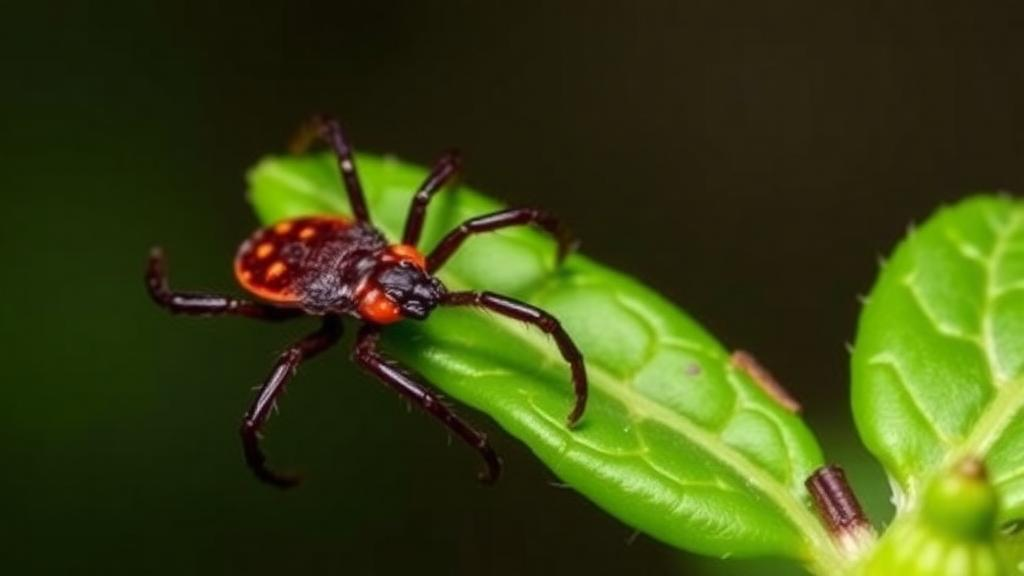
Deep in the cloud forests of northwestern Ecuador, an international team of researchers has formally described a previously unknown species of hard tick, recovered from small mammals living within the Andean Chocó Biosphere Reserve. The new species, named Ixodes mashpiensis, was identified from ticks collected between March and August 2023 in the Mashpi Reserve, located in Pichincha Province. The discovery, published in the open-access journal Parasites & Vectors, marks the first time any species of the genus Ixodes has been described from the Ecuadorian portion of the Andean Chocó, one of the world’s most biologically rich and most threatened biodiversity hotspots.
The genus Ixodes is the most species-rich group of hard ticks on the planet, and the Neotropical region alone harbors nearly 62 recognized species. Ecuador has so far recorded nine of them, yet the authors of the new study emphasize that the true diversity of these parasites in the country’s northwestern montane forests remains poorly understood. Ticks of this genus matter far beyond their taxonomic interest: several Ixodes species are notorious vectors of disease-causing agents, including the bacteria responsible for Lyme borreliosis in other parts of the world. Knowing exactly which tick species live where, and which animals they feed on, is therefore a foundation for understanding disease ecology in tropical ecosystems.
The fieldwork behind the discovery took place in the Mashpi Reserve, a protected cloud forest site within the wider biosphere reserve. Researchers captured wild rodents and didelphids, the marsupial family that includes opossums, and carefully collected the ticks parasitizing them. In total, 113 Ixodes specimens were gathered, representing every parasitic life stage of the tick: larvae, nymphs, females, and even a single male. Recovering all of these stages from the same host community is a significant advantage in tick taxonomy, because the morphology of each stage can differ dramatically, and describing a species from only one life stage leaves room for ambiguity.
To determine whether the specimens truly represented something new, the team applied an integrative taxonomic approach, combining classical morphology with molecular genetics. Under light microscopy and, in greater detail, scanning electron microscopy, the researchers examined the fine anatomical structures that taxonomists use to separate closely related tick species. These include features of the mouthparts, the dorsal shield known as the scutum, the arrangement of grooves and punctations on the body surface, and the shape of structures such as the spiracular plates and anal groove, which in Ixodes characteristically curves around the anus in front of it. The specimens were first run through existing Neotropical taxonomic keys, and comparative analysis showed that they did not match any of the described species.
The molecular side of the study focused on two mitochondrial genes that have become standard tools in tick barcoding and phylogenetics: the 16S ribosomal RNA gene and cytochrome c oxidase subunit I, commonly abbreviated COI. The team generated partial sequences of both genes from the specimens and analyzed them using maximum-likelihood phylogenetic inference, a statistical method for reconstructing evolutionary relationships from DNA data. Sequences were aligned and compared against public databases using the BLASTn search tool, and the resulting phylogenetic trees placed the new ticks as a strongly supported evolutionary lineage within the Neotropical Ixodes clade. In other words, the DNA evidence independently confirmed what the morphology suggested: this was a species that science had not yet named.
With both lines of evidence in agreement, the researchers formally described Ixodes mashpiensis based on the females, the male, the nymphs, and the larvae, designating type specimens that anchor the name for future study. Diagnostic morphological characters distinguish the new species from its closest congeners, the related species against which it was compared. The species epithet mashpiensis honors the Mashpi Reserve, the cloud forest site where the ticks were collected, and where the research was supported by the Department of Research and Biology of Mashpi Lodge, an ecotourism operation that has invested in on-site scientific research.
The significance of the finding extends past the addition of one name to the tick catalogue. Ecuador’s Andean Chocó sits at the intersection of the Andes and the Chocó biogeographic region, a corridor of extremely high endemism where new species of plants, amphibians, birds, and mammals continue to be described. Parasites, however, are frequently overlooked in biodiversity inventories, even though they can be just as specialized and just as vulnerable to extinction as their hosts. Each undocumented parasite species represents an unknown quantity in disease ecology: without knowing which ticks occur in an area and which hosts they feed on, researchers cannot assess which pathogens might circulate there or how transmission networks are structured.
The authors note that the recognition of Ixodes mashpiensis provides a taxonomic framework for future studies on the ecology, evolution, host associations, and pathogen transmission of Neotropical Ixodes. Because the new species was found parasitizing wild rodents and opossums, both groups known to serve as reservoirs for a range of zoonotic organisms, follow-up work could examine whether this tick feeds on humans or domestic animals, and whether it carries any disease agents. The study itself did not report pathogen screening, so questions about the medical or veterinary importance of Ixodes mashpiensis remain open. What the study does establish is the essential first step: a reliable, diagnosable species identity backed by both anatomy and DNA.
The research was carried out by a team spanning Ecuador, Brazil, Uruguay, and Mexico, led by first author Vanessa H. Mosquera of the Universidade Federal de Viçosa in Brazil and the Universidad Central del Ecuador in Quito, with corresponding author Sandra Enríquez coordinating the work from the Instituto de Investigación en Zoonosis in Quito. The project received financial support from the Brazilian National Council for Scientific and Technological Development and the Coordination for the Improvement of Higher Education Personnel, alongside institutional backing from the Universidad Central del Ecuador and Mashpi Lodge. All animal and tick collections were authorized by Ecuador’s Ministry of Environment, Water and Ecological Transition and approved by the university’s animal research ethics committee, reflecting the regulatory safeguards required for biodiversity research in the country.
For now, Ixodes mashpiensis stands as a reminder of how much undiscovered life persists in the world’s cloud forests, including organisms small enough to escape notice until someone looks closely. The known tick fauna of Ecuador has grown by one species, and the Andean Chocó has gained its first formally described Ixodes. As molecular tools become cheaper and field surveys reach deeper into remote reserves, researchers expect that more such lineages will come to light, each one sharpening the picture of how parasites, hosts, and pathogens are woven together in one of the most biodiverse landscapes on Earth.
Subject of Research: Integrative taxonomic description of a new Ixodes tick species parasitizing small mammals in the Ecuadorian Andean Chocó
Article Title: Description of a new species of Ixodes Latreille, 1795 (Acari: Ixodidae) parasitizing small mammals in the Andean Chocó Biosphere Reserve of Ecuador
Article References: Mosquera, V. H., Venzal, J. M., Martins, G. F., Guevara-Camacho, J. M., Brito, J., Pozo, S., Aguilar-Guerrero, A., Roldán, M., & Enríquez, S. (2026). Description of a new species of Ixodes Latreille, 1795 (Acari: Ixodidae) parasitizing small mammals in the Andean Chocó Biosphere Reserve of Ecuador. Parasites & Vectors. https://doi.org/10.1186/s13071-026-07645-1
Image Credits: AI Generated
DOI: 10.1186/s13071-026-07645-1
Keywords: Ixodes, ticks, Ecuador, Andean Chocó, taxonomy, new species, small mammals, 16S rRNA, COI, phylogenetics, Parasites & Vectors, biodiversity
Cite Scienmag News
Margaret Porter. (October 7, 2026). New Tick Species Hidden in Ecuador’s Cloud Forests Named After the Reserve Where It Was Found. Scienmag. https://scienmag.com/new-tick-species-hidden-in-ecuadors-cloud-forests-named-after-the-reserve-where-it-was-found/
Margaret Porter. "New Tick Species Hidden in Ecuador’s Cloud Forests Named After the Reserve Where It Was Found." Scienmag, 7 October 2026, https://scienmag.com/new-tick-species-hidden-in-ecuadors-cloud-forests-named-after-the-reserve-where-it-was-found/. Accessed 7 October 2026.
Margaret Porter. "New Tick Species Hidden in Ecuador’s Cloud Forests Named After the Reserve Where It Was Found." Scienmag. October 7, 2026. https://scienmag.com/new-tick-species-hidden-in-ecuadors-cloud-forests-named-after-the-reserve-where-it-was-found/